About This Episode
On a Danish street in 2021, an 18-year-old student named Mads Arberg from Aarhus was murdered during what began as a calculated robbery. The target: approximately one kilogram of cannabis worth a few thousand Danish kroner. The outcome: a death that would ripple through a family and community, and raise questions about violence in Northern Europe's drug trade.
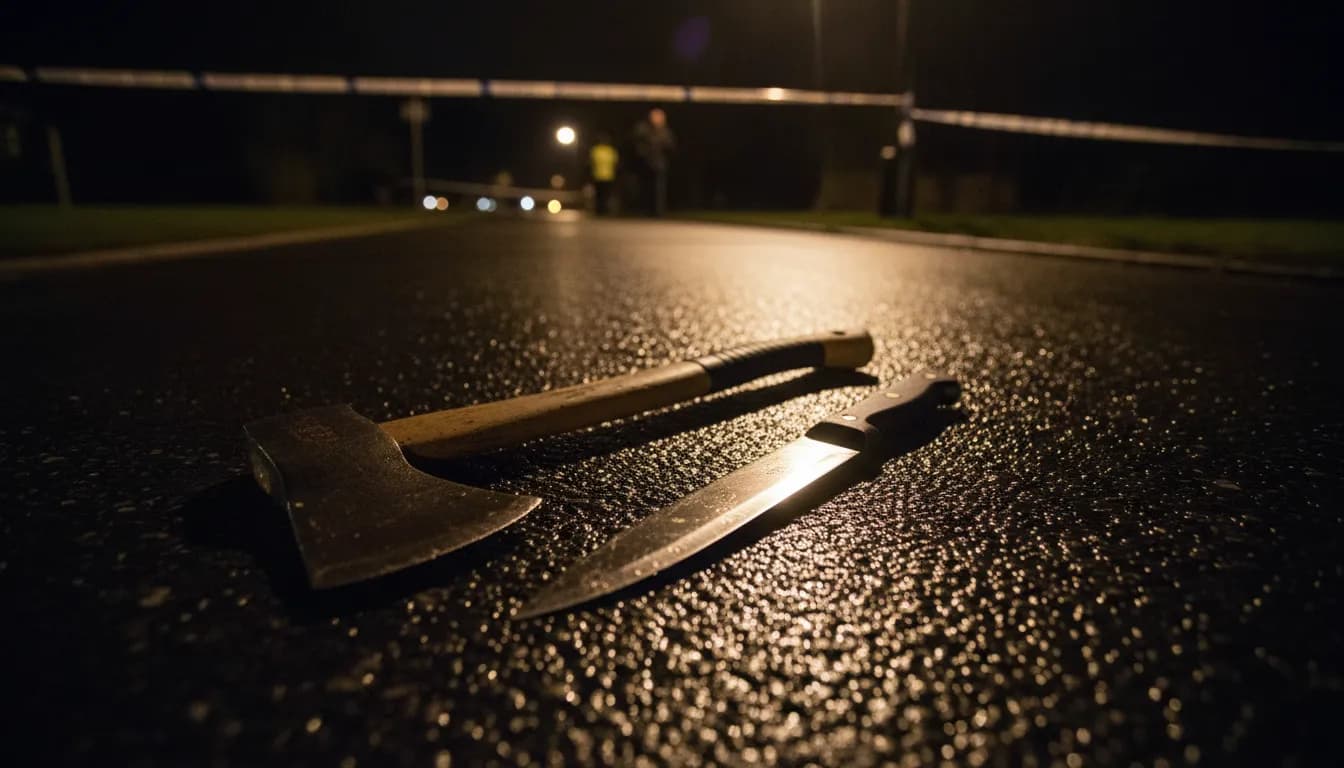
Mads was a vocational school student—the type of ordinary young person found in towns across Scandinavia—when he was attacked by a 21-year-old man armed with an axe and knife. This was no spontaneous crime of passion. Police and prosecutors established that the assault was premeditated, a planned ambush designed to rob a teenager of his merchandise. What began as a transaction ended in lethal violence.
For international observers, the case illuminates a less-discussed reality of Nordic countries: beneath the social-democratic stability and low crime statistics lies pockets of drug-related brutality that can erupt with shocking speed. While Scandinavian nations enjoy global reputations for safety and order, their marijuana markets—like those elsewhere—remain zones where disputes can turn fatal in seconds.
The case was tried at the Court in Aarhus, Denmark's second-largest city in the eastern Jutland region. The 21-year-old defendant was convicted of robbery and murder. Court records indicate he claimed self-defense—a common assertion in cases where the accused acknowledges the killing but disputes intent or culpability. Danish law distinguishes between *mord* (murder with intent) and *drab* (killing, sometimes with reduced culpability), and the verdict reflected the court's assessment of what occurred.
The victim's family faced the incomprehensible: their son, involved in a small-scale drug distribution, had been targeted for elimination over a quantity of cannabis that, in legal markets like Canada or parts of the United States, might be sold across a dispensary counter in minutes.
Denmark, like other Nordic nations, has grappled with evolving drug enforcement policy. Cannabis remains illegal, though possession of small amounts is often treated as a public health rather than criminal matter. Yet the market itself—the distribution networks—remain criminal enterprises, and those enterprises can be violent. Similar cases have emerged across Scandinavia, from Sweden to Norway, where drug-related homicides, though statistically rare compared to other regions, carry particular shock value in societies accustomed to lower violence rates.
The Aarhus case gained renewed attention through 'Danske Drabssager' ('Danish Murder Cases'), a true crime podcast that has become a platform for examining homicides that might otherwise fade from public memory once headlines move on. The podcast, hosted by Stine Bolther, reconstructs the chronology and human dimensions of significant Danish criminal cases, offering listeners both the investigative details and the broader context of how such crimes reshape lives.
What makes cases like Mads Arberg's significant for international criminology is what they reveal about how cannabis markets operate in high-income, low-violence societies. Unlike in regions where drug trafficking involves organized crime syndicates and turf wars, Nordic cannabis crimes often involve younger perpetrators, smaller quantities, and rapid escalation to disproportionate violence—sometimes among people who knew each other or operated in the same social circles.
For Mads's family and friends, the tragedy lay not in complexity but in simplicity: a teenager involved in petty dealing was identified as a target, robbed, and killed. The 21-year-old's assertion of self-defense did not persuade the court that his actions were justified.
The case remains a stark reminder that even in societies with strong institutions and low baseline crime, violence can arrive without warning—and that the cannabis trade, whether legal or illegal, carries risks that extend far beyond economics.