The Investigator: A British Crime Story
ITV/Netflix documentary series (2016-2018) revisiting cold case murders across England and Scotland
Quick facts
What Is the Series About?
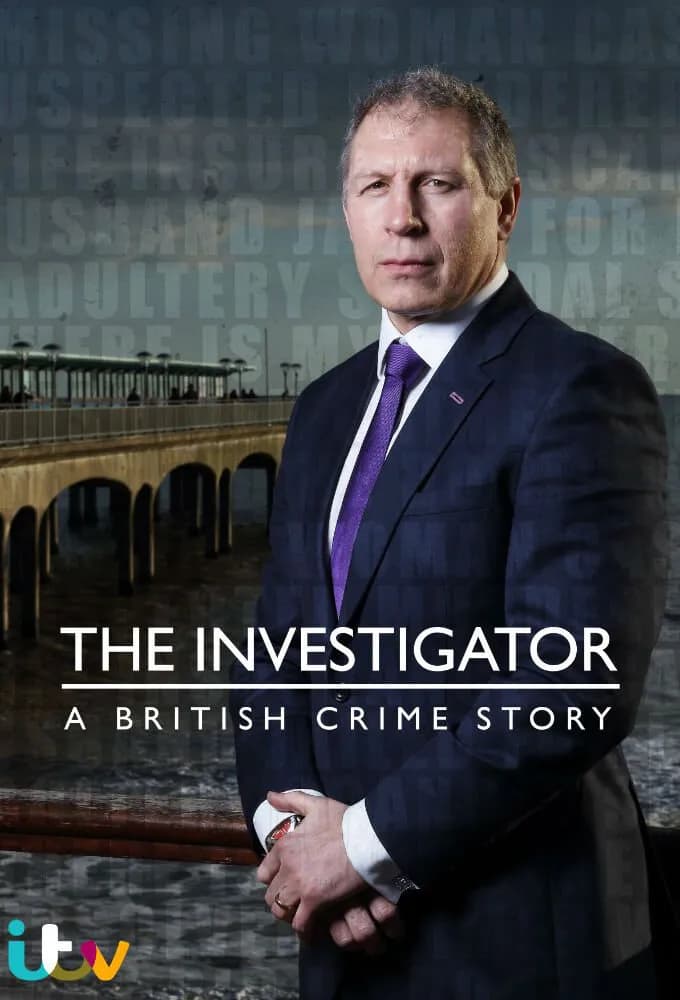
The Investigator: A British Crime Story is a British true crime documentary series that originally aired on ITV in 2016 before becoming available on Netflix. Presented by former police detective and child protection expert Mark Williams-Thomas, the series spans two distinct investigations across seven episodes. Series 1 covers four episodes and digs into the 1985 disappearance and murder of Carole Packman in Portsmouth, while Series 2 covers three episodes and examines the crimes of serial killers Peter Tobin and Angus Sinclair, including the notorious 1977 World's End murders in Edinburgh and the 1991 disappearance of Vicky Hamilton.
Williams-Thomas does not merely narrate these cases from a distance. He actively re-investigates them, interviewing surviving witnesses, scrutinising forensic evidence, and challenging official conclusions, making the series a hybrid of cold case journalism and investigative documentary.
Series 1: The Murder of Carole Packman
On 5 June 1985, Carole Ann Packman, a 36-year-old mother from Portsmouth, Hampshire, vanished without trace. Her husband Russell Causley, a former army soldier with a sideline in insurance fraud, claimed she had simply walked out on the family. Police initially treated the disappearance as a missing persons case and the investigation stalled.
What emerged over the following years painted a far darker picture. Causley had taken out life insurance policies on Carole, attempted to fraudulently claim on them, and showed no credible concern for her whereabouts. Suspicion hardened into near-certainty among those who knew him. Yet without a body, a conviction seemed out of reach.
It took until 2006, more than two decades after Carole vanished, for a jury to convict Causley of her murder. He was sentenced to life imprisonment, a verdict that relied on circumstantial evidence, testimony from those close to him, and the sheer implausibility of his ever-shifting account of events. Crucially, Carole's body has never been found, and Causley has consistently refused to reveal where her remains are.
Williams-Thomas revisits the case in Series 1 with access to key individuals and documentation, presenting findings that contributed to Dorset Police formally reopening the investigation in 2017, a direct real-world consequence of the documentary's broadcast. Causley remains in prison to this day, still serving his life sentence.
Series 2: Peter Tobin, Angus Sinclair, and Decades of Cold Cases
Vicky Hamilton and Peter Tobin
In February 1991, Vicky Marie Hamilton, a 15-year-old from West Lothian, Scotland, disappeared while waiting for a bus. For 16 years her fate was unknown. It was only in 2007 that her remains were discovered buried near the former home of convicted killer Peter Tobin in Peterhead, Scotland, more than 500 miles from where she was last seen.
Tobin's DNA linked him conclusively to the crime. He was convicted of Hamilton's murder in 2007 and sentenced to life imprisonment. Scottish Police launched Operation Anagram to investigate whether Tobin was responsible for additional unsolved disappearances. Series 2 of The Investigator examines this investigation and the lingering questions Operation Anagram left unanswered. Tobin died at HM Prison Glenochil on 11 March 2019.
The World's End Murders and Angus Sinclair
On the night of 15 October 1977, best friends Christine Elizabeth Edy and Helen Margaret Scott, both 17 years old, left the World's End pub in Edinburgh and were never seen alive again. Their bodies were found the following day on farmland east of the city; both had been raped and strangled. The case became one of Scotland's most notorious unsolved murders.
A first trial against Angus Henry Sinclair collapsed in 2007 when the judge directed a not guilty verdict after ruling that the prosecution's evidence was insufficient. It appeared that the families of Christine and Helen would never see justice.
The turning point came through advances in forensic science. In 2010, scientists succeeded in extracting a DNA profile from one of the ligatures used to kill the girls, a profile that matched Sinclair. Armed with this evidence, prosecutors brought a retrial under Scotland's double jeopardy laws. In November 2014, Sinclair was convicted of both murders and sentenced to life imprisonment with a minimum term of 37 years. He died at HM Prison Glenochil on 11 March 2019, the same date as Peter Tobin.
Series 2 traces the forensic breakthroughs, the legal obstacles, and the emotional toll on the victims' families across nearly four decades of waiting for justice.
Production
The series was produced with involvement from Syco Entertainment and fronted by Mark Williams-Thomas, whose background as a detective sergeant with Surrey Police lends the investigation procedural credibility. Williams-Thomas has stated publicly that his goal was not merely to make television but to surface evidence that could prompt official action, an ambition that, in the case of Carole Packman, demonstrably succeeded.
According to Williams-Thomas's own account of the series, he conducted extensive interviews with families, former investigators, and forensic experts, and in some instances obtained access to case materials not previously aired publicly. The series uses a combination of interview footage, archive material, and location sequences to reconstruct events, a format that drew both praise and criticism from reviewers.
Reception
The series debuted on ITV on 14 July 2016 and drew a significant audience, ultimately reaching an estimated 10 million viewers globally following its international rollout on Netflix. On IMDb, it holds a rating of 5.7 out of 10 from approximately 1,800 ratings, a score that reflects divided opinion among viewers.
Critical reception was mixed. The Telegraph criticised the series for what it described as tacky cliffhangers and an over-reliance on dramatised reconstructions that prioritised tension over rigour. Others raised concerns about the impact of revisiting traumatic events on the families of victims.
On the other side of the debate, many viewers and commentators praised Williams-Thomas for pursuing outcomes rather than ratings. The fact that the Carole Packman investigation was formally reopened by Dorset Police in the wake of the broadcast was cited repeatedly as evidence of genuine public interest value. Radio Times described it as a series that demonstrated the potential for documentary journalism to function as a real instrument of justice.
The Cases Today
Russell Causley remains imprisoned and continues to serve his life sentence for the murder of Carole Packman. The Dorset Police investigation reopened in 2017 has not resulted in the discovery of Carole's remains. The location of her body is believed to be known only to Causley himself.
Peter Tobin died in prison in March 2019. Operation Anagram did not result in additional convictions before his death, and several families of missing women remain without definitive answers.
Angus Sinclair likewise died in March 2019, having served only a fraction of his minimum term. The families of Christine Edy and Helen Scott had waited 37 years for the conviction that finally came in 2014, and Sinclair's death means he will never face further questioning about any other offences he may have committed.
For all its imperfections, The Investigator: A British Crime Story stands as a notable example of true crime documentary making a tangible difference, not just recounting history, but actively shaping what happens next.