Murder Maps
Pluto TV / Amazon Freevee / Curiosity Stream, 2015 — Historical London murder cases reconstructed
What Is Murder Maps?
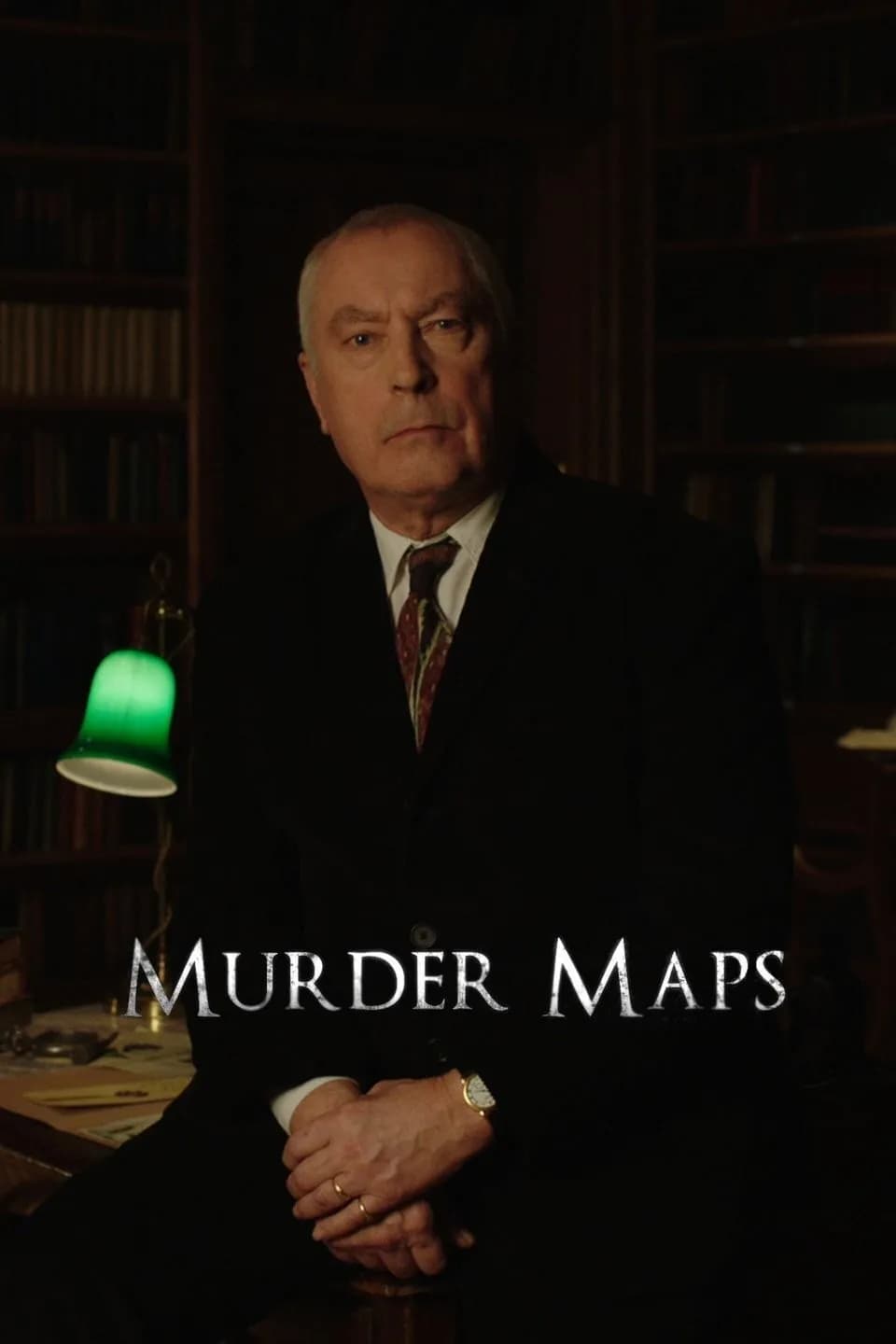
Murder Maps is a British drama-documentary series that reconstructs some of the most notorious historical murder cases in United Kingdom history — primarily set in London — using forensic evidence, period geography, and dramatic reenactments. Rather than focusing on a single crime, the series devotes each episode to a different killer and a different era, tracing how investigators of the time used the tools available to them to bring perpetrators to justice.
First broadcast in the United Kingdom on November 10, 2015, the series spans 26 episodes across five seasons, with each episode running approximately 44 minutes. It is hosted by journalist and presenter Nicholas Day and directed by Daniel Kontur. The series holds an IMDb rating of 7.5 out of 10 based on 668 viewer votes, reflecting a consistently positive audience response.
The show is currently available to stream free of charge on Pluto TV, Amazon Freevee, Hoopla, and The Roku Channel, as well as on Curiosity Stream and Prime Video.
The Cases
Unlike most true crime documentary series, Murder Maps does not tell a single story. Each episode functions as a self-contained investigation into a real historical crime. The geography of London — its streets, alleyways, parishes, and slums — serves almost as a character in itself, with maps and spatial analysis used to show how killers moved, where victims were found, and how detectives triangulated their suspects.
Jack the Ripper — Whitechapel, 1888
Perhaps the most iconic case featured in the series is that of Jack the Ripper, the unidentified serial killer who terrorized the Whitechapel district of East London between August and November 1888. The Ripper is believed to have murdered at least five women — Mary Ann Nichols, Annie Chapman, Elizabeth Stride, Catherine Eddowes, and Mary Jane Kelly — though some researchers have attributed as many as eleven deaths to the same perpetrator.
The murders were characterized by extreme brutality and, in several cases, surgical mutilation of the victims, leading early investigators to speculate that the killer had some degree of anatomical knowledge. Police at the time used public maps and witness geography to attempt to chart the killer's movements through the labyrinthine streets of Whitechapel — a primitive but historically significant precursor to modern criminal geographic profiling.
Despite one of the most publicized investigations in Victorian history, no perpetrator was ever identified or convicted. The Jack the Ripper case remains officially unsolved.
Dr. Hawley Crippen — London, 1910
One of the series' most compelling episodes covers the case of Dr. Hawley Crippen, an American-born physician living in London who murdered his wife and concealed her dismembered remains beneath the floor of his basement. When police began to close in, Crippen fled to Canada aboard a transatlantic steamship with his mistress, Ethel Le Neve, who was disguised as a boy.
The case became internationally famous as the first use of wireless telegraphy to apprehend a murder suspect. The ship's captain recognized Crippen from newspaper photographs and telegraphed Scotland Yard. A detective sailed on a faster ship, arriving in Canada ahead of Crippen, and arrested him in Montreal.
Crippen was returned to England, tried, found guilty of murder, and executed by hanging on February 23, 1911. The case remains a landmark in both forensic history and the history of communications technology.
Additional Cases
Across its five seasons, the series also examines a broad range of other historical crimes, including Victorian-era poisonings, early 20th-century domestic murders, and cases that stretched police methodology to its limits. Season 5 notably expands the series' geographic scope, touching on cases beyond London.
Production
The series was produced in the United Kingdom and is directed by Daniel Kontur. The format blends dramatic reenactment with forensic narration and historical cartography, giving the series a distinctive visual identity rooted in period detail.
Host Nicholas Day acts as both narrator and investigative guide, walking viewers through the evidence, the geography, and the investigative decisions that ultimately led — or failed to lead — to a conviction. The use of historical maps is not merely aesthetic; the series argues that geography was often a decisive forensic tool in pre-modern criminal investigation.
The full series is catalogued on MagellanTV, which describes it as a premium true crime and history documentary offering.
Reception
Critical and audience reception to Murder Maps has been consistently positive according to TV Guide, with viewers praising the series for its educational depth, strong production values, and the atmospheric reconstruction of Victorian and Edwardian London. The 7.5/10 IMDb score places it comfortably among well-regarded British true crime documentary output.
Netflix, which carried the series from 2017, tagged it with descriptors including Gritty, True Crime, Forensics, British, Historical, and Dark — a characterization that accurately reflects the series' tone and content.
Some critics have noted that the heavy use of dramatization in certain episodes risks blurring the line between documented fact and creative reconstruction, a common tension in the drama-documentary format. However, no significant factual disputes or legal controversies have been reported in connection with the series.
The show has developed a dedicated following among fans of British true crime and Victorian history, and its YouTube presence continues to attract new viewers years after its original broadcast.
The Cases Today
The majority of cases featured in Murder Maps are closed historical matters — perpetrators long since deceased, victims long since buried. The Jack the Ripper case, however, remains the notable exception: officially unsolved, it continues to generate serious academic research, amateur investigation, and cultural fascination more than 135 years after the murders.
No new forensic evidence has definitively identified the Ripper in the years since Murder Maps first aired. Several DNA-based studies have been published claiming to identify suspects, but these findings have been contested by other researchers and the case remains formally open.
For crimes like the Crippen case, the series has had the effect of reintroducing pivotal moments in forensic history to a new generation of viewers, highlighting how early 20th-century investigators pioneered techniques that became foundational to modern criminal justice.