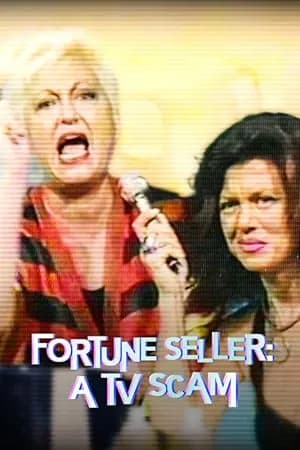
Fortune Seller: A TV Scam
Netflix, 2022 — The Italian teleshopping fraud that deceived 300,000 people
Quick facts
What Is the Series About?
*Fortune Seller: A TV Scam* is a four-episode Netflix true-crime docuseries that tells the story of Wanna Marchi and her daughter Stefania Nobile, two of the most notorious figures in Italian television history. The series, released on September 21, 2022, chronicles how a celebrated teleshopping personality transformed her media empire into one of the largest consumer fraud operations Italyfraud operations Italy had ever seen — a scheme that ultimately affected an estimated 300,000 people and resulted in lengthy prison sentences for both women.
Directed by Nicola Prosatore and written by Alessandro Garramone and Davide Bandiera, the docuseries reconstructs the rise and fall of Marchi and Nobile through archival footage, court records, and firsthand accounts. It is a portrait of exploitation disguised as entertainment, set against the glittering backdrop of Italian commercial television in the 1990s.
---
The Case
The Queen of Teleshopping
Born Anna Maria Mazzarotti, Wanna Marchi built her public persona as Italy's undisputed "queen of teleshopping" during the 1980s and 1990s. Her high-energy sales style and commanding on-screen presence made her a household name, and her shows attracted enormous audiences across Italian commercial television channels. Her daughter, Stefania Nobile, became her closest business partner, working alongside her in the growing media-sales enterprise.
The Fraud
According to reporting by *The Sun* and other sources covering the case, the criminal scheme operated between approximately 1996 and 2001. Marchi and Nobile pivoted from conventional product sales to a far more lucrative and predatory operation: selling "lucky" numbers, anti-evil amulets, and products that falsely promised protection from misfortune, lottery winnings, and divine intervention. Vulnerable consumers — many of them elderly or in financial distress — were targeted through television broadcasts and direct telephone sales.
The charges that ultimately came before Italian courts included fraud, aggravated fraud, extortion, false advertising claims about products, and fraudulent bankruptcy. Prosecutors argued the pair used intimidation alongside false promises, pressuring victims who had already paid to spend even more in order to lift supposed curses or secure promised windfalls that never materialized.
An estimated 300,000 people were affected by the scheme, with victims reporting financial ruin, personal devastation, and in some cases complete loss of savings.
The Sting and the Trial
The operation was brought to national attention through a sting conducted by the Italian investigative TV program *Striscia La Notizia, which exposed the methods Marchi and Nobile used to manipulate their customers. The resulting criminal trial became, by multiple accounts, a national spectacle* — a courtroom drama that riveted Italy and forced a public reckoning with the power of television to exploit trust.
Sentencing
On April 3, 2006, both Wanna Marchi and Stefania Nobile were sentenced to 2.5 years in prison for aggravated fraud. The following month — May 2006 — a further sentence of 10 years was imposed, alongside a court order requiring them to repay €2.2 million to their victims. One source reports that Marchi ultimately served a combined sentence totaling 9 years and 6 months covering fraudulent bankruptcy, aggravated scams, and conspiracy.
In April 2010, both women received an additional conviction for the fraudulent bankruptcy of Ascié srl, the company tied to their operations.
Marchi has since been released, reportedly on good behavior. Both she and Nobile are reported to have completed their prison time.
---
Production
The series was produced for Netflix Italy and directed by Nicola Prosatore, with the screenplay crafted by Alessandro Garramone and Davide Bandiera. The production spans four episodes and makes extensive use of archival television footage — a key element given that so much of the fraud was conducted in plain sight on broadcast television.
As *The Euro TV Place* noted at the time of the trailer release, the documentary leans into the surreal quality of the original broadcasts: watching Marchi and Nobile perform their sales routines on screen, knowing what would later be revealed in court, gives the archival material an unsettling double meaning.
The series draws on the court record, victim testimony from the trial, and documentary footage to reconstruct the full arc of the case — from the height of Marchi's teleshopping fame through the criminal proceedings and their aftermath.
---
Reception
Fortune Seller: A TV Scam holds an IMDb rating of 6.8/10 based on audience scores tracked on the title's IMDb page. Viewer commentary on the platform reflects the fascination the case continues to generate in Italy and among international audiences: reviewers describe Marchi as an early prototype of the influencer-era celebrity who weaponized screen charisma for criminal ends.
*Decider* covered the series in the context of broader true-crime streaming, framing it as a documentary about an influencer-like figure's rise and spectacular fall — relevant not only as a historical crime story but as a commentary on media trust and consumer vulnerability.
The subject matter is inherently contentious. Revisiting the case means revisiting the suffering of hundreds of thousands of victims, many of whom were among Italy's most financially precarious citizens. The series does not shy away from that damage: court testimony and personal accounts of ruin form a central thread through all four episodes.
Formal critic reviews and major award coverage were not widely reported in available sources at the time of this writing. The series appears to have performed primarily as a word-of-mouth true-crime title within the Netflix Italy catalogue and among international subscribers interested in European crime documentaries.
---
The Case Today
Wanna Marchi and Stefania Nobile have both served their prison sentences and been released. The case remains one of the most discussed examples of mass consumer fraud in Italian legal and media history — a cautionary study in how broadcast television can be weaponized against the very audiences it is supposed to entertain.
The Netflix docuseries has renewed international interest in the case, introducing the story of Marchi and Nobile to audiences outside Italy who had little prior awareness of the scale of the fraud or the drama of the trial. Whether that renewed attention has prompted any further legal or financial proceedings for the victims is not confirmed in available sources.
What the series makes clear is that the Wanna Marchi case was not a simple confidence trick run by two obscure fraudsters. It was a sophisticated, televised operation that exploited the cultural authority of broadcast media at its peak — and that its victims numbered in the hundreds of thousands is a figure that continues to define the case's place in Italian criminal history.