Flugtkongen
DRTV, 2016 — Denmark's most spectacular prison tunnel escape, Christmas Eve 1949
What Is the Series About?
Flugtkongen is a 2016 Danish documentary special produced for DR2 and available on DRTV. The title translates literally as The Escape King, and the programme covers what Danish broadcasting describes as the country's longest and most spectacular prison tunnel escape: the Christmas Eve 1949 breakout by career burglar Carl August Lorentzen from Horsens Statsfængsel. The documentary blends archival reconstruction of the escape with a present-day archaeological investigation, as researchers and museum staff attempt to physically relocate the original tunnel beneath the grounds of what is now Horsens Prison Museum.
The series sits at the intersection of true crime and forensic history. It is not a modern murder or kidnapping case, but rather a mid-century property crime story that has acquired the status of Danish folk legend — a tale of ingenuity, obsession, and the stubborn refusal of one man to remain behind bars.
---
The Case
Carl August Lorentzen was a habitual burglar and repeat offender who had accumulated multiple convictions for housebreaking (indbrud) by the time he found himself serving time at Horsens Statsfængsel, one of Denmark's most secure prisons. Exactly what sentence he was serving at the time of the escape is not specified in available records, but his criminal history made clear that he was no first-time offender.
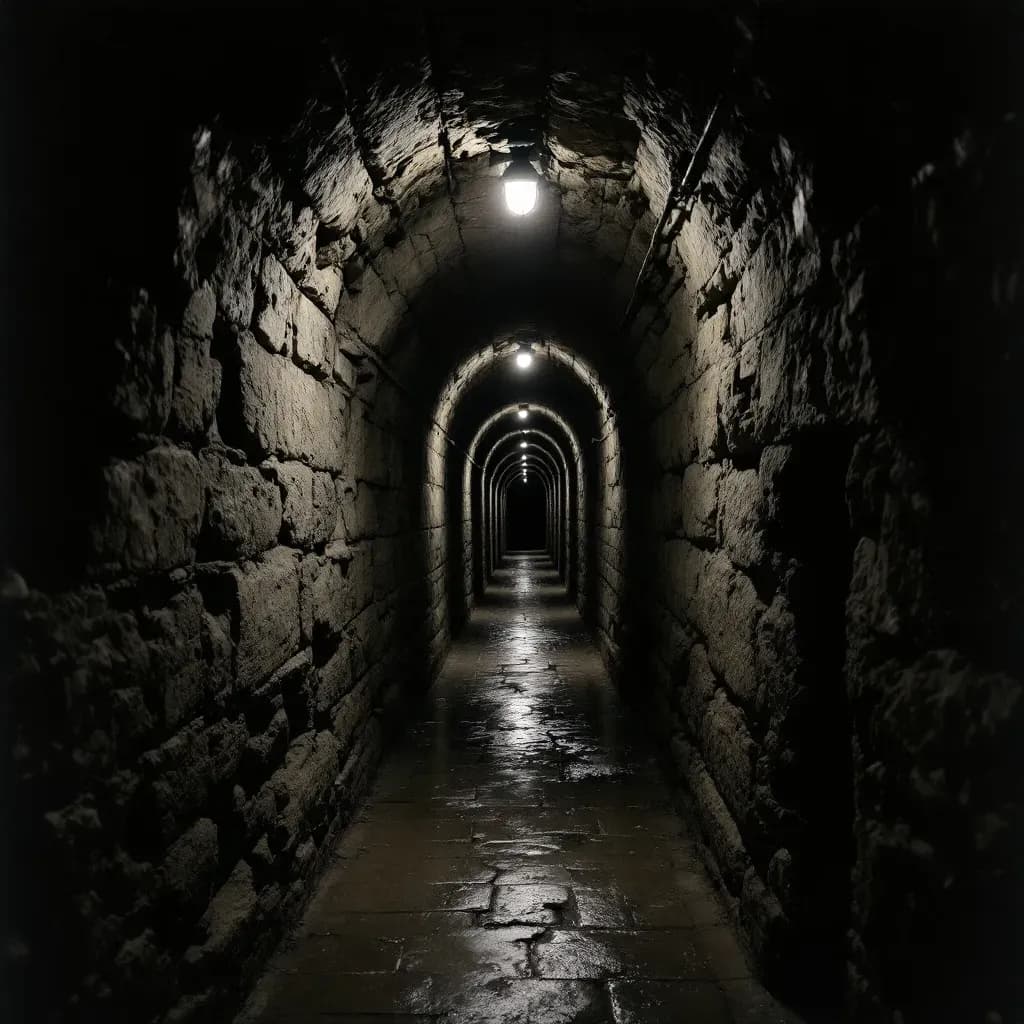
On the night of 24 December 1949 — Christmas Eve, known in Denmark as lillejuleaften — Lorentzen executed what he had apparently been planning for a considerable period. Using rudimentary tools including, according to later accounts, a needle, a teaspoon, and a small shovel, he dug an 18-metre tunnel beneath the prison yard and emerged on the other side of the perimeter wall. The audacity and physical effort of the feat immediately captured public imagination.
The escape earned Lorentzen the nickname flugtkongen — the Escape King — a title that reflected both the scale of his achievement and a certain grudging Danish admiration for the sheer stubbornness of the enterprise. A 2024 TV 2 article marking the 75th anniversary of the escape noted that new information about the case had continued to emerge even seven decades later, underlining the enduring fascination the story holds in Denmark.
Lorentzen did not remain free indefinitely. He was eventually recaptured and returned to the prison system. Records confirm that he was released on probation on 21 December 1954, only to be re-imprisoned on 24 January 1956 after committing further thefts — a pattern entirely consistent with his profile as a compulsive repeat offender. His story ended inside the institution that had once failed to hold him: Carl August Lorentzen died in Horsens State Prison on 1 June 1958.
It is worth noting that this case involved property crime, not violence. No individual named victims appear in the available historical record — the people harmed by Lorentzen's burglaries are not identified in surviving documentation. The case is therefore unusual within the true crime genre: the drama centres not on a victim but on the perpetrator's extraordinary act of self-liberation.
---
Production
Flugtkongen was produced in Denmark and broadcast on DR2, the second channel of the Danish public broadcaster DR, with the programme made available for streaming on DRTV. The director is not credited in publicly available listings for the series.
The documentary's production approach is distinctive. Rather than relying solely on archival footage, dramatised reconstruction, or talking-head interviews — the standard toolkit of the television true crime genre — Flugtkongen incorporates an active archaeological dimension. A team attempts to physically locate and map the original tunnel that Lorentzen dug in 1949, treating the escape as a site of forensic and historical interest rather than purely a narrative to be retold. This gives the programme an unusual texture, combining the suspense of historical revelation with the procedural drama of an archaeological dig.
The setting of Horsens Prison Museum — housed within the walls of the former Horsens Statsfængsel — provides a powerful visual backdrop. The prison itself is a formidable nineteenth-century structure, and the juxtaposition of its imposing architecture with the story of one man tunnelling beneath it using improvised tools is central to the documentary's emotional and dramatic logic.
Filming and research for the documentary also drew on records held at the Danish Police Museum, which preserves documentation of Lorentzen's imprisonment, probation, and eventual death.
---
Reception
No formal critical reviews or aggregated audience ratings are available in public sources for Flugtkongen. The programme does not appear to have a verified IMDb listing, and no viewer score can be confirmed. However, the framing used by DRTV in its own programme description — billing the case as Denmark's longest and most spectacular tunnel escape — suggests that DR marketed the documentary with confidence in its subject's popular appeal.
The enduring cultural footprint of the flugtkongen nickname is itself a measure of the case's resonance. A DR news feature published in 2024 demonstrates that the title has since been applied by Danish media to Brian Bo Larsen, a contemporary prisoner notorious for more than twenty prison escapes. The fact that a modern repeat escapee is measured against Lorentzen's 1949 feat — and described using the same honorific — speaks to how firmly the original flugtkongen has lodged himself in Danish popular memory. Readers should note that Brian Bo Larsen and Carl August Lorentzen are entirely different individuals; the shared nickname reflects a journalistic tradition rather than any connection between the two cases.
No controversies related to the production of Flugtkongen have been identified in available sources.
---
The Case Today
Seventy-five years after Lorentzen pressed his makeshift tools into the earth beneath a Danish prison, his escape continues to attract serious historical attention. The 75th anniversary in December 2024 prompted new reporting from TV 2, with journalists noting that fresh information about the escape had come to light — suggesting that the documentary and subsequent research have kept the archival investigation alive well beyond the original broadcast.
Horsens Prison Museum, located on the site of the escape, continues to operate as a significant heritage attraction in Denmark, and Lorentzen's tunnel escape forms part of its historical narrative. Whether the tunnel itself was ever definitively located following the archaeological investigation shown in Flugtkongen is not confirmed in currently available public sources.
Carl August Lorentzen died in 1958 without leaving, as far as records show, any memoir or public account of his motivations. He remains a figure understood primarily through the physical evidence of what he did — 18 metres of hand-dug earth, completed on a winter's night in 1949 — and through the imagination of those who have tried, ever since, to reconstruct how he did it.