El caso Wanninkhof-Carabantes
Netflix, 2021 — Spain's most notorious wrongful conviction and the real killer behind two murders
Quick facts
What Is the Series About?
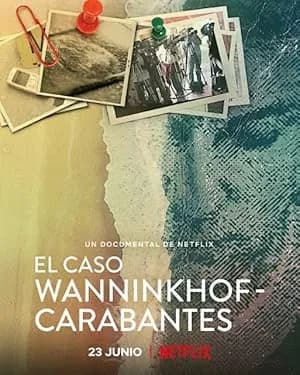
El caso Wanninkhof-Carabantes is a feature-length documentary available on Netflix that examines one of the most shocking miscarriages of justice in modern Spanish legal history. Directed by Tània Balló and released on 23 June 2021, the film runs 88 minutes and chronicles the 1999 murder of teenager Rocío Wanninkhof in Mijas, Málaga, the wrongful conviction of Dolores Vázquez Mosquera, and the eventual identification of the true killer — British ex-convict Tony Alexander King — following a second murder in 2003. Rather than focusing solely on the crimes themselves, Balló's documentary places the failures of the justice system, the media, and entrenched social prejudices at the centre of the story.
The Case
On the night of 9 October 1999, nineteen-year-old Rocío Wanninkhof Hornos disappeared near Mijas, a coastal municipality in the province of Málaga, Andalusia. Her body was subsequently found; she had been murdered. From the outset, police and press attention quickly zeroed in on Dolores Vázquez Mosquera, the former romantic partner of Rocío's mother. Despite the absence of compelling forensic evidence against her, Vázquez was subjected to relentless media scrutiny and institutional suspicion. She was eventually convicted and spent more than 500 days in prison for a crime she did not commit.
The case took a dramatic turn in 2003, when a second teenage girl, Sonia Carabantes, was murdered in the same general Málaga area. Crucially, investigators were able to recover DNA evidence from the scene of Carabantes' murder that did not match Vázquez — and that ultimately pointed to a different suspect entirely. That suspect was Tony Alexander King, a British national who had moved to Spain in 1997. King had a prior criminal history in the United Kingdom, where he had been known as the "Holloway Strangler." On 21 September 2004, King confessed to murdering both Rocío Wanninkhof and Sonia Carabantes, and admitted to committing additional sexual assaults in the region. He was subsequently convicted and sentenced to 55 years in prison.
Dolores Vázquez was exonerated and released. Her case has since become a defining reference point in Spanish public discourse around wrongful convictions, gender bias in legal proceedings, and the destructive power of trial-by-media.
Production
The documentary was directed by Tània Balló, a Catalan filmmaker with a track record of socially engaged documentary work. Balló approaches the case not as a straightforward crime reconstruction but as a forensic examination of systemic failure. The film draws on archival news footage, legal documents, and interviews to reconstruct the atmosphere of moral panic and media frenzy that surrounded the original investigation and trial. A central thesis of the documentary is that Dolores Vázquez was targeted not because of evidence but because of who she was: a woman whose lifestyle and relationships made her an easy target for prejudice in the press and, ultimately, in the courtroom.
The production is notable for the way it situates the Wanninkhof-Carabantes case within broader conversations about misogyny in the Spanish justice system, demonstrating how institutional biases can override due process. The official Netflix trailer underscores this framing, positioning the wrongful conviction as the documentary's emotional and ethical core.
Reception
Critical coverage of El caso Wanninkhof-Carabantes has been largely positive, with reviewers praising its rigorous approach to a case that still carries significant emotional weight for Spanish audiences. Writing for El País, critics described it as an examination of "the perfect media crime," highlighting how the combination of a sensational murder, a socially marginalised suspect, and an uncritical press created the conditions for a catastrophic judicial error. The documentary holds an IMDb rating of 6.5/10.
Coverage in outlets including La Vanguardia and El Confidencial echoed the view that the film succeeds in exposing how a "system failed Dolores Vázquez" on multiple levels simultaneously — police investigation, prosecution, media coverage, and public opinion all converged to condemn an innocent woman. Spanish news outlet Diario Sabemos described the documentary as a work in which "an entire system failed Dolores Vázquez," a phrase that encapsulates the film's central argument. Some viewers and commentators have noted that the documentary is as much about structural misogyny and media ethics as it is about the murders themselves, which gives it a relevance that extends beyond the specific facts of the case.
The Case Today
Tony Alexander King remains imprisoned in Spain, serving his 55-year sentence. The Wanninkhof-Carabantes case has left a lasting imprint on Spanish legal and media culture. It prompted significant reflection on the standards required before the press names — and effectively convicts — suspects in high-profile criminal cases, and it has been cited in academic and journalistic discussions about the presumption of innocence and the dangers of allowing public sentiment to drive prosecutorial decisions.
For Dolores Vázquez, the years since her exoneration have been marked by the irreversible personal cost of a wrongful conviction: more than 500 days imprisoned, a reputation destroyed in national newspapers, and a public ordeal that no court verdict could fully undo. The documentary does not shy away from these consequences, and its enduring value lies in its insistence that understanding how the system failed is the only honest way to honour the victims — both Rocío Wanninkhof and Sonia Carabantes, whose murders were delayed in justice, and Dolores Vázquez herself, whose life was upended by a failure of the institutions sworn to deliver it.