The Zodiac Killer — Unsolved Serial Murder Case
Northern California, 1968–1969 — Unsolved despite decades of investigation
Published June 3, 2026
Case Details
Quick Facts
Classification:
The Case
The Zodiac Killer case is one of America's most infamous unsolved serial murder investigations. Between 1968 and 1969, an unidentified offender killed at least five people in the San Francisco Bay Area and sent a series of taunting letters and cryptograms to local newspapers, signing them with his now-iconic circle-cross symbol. Despite decades of investigation by multiple law enforcement agencies, the FBI still treats the matter as open and under review, and no suspect has ever been charged with sufficient evidence to secure a conviction.
The killer's identity remains unknown. He targeted young couples in secluded areas during his early attacks, then shifted to a solitary victim in an urban setting. Beyond the confirmed murders, the offender claimed in his letters to have killed as many as 37 people, though authorities have never verified these additional claims. The case has generated countless theories, numerous suspects, extensive media coverage, and ongoing public fascination for more than five decades.
The Crime
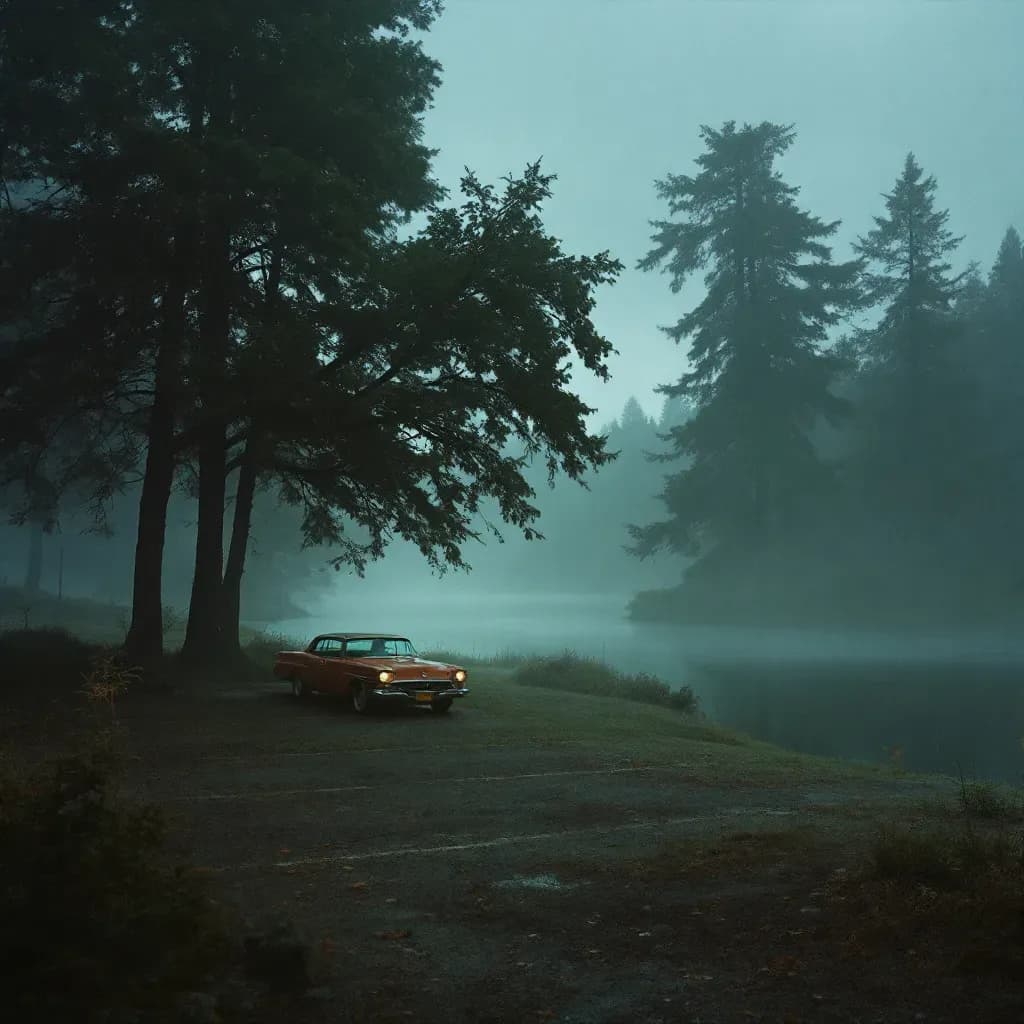
The confirmed Zodiac crime series began on December 20, 1968, when David Arthur Faraday, 17, and Betty Lou Jensen, 16, were shot while sitting in a parked car on Lake Herman Road near Vallejo, California. The killer approached the vehicle, ordered the couple out, and shot them both. Jensen died at the scene; Faraday died shortly after arrival at the hospital.
Timeline
First confirmed murder
David Faraday, 17, and Betty Lou Jensen, 16, were shot and killed on Lake Herman Road near Vallejo while sitting in a parked car.
Attack at Blue Rock Springs
Darlene Ferrin, 22, was killed and Michael Mageau, 19, was wounded in an ambush attack in a parking lot at Blue Rock Springs Park in Vallejo.
Stabbing at Lake Berryessa
A hooded attacker assaulted Bryan Hartnell, 20, and Cecelia Shepard, 22, at Lake Berryessa in Napa County. Shepard died of her wounds; Hartnell survived.
Murder of taxi driver in San Francisco
Taxi driver Paul Stine was shot and killed in Presidio Heights, San Francisco, in what is widely regarded as the Zodiac's last confirmed attack.
First cryptogram letters sent
The killer began sending taunting letters containing cryptograms to newspapers in the San Francisco Bay Area, signed with a circle-cross symbol.
Arthur Leigh Allen named suspect
Police named Allen, a Vallejo elementary school teacher and convicted sex offender, as their primary suspect, though he was never charged.
Main suspect dies
Arthur Leigh Allen died of heart failure. DNA and fingerprint evidence available at the time did not match him to the crimes.
Cryptogram partially solved
Amateur codebreakers solved one of the Zodiac's 340-character ciphers, 51 years after it was sent, though it produced no useful investigative leads.
Seven months later, on July 4, 1969, the killer struck again at Blue Rock Springs Park in Vallejo. Darlene Ferrin, 22, and Michael Mageau, 19, were ambushed in a parking lot. The assailant fired multiple shots into their vehicle. Ferrin died from her wounds; Mageau survived despite serious injuries. Shortly after this attack, a man called the Vallejo Police Department to claim responsibility and provided details only the killer would know.
The third confirmed attack occurred on September 27, 1969, at Lake Berryessa in Napa County. Bryan Calvin Hartnell, 20, and Cecelia Ann Shepard, 22, were approached by a man wearing a dark executioner-style hood with a circle-cross symbol on the chest. The hooded figure tied them up and stabbed them repeatedly. Shepard died two days later from her injuries; Hartnell survived and provided police with a detailed description of the attacker and the unusual costume.
The final widely accepted Zodiac murder took place on October 11, 1969, in the Presidio Heights neighborhood of San Francisco. Cab driver Paul Stine was shot and killed in his taxi. Witnesses observed a stocky man leaving the scene, and police arrived within minutes but failed to apprehend the suspect due to a miscommunication about the suspect's description.
The killer's modus operandi evolved throughout the series. The early attacks targeted young couples in parked cars in secluded rural or suburban locations, using a handgun. The Lake Berryessa attack involved a knife and the theatrical element of the hood costume. The final confirmed murder was an urban shooting of a solitary victim. This variation in method, victim type, and location has led some researchers to question whether all attributed crimes were committed by the same offender, though the letters claiming responsibility linked them together.
The Victims
The confirmed Zodiac victims were ordinary young people whose lives were cut short by random violence. David Faraday was a high school student described by friends and family as bright and well-liked. Betty Lou Jensen was a popular 16-year-old on her first date with Faraday when they were killed.
Darlene Ferrin was a young mother and waitress in Vallejo. Her companion, Michael Mageau, survived the attack but suffered severe physical injuries and lasting trauma. The attack occurred on July 4, a date some investigators believe was deliberately chosen by the killer.
Cecelia Shepard was a college student at Pacific Union College. She and Bryan Hartnell, also a student, were enjoying a lakeside picnic when they were attacked. Hartnell's survival provided investigators with crucial eyewitness testimony about the attacker's appearance, voice, and behavior.
Paul Stine was a 29-year-old San Francisco cab driver and part-time student. His murder differed from the earlier attacks in that he was alone, older than previous victims, and killed in an urban setting. This shift in victim profile has been cited by some researchers as evidence of the killer's evolution or possible desperation.
Beyond these confirmed victims, the Zodiac claimed responsibility for many additional murders in his letters to newspapers, stating he had killed 37 people. Authorities have never confirmed these additional claims, and the true number of victims remains unknown.
Investigation
The investigation into the Zodiac killings began immediately after the first murders, but the case took on a new dimension in July 1969 when the killer began sending letters to San Francisco Bay Area newspapers. These letters included cryptograms—coded messages that the killer challenged authorities and the public to solve. One cryptogram was quickly decoded by a local schoolteacher and his wife, revealing a message about killing for thrills but providing no useful investigative leads.
The killer's letters taunted police and demanded media coverage, threatening additional violence if his communications were not published on newspaper front pages. He provided details about the crimes that only the perpetrator would know, definitively linking the attacks. The correspondence continued sporadically through 1974, with the final confirmed Zodiac letter received in that year.
Arthur Leigh Allen emerged as the primary suspect in 1971. Allen was a former elementary school teacher from Vallejo and a convicted sex offender. Several circumstantial factors pointed to him: he lived in Vallejo, owned weapons similar to those used in the attacks, and allegedly made suspicious statements to acquaintances. Police searched his residence multiple times and subjected him to intense scrutiny for more than two decades.
Despite the focus on Allen, investigators could never develop sufficient evidence to file charges. Fingerprints recovered from the Paul Stine crime scene did not match Allen's prints. After DNA testing became available, genetic material from stamps and envelopes used on the Zodiac letters was compared to Allen's DNA—again, no match. Allen died of heart failure in 1992, taking any secrets he may have possessed to his grave. He remains the only person publicly named by police as a suspect.
In subsequent decades, various private investigators, amateur sleuths, and family members have proposed alternative suspects. Gary Francis Poste, who died in 2018, was identified by a private investigation team in 2021, but law enforcement did not accept this identification as definitive. Earl Van Best Jr., who died in 2005, was named by his own son as a possible suspect, but again, authorities did not find the evidence compelling enough to close the case.
Trial and Verdict
There has never been a trial in the Zodiac Killer case because no suspect has been charged with the crimes. The lack of definitive physical evidence linking any individual to all the confirmed attacks has prevented prosecutors from bringing charges. While Arthur Leigh Allen was investigated extensively and remained under suspicion until his death, the absence of matching fingerprints and DNA meant the case against him was purely circumstantial.
The evidentiary challenges in the case are significant. The crimes occurred before modern DNA technology was available, and the physical evidence collected at various scenes has been limited or degraded over time. Fingerprints from the Paul Stine murder scene exist, but if they belong to the killer, they have not matched any individual in law enforcement databases. Partial DNA profiles have been developed from the letters, but these too have not produced a confirmed match.
The case remains officially open and unsolved. The FBI, San Francisco Police Department, and other agencies continue to review evidence and consider new leads. Any resolution would require either a DNA match to a known individual, a credible confession backed by verifiable details, or the discovery of previously unknown evidence that definitively identifies the offender.
Today
The Zodiac Killer case remains active in the public imagination and continues to attract attention from law enforcement, researchers, and true crime enthusiasts. In December 2020, a team of amateur codebreakers successfully solved the Zodiac's 340-character cipher, which had remained undecoded for 51 years. The decoded message revealed the killer's taunts about the afterlife but provided no new investigative leads or clues to his identity.
Modern forensic technology offers hope that the case may eventually be solved. Advances in genetic genealogy—the technique used to identify the Golden State Killer in 2018—have raised the possibility that DNA from the Zodiac letters could be used to trace the killer's family tree and identify him through relatives. Several law enforcement agencies have indicated they are exploring this avenue, though no breakthrough has been announced.
The case has inspired extensive media coverage, including the acclaimed 2007 film "Zodiac," directed by David Fincher, numerous documentaries, podcasts, and books. This ongoing cultural fascination keeps the case in the public eye and occasionally generates new tips and leads for investigators to pursue.
Despite the passage of more than five decades, the Zodiac investigation continues. Cold case detectives periodically review the evidence, and advances in forensic science may yet provide the breakthrough needed to identify the killer. For the families of the victims and the surviving witnesses, closure remains elusive, but the hope persists that modern technology and persistent investigation will finally answer the question that has haunted Northern California since 1968: who was the Zodiac Killer?
Media coverage
TV series
- The Most Dangerous Animal of All(2026)
Podcasts
- The Zodiac Killer: America's Unsolved Serial Murder Mystery(2026)
Ask about this case
Answers from KrimiNyt's coverage onlyFollow this case
Get an email when a new documentary, podcast or book about The Zodiac Killer — Unsolved Serial Murder Case appears, or when a verdict is reached.