The Playing Card Killer — Madrid's Random Serial Murders
Madrid, Spain, 2003 — Solved
Published June 9, 2026
The Case
The Playing Card Killer case refers to a series of random shootings in Madrid, Spain, in early 2003, perpetrated by Alfredo Galán Sotillo, a former soldier from Puertollano, Ciudad Real. Born on December 22, 1977, Galán terrorized the Spanish capital by shooting victims apparently at random and leaving Spanish playing cards at the crime scenes—a signature that gave him his notorious nickname, known in Spanish as "El asesino de la baraja." Between January and March 2003, he killed six people and attempted to kill three others before voluntarily surrendering to authorities in July 2003. The case shocked Spain and became one of the country's most infamous serial murder cases, later examined in multiple documentaries and a Netflix series.
The Crime
Galán's killing spree unfolded over approximately three months in the winter and early spring of 2003. His victims were chosen completely at random, with no apparent connection between them or to the killer himself. The attacks typically involved Galán approaching victims and shooting them at close range, often targeting the head, neck, or back. The randomness of victim selection created widespread fear in Madrid, as residents realized anyone could become a target.
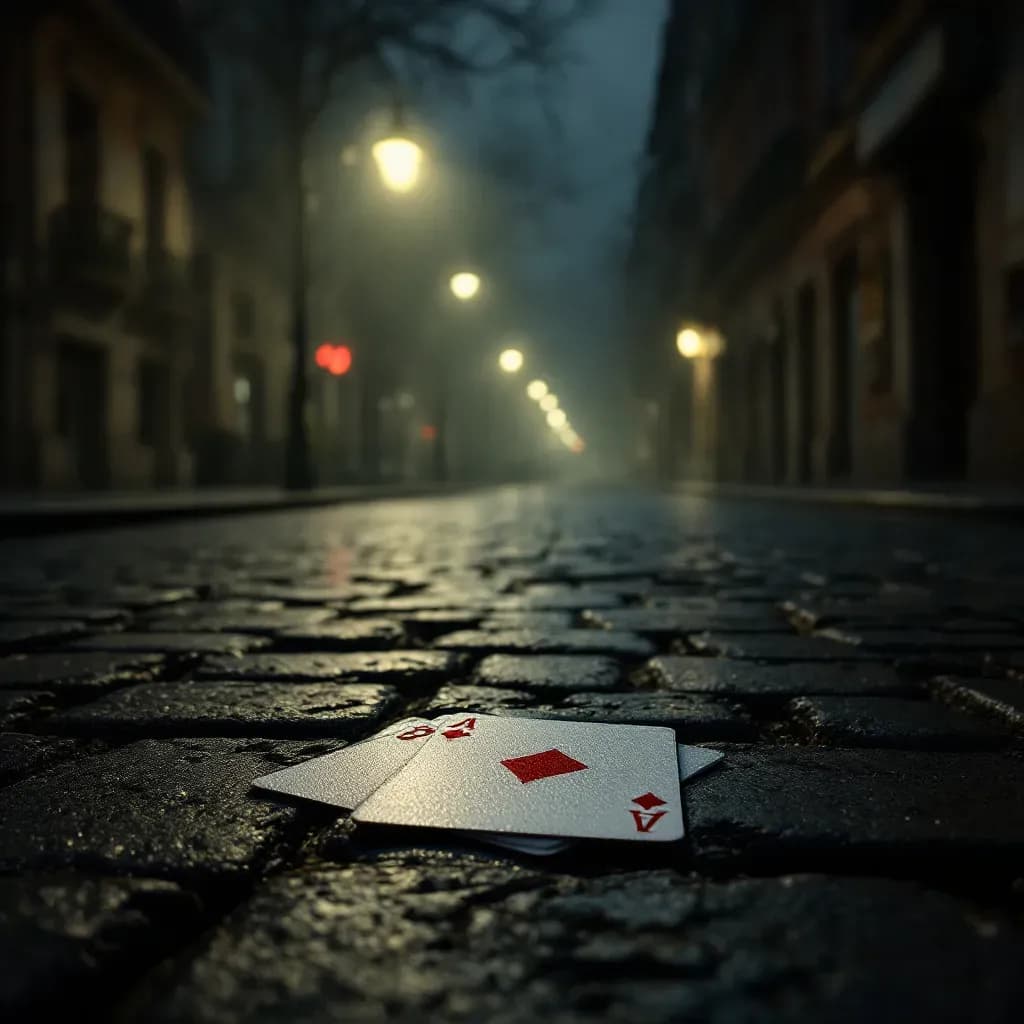
The killer's signature was the Spanish playing card he left at each crime scene. This distinctive calling card became the central element of the investigation and ultimately gave the case its name. Galán used a Tokarev TT-33 handgun, a Soviet-era pistol he had reportedly brought back from his military service in Bosnia. The weapon's ballistic signature would later become crucial evidence linking the crimes together and tying them definitively to Galán.
Timeline
First murder: Juan Francisco Ledesma shot dead
On January 24, 2003, Juan Francisco Ledesma, 50, is shot and killed. A playing card from the Spanish baraja deck is left at the crime scene.
Second named victim: Juan Carlos Martín Estacio killed
On February 5, 2003, Juan Carlos Martín Estacio, 28, is shot and killed. Another playing card is left at the crime scene.
Last attack in the series takes place
On March 18, 2003, the last attack included in the charges against Alfredo Galán Sotillo takes place. Shortly afterward, he is arrested by Spanish police.
Tenth anniversary of the verdict marked in Spanish media
In March 2015, ABC Madrid and other outlets mark the tenth anniversary of the verdict and follow up on the case's legacy in Spanish public discourse.
The pattern of attacks—random victims, execution-style shootings, and the playing card signature—suggested a methodical killer operating with a clear ritual. This combination of randomness and ritual made the case particularly challenging for investigators and terrifying for Madrid residents who had no way to predict where the killer might strike next.
The Victims
Alfredo Galán was ultimately convicted of killing six people and attempting to kill three more during his brief but deadly spree. The victims who lost their lives included Juan Francisco Ledesma, Juan Carlos Martín, Mikel Jiménez, Juana Dolores Uclés, George, and Diona Magda. These individuals came from different backgrounds and had no connection to each other or to their killer—they were simply in the wrong place at the wrong time.
The three survivors of Galán's attacks provided crucial testimony during the investigation and trial. Their accounts helped establish the pattern of random approach and sudden violence that characterized Galán's methodology. The psychological impact on survivors and victims' families was profound, as the senseless nature of the killings offered no closure or explanation beyond the actions of a disturbed individual seeking notoriety.
The randomness of victim selection meant that Madrid residents across all demographics felt vulnerable during the active phase of the killings. Unlike cases where victims share characteristics that might allow others to feel safe, Galán's indiscriminate targeting created citywide anxiety.
Investigation
The investigation into the Playing Card Killer centered on the distinctive signature left at each scene and the ballistic evidence linking the shootings. Police worked to establish connections between crime scenes and identify patterns in the killer's movements and timing. The playing cards provided a clear link between incidents but offered limited investigative leads initially.
Ballistic analysis of bullets and shell casings recovered from the crime scenes revealed that the same weapon—the Tokarev TT-33 handgun—had been used in all the attacks. This crucial finding definitively connected the murders and attempted murders to a single perpetrator. Investigators worked to trace potential sources of such a weapon, which was not commonly found in Spain.
The case took an unexpected turn when Galán voluntarily surrendered to police on July 3, 2003. He walked into a police station in his hometown of Puertollano and confessed to the murders. His decision to turn himself in ended the active manhunt but opened new questions about his motivations and mental state. The confession provided investigators with details that had not been publicly released, confirming his responsibility for the crimes.
Trial and Verdict
Alfredo Galán Sotillo faced trial in Madrid, where prosecutors presented solid evidence linking him to the murders and attempted murders. The trial examined his background as a former military serviceman, his acquisition of the murder weapon during his deployment, and his psychological state during the commission of the crimes. Galán had confessed, but the court still required comprehensive evidence to establish guilt beyond reasonable doubt.
In 2005, the Audiencia Provincial de Madrid delivered its verdict. The court convicted Galán of six murders, three attempted murders, unlawful entry, and illegal weapons possession. He received a sentence of 142 years and 3 months in prison—one of the longest sentences handed down in Spanish criminal history. The lengthy sentence reflected the severity and number of crimes, as well as the terror he had inflicted on Madrid's population.
The trial proceedings revealed details about Galán's methodology, his selection of victims, and his psychological motivations. Expert testimony explored whether mental illness played a role in his crimes, though the court ultimately found him criminally responsible for his actions. The conviction brought a measure of closure to victims' families, though the senseless nature of the crimes left many questions about what could drive someone to such random violence.
Today
Alfredo Galán remains incarcerated in the Spanish prison system. While his formal sentence totals 142 years, Spanish law limits actual time served under various sentencing provisions, though he faces extended imprisonment under any calculation. The case status remains solved and closed in the criminal sense, with no outstanding questions about the perpetrator's identity or conviction.
The Playing Card Killer case has maintained public interest in Spain and internationally. Netflix produced a docuseries titled "Baraja: La firma del asesino" (Playing Card: The Killer's Signature) examining the case in detail. Spanish broadcaster RTVE has featured multiple documentary programs and chronological examinations of the crimes. Mediaset's program "Personas & Bestias" devoted an episode to analyzing Galán and his crimes. These media treatments continue to explore the psychological dimensions of the case and its impact on Spanish society.
The case serves as a reminder of the particular terror created by random serial violence, where victims share no characteristics that might have protected others. Galán's brief but deadly spree left an indelible mark on Madrid and remains one of Spain's most studied serial murder cases. The playing card signature—a detail that might seem theatrical—became a genuine source of terror for residents who feared finding such a card might mean discovering a crime scene. Today, the case represents both a successful resolution through Galán's surrender and confession, and an enduring mystery about what drives individuals to commit such senseless violence against strangers.
Media coverage
TV series
- Baraja: la firma del asesino(2026)
Ask about this case
Answers from KrimiNyt's coverage onlyFollow this case
Get an email when a new documentary, podcast or book about The Playing Card Killer — Madrid's Random Serial Murders appears, or when a verdict is reached.