Carl Panzram — Serial Killer and Habitual Offender
Multiple U.S. locations, 1891–1930, partially solved
Published June 7, 2026
Quick Facts
The case in brief
On June 20, 1929, Carl Panzram killed foreman R. G. Warnke in the laundry at the United States Penitentiary in Leavenworth, Kansas. Warnke was a civilian laundry foreman in the prison's laundry — not a prison guard — and the killing took place within the walls of one of the United States' most secure federal institutions. The case is closed: Panzram was convicted and executed by hanging at the same prison on September 5, 1930.
truecrime.news has chosen not to publish further personal information about the victim's family or survivors, as such information does not appear in the sources available to the editorial team.
The crime
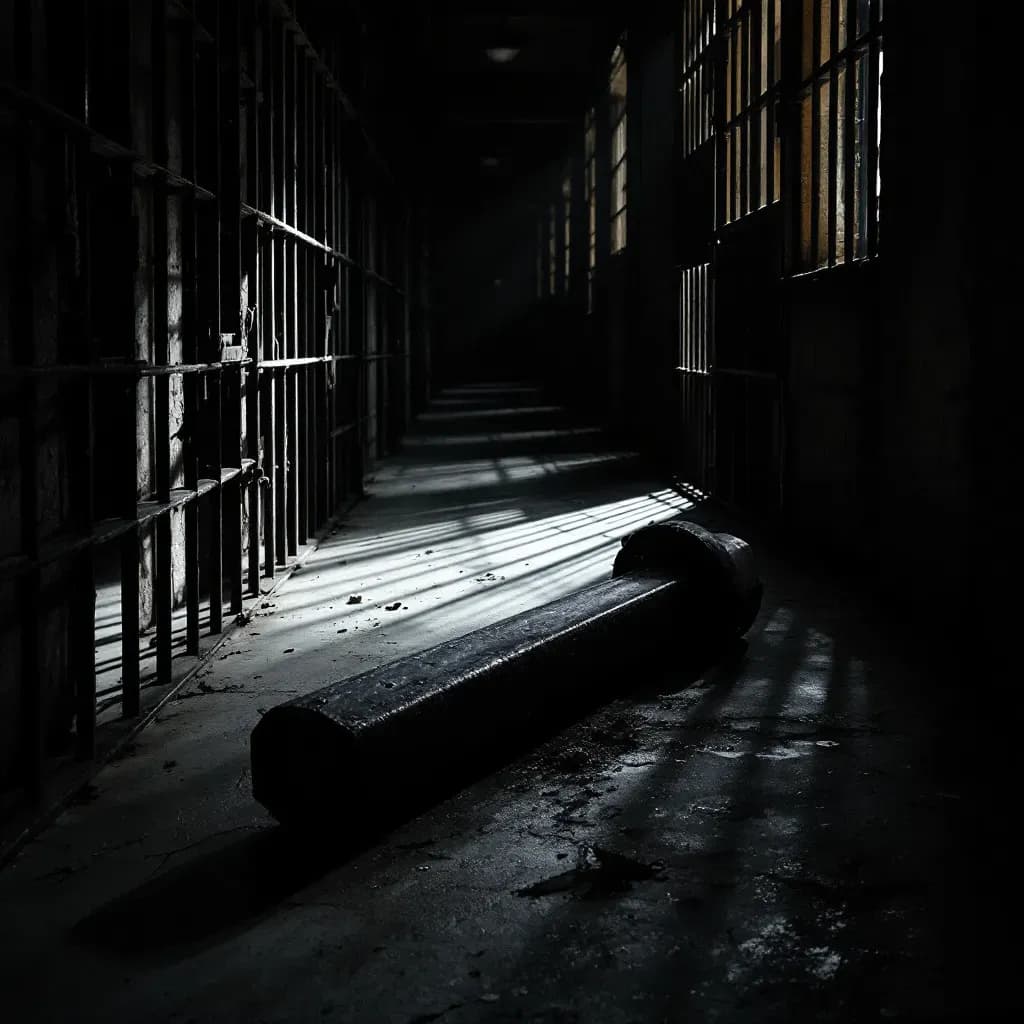
On June 20, 1929, Carl Panzram, then an inmate at the United States Penitentiary, Leavenworth, attacked foreman R. G. Warnke with an iron bar. Warnke died as a result of the attack. The crime scene was the laundry within the prison grounds, where Warnke carried out his work as foreman.
Timeline
Carl Panzram is born
Carl Panzram — also known as Charles Panzram — is born on June 28, 1891.
Killing of prison guard R. G. Warnke
On June 20, 1929, Carl Panzram beats prison guard R. G. Warnke to death with an iron bar in the laundry at United States Penitentiary, Leavenworth, Kansas.
Carl Panzram executed by hanging
On September 5, 1930, Carl Panzram is executed by hanging at United States Penitentiary, Leavenworth, Kansas, following his conviction for the killing of Warnke.
The killing thus took place in a situation where Panzram was already serving a sentence — he was not at large in society when the crime was committed. This fact came to play a central role in the subsequent trial, as the prosecution argued that an additional prison sentence would have no deterrent effect.
In the period leading up to and during the trial, Panzram confessed to a total of 21 killings. As reviews of the case show, only a small number of these confessions have been verified and confirmed in standard sources. truecrime.news therefore refers exclusively to the Warnke killing as the documented factual basis for the conviction and execution.
Investigation and charges
Since the killing took place within the walls of a federal prison and with Panzram as the direct perpetrator at the scene, the investigation was by its nature relatively brief. Panzram did not deny responsibility for Warnke's killing. The US federal authorities charged him with murder.
Panzram's case illustrates a particular legal issue within the American justice system: what is the legal response when an already incarcerated person commits a new killing? The prosecution sought the death penalty, and the defense's options were limited by the evident circumstances of the case.
Trial and verdict
Carl Panzram was brought before a US federal court and found guilty of killing R. G. Warnke. The court sentenced him to death. According to the sources truecrime.news has reviewed, Panzram received the sentence without showing signs of remorse or fear — on the contrary, he stated that he wanted the execution carried out as quickly as possible.
On September 5, 1930, Carl Panzram was executed by hanging at the United States Penitentiary, Leavenworth, Kansas — the same prison where he had committed the killing of Warnke just under fifteen months earlier. He was 39 years old at the time of the execution, having been born on June 28, 1891.
The case today
The case against Carl Panzram was legally concluded with his execution in 1930. It has since attracted attention in criminological and historical contexts, primarily because of the scope of Panzram's own confessions and his unusual conduct during the trial and in the lead-up to the execution.
International sources treat the case as a historical example of a lifelong criminal career that ended with a killing committed behind prison walls. The Warnke killing is the only one that directly formed the basis for the death sentence and the subsequent execution.
truecrime.news wishes to emphasize that R. G. Warnke was the victim of a crime committed at his workplace, while he was carrying out his work as a prison employee. The case is a reminder that prison staff can find themselves in real danger in the course of their duties.
Media coverage
TV series
- Carl Panzram: The Spirit of Hatred and Vengeance(2026)
Ask about this case
Answers from KrimiNyt's coverage onlyFollow this case
Get an email when a new documentary, podcast or book about Carl Panzram — Serial Killer and Habitual Offender appears, or when a verdict is reached.