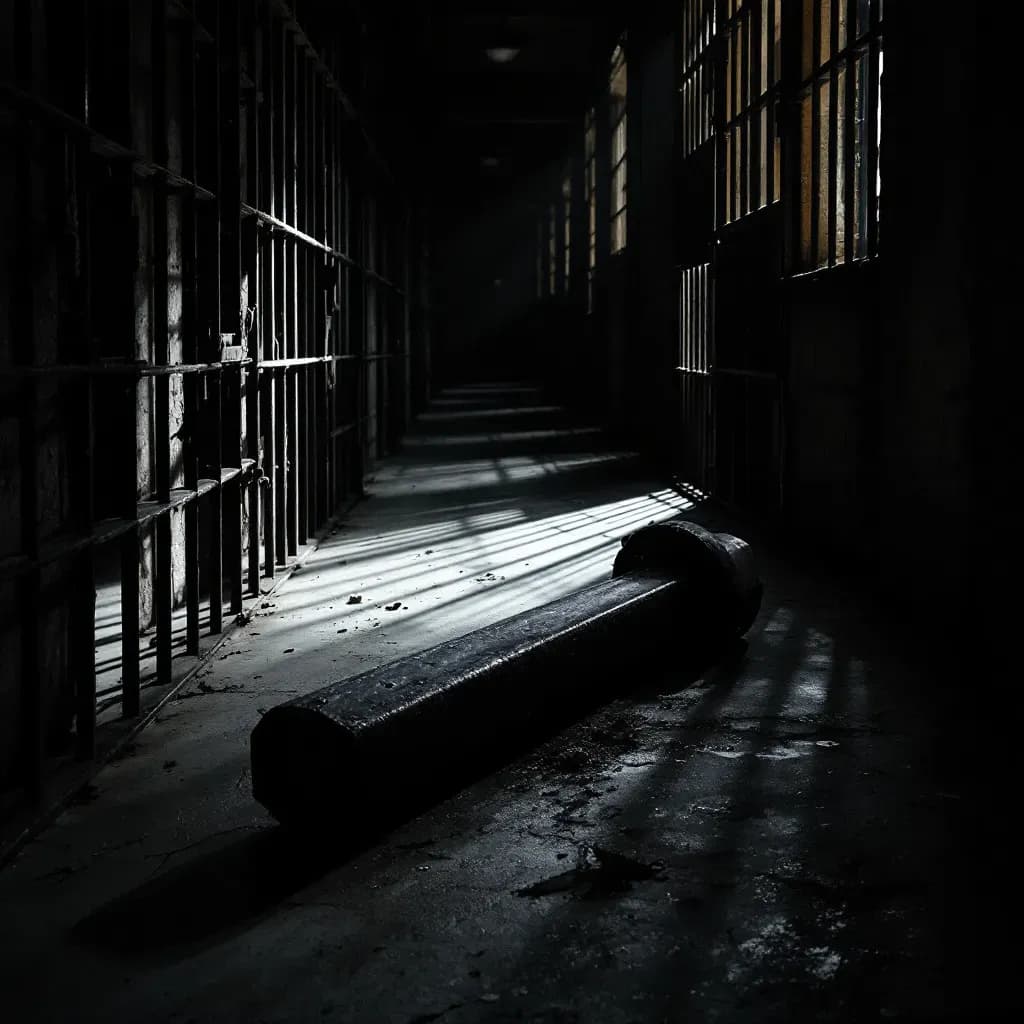
prison murder
Descriptive term for killings inside prison walls, prosecuted under Penal Code § 237
Prison murder is not an independent legal concept in Danish criminal law, but is used as a descriptive label for killings committed within prison walls — either by inmates against fellow inmates or against prison staff. The relevant provision is the Danish Penal Code (straffeloven) § 237, under which a person who kills another is punished for manslaughter with imprisonment from 5 years up to life. Danish legislation does not distinguish between a killing committed in a prison and a killing committed elsewhere. What matters is the elements of the offence: that the perpetrator intentionally deprived another human being of life.
The prison setting is therefore not a legal classification, but may form part of the specific circumstances in the court's assessment of sentencing. In practice, the circumstances of a prison murder may affect where within the statutory sentencing range the penalty is set. The general rules on sentencing in the Penal Code (§§ 80–82) apply here as in all other homicide cases.
In international true crime cases — including, for example, Carl Panzram's 1929 killing of Robert Warnke, the foreman of the laundry at Leavenworth prison — the term prison murder is used as a factual and contextual category describing the location and dynamics of the killing rather than a separate legal offence type. Such cases are handled in the respective countries' legal systems under national rules on manslaughter or murder, but what they have in common is that the prison setting constitutes the central context of the crime.