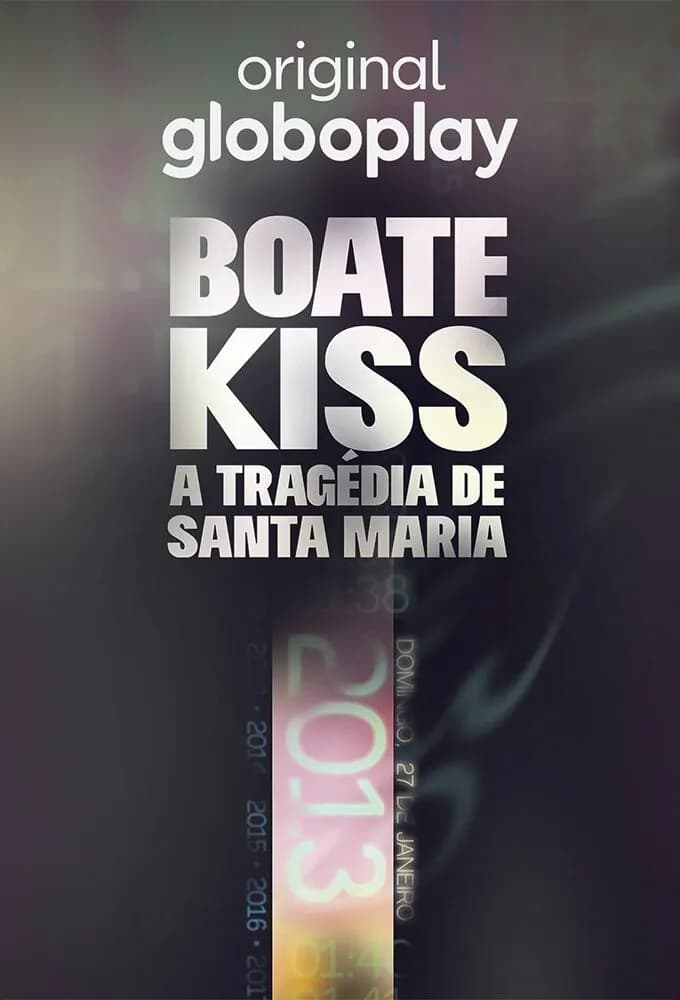
Boate Kiss: A Tragédia de Santa Maria
Globoplay, 2023 — The documentary series about Brazil's deadliest nightclub fire
Quick facts
What Is the Series About?
Boate Kiss: A Tragédia de Santa Maria is a Globoplay original documentary series that chronicles the January 27, 2013 fire at the Boate Kiss nightclub in Santa Maria, Rio Grande do Sul, Brazil. The catastrophe killed 242 people, injured more than 623, and shook the entire country. Released in 2023 on the tenth anniversary of the tragedy, the five-episode series examines the criminal negligence that enabled it, the decade-long fight for justice by survivors and victims' families, and the structural failures that made such a disaster possible.
What sets this documentary apart from conventional true crime productions is the identity of its director: Marcelo Canellas, an award-winning Brazilian journalist whose 19-year-old daughter, Vanessa Canellas, died in the fire. Canellas also serves as narrator, lending the series an intimate, first-person weight that is rarely found in the genre.
The Case
On the night of January 26 to 27, 2013, hundreds of young people gathered at Boate Kiss on Rua Coronel Pedro Casado in Santa Maria to attend a concert by the forró band Gurizada Fandangueira. At approximately 2:15 AM, a performer ignited a pyrotechnic device as part of the stage show. A spark struck the ceiling, which was lined with highly flammable acoustic foam insulation. Within seconds the foam was ablaze, releasing toxic smoke and carbon monoxide that incapacitated and killed concertgoers before many could reach the exits.
The death toll reached 242 people, with over 623 injured. Victims came from more than 70 Brazilian cities, seven states, and even Paraguay. Most were young adults between 18 and 25 years old.
The Perpetrators and Their Sentences
Nine individuals were formally charged. Four were convicted by a jury in 2016:
- Elissandro Callegaro Spohr (co-owner of Boate Kiss) — sentenced to 22 years and 6 months
- Mauro Londero Hoffmann (co-owner of Boate Kiss) — sentenced to 19 years and 6 months
- Marcelo de Jesus dos Santos (lead singer of Gurizada Fandangueira) — sentenced to 18 years
- Luciano Augusto Bonilha Leão (band producer) — convicted (exact sentence not publicly confirmed)
All four were found guilty of aggravated homicide. The charge was originally filed as negligent homicide but upgraded when prosecutors argued the defendants knowingly accepted the risk of mass casualties by allowing pyrotechnics in an overcrowded venue with combustible materials and insufficient emergency exits. As of 2023 to 2024, all four remain in custody.
Five other individuals, including club employee Ricardo de Castro Pasche and two relatives of Spohr listed as nominal owners, were charged but not convicted.
Systemic Negligence
The forensic investigation established a clear chain of institutional failures. The venue had been granted fire safety permits despite being significantly over capacity. The acoustic foam on the ceiling had not been certified as fire-retardant. No sprinkler system was in place. Security personnel reportedly blocked one of the exit doors to prevent concertgoers from leaving without paying.
Academic and legal analysis framed the disaster not merely as an accident but as the predictable result of systemic negligence compounded at every level — from the venue owners to the licensing authorities. In a separate civil proceeding in 2020, both the Municipality of Santa Maria and the State of Rio Grande do Sul were held civilly liable for damages to victims' families, acknowledging the failure of public fire safety oversight. No criminal charges were filed against state or municipal officials.
Production
The series was produced for Globoplay and released in 2023, a decade after the fire. Director Marcelo Canellas had already built a distinguished career in Brazilian investigative journalism at TV Globo, earning multiple awards for long-form documentary work. His decision to direct a series about a disaster that claimed his own daughter's life was publicly framed as an act of grief transformed into accountability journalism.
The series was written by Fernando Rinco and Gabriel Mitani, and spans five episodes of approximately 53 to 55 minutes each. The production includes forensic reconstructions of the fire's progression, extensive interviews with survivors and family members, courtroom footage from the 2016 trial, and archival news material. Canellas appears on camera and provides narration throughout, often speaking directly about Vanessa in a way that grounds the broader tragedy in personal loss.
The fifth episode covers the legal aftermath and the ongoing civil liability proceedings, tracing the full arc from the night of the fire to the confirmed convictions and the unresolved question of state accountability.
Reception
The series received a strong and emotional response from Brazilian audiences upon its release on Globoplay. Critics and viewers praised its narrative depth, forensic rigor, and the moral weight carried by Canellas's personal perspective. It has been described in Brazilian media as one of the most important true crime documentaries the country has produced.
The series reignited public debate about pyrotechnic regulations in live entertainment venues, a topic that had largely faded from the national agenda in the decade since the fire. Some critics noted that while the documentary is thorough in its treatment of the convicted individuals, it gives comparatively limited attention to why municipal and state officials who approved the venue's safety permits faced no criminal consequences — a gap that advocacy groups representing victims' families have long highlighted.
No significant backlash against the series has been reported. An IMDB rating is not currently available in public sources, likely reflecting the limited international distribution of the Globoplay original.
The Case Today
As of 2023 to 2024, all four convicted individuals remain incarcerated following the confirmation of their sentences on appeal. Civil compensation proceedings for victims' families continue in Brazilian courts. The municipality and state government's civil liability, established in 2020, has resulted in some payouts but litigation is ongoing for many families.
The Boate Kiss case had a lasting impact on Brazilian fire safety legislation. New regulations governing nightclub capacity limits, fire suppression systems, and the use of pyrotechnics at indoor events were introduced in the years following the disaster. Advocacy organizations founded by survivors and victims' families continue to push for stricter enforcement and for criminal accountability to extend beyond the four individuals convicted in 2016.
The release of Boate Kiss: A Tragédia de Santa Maria on Globoplay ensured that the case returned to the center of the national conversation a decade after the fire — both as a reminder of what was lost and as a challenge to ensure it cannot happen again.