Remote killing
Death at a distance – from contract killings to high-tech murders and the difficult investigation

Definition
What is remote killing? Delve into the methods, from contract killings to cyber-murders, and understand why these cases are so complex and fascinating in true crime.
Death at a distance – from contract killings to high-tech murders and the difficult investigation
Remote killing: When murder occurs without contact
Remote killing, a central concept within criminology and the true crime genre, defines a homicidal act where the perpetrator is not physically present with the victim at the moment of the crime. Death is instead caused from a distance, which can be significant, and typically involves some form of intermediary mechanism, advanced technology, or a hired third party. A characteristic feature of remote killing is the absence of direct confrontation between perpetrator and victim, often indicating a particular kind of cold-bloodedness and meticulous calculation behind the act. This type of murder raises complex legal and ethical questions regarding accountability, complicity, and the ever-increasing role that technological means play in the perpetration of severe violence.
Methods of remote killing: From murder to cyberattacks
Remote killing can manifest in many ways, ranging from the classic contract killing, where an intermediary – a third party – is hired to carry out the murder on behalf of the actual perpetrator, to more technologically sophisticated methods. Examples include the use of remote-controlled devices, elaborate poisonings distributed via mail or courier services, or even cyberattacks and digital assaults that manipulate critical systems – such as medical equipment or vital public infrastructure – with fatal outcomes. Unfortunately, constant technological development continually creates new, unsettling scenarios for how remote killings can be planned and executed, placing stricter demands on modern investigative methods and police investigations.
Remote killing: An investigative and chilling challenge
Within the true crime universe, remote killing is a subject that evokes both fascination and deep unease, primarily because it often involves an exceptional degree of planning and a markedly detached, almost impersonal approach to ending a human life. For investigators, cases of remote killing represent a significant challenge. The trail can be extremely elusive, often consisting of digital traces spread across vast geographical distances, or involving anonymous criminal networks, including the notorious dark web, which significantly complicates solving the crime. Identifying the true mastermind – the person orchestrating the crime from a safe distance – can be a lengthy and complex process, requiring specialized investigative techniques, digital forensics, and often international police cooperation. Remote killing thus exposes a dark facet of human ingenuity and how criminal actors can exploit distance and new technology to commit the ultimate crime. A thorough understanding of this phenomenon is essential, not only for the effective resolution of specific murder cases but also for developing strategies to prevent and counter the increasingly sophisticated methods used to take a life without direct physical contact. This makes remote killing a persistently relevant and pressing issue for law enforcement, criminological research, and society as a whole.
How does remote killing unfold in real cases of contract killings or high-tech murders? Delve into the most shocking examples of remote killing – find our cases below.
Read more
Marianne Vaatstra Murder Solved After 13 Years by DNA Sweep
The 1999 rape and murder of 16-year-old Marianne Vaatstra in rural Friesland remained unsolved for over a decade until Dutch investigators employed an unprecedented mass DNA screening of thousands of local men, ultimately leading to the 2012 arrest and conviction of Jasper Steringa.
Hafnium: How China Hacked Microsoft Exchange in 2021
The 2021 Hafnium attack: Chinese state hackers compromised thousands of Exchange servers globally. From espionage to worldwide ransomware chaos. Read the full story here.
The Great Escape: Colonel Rose's Tunnel Out of Libby Prison
On February 9, 1864, Colonel Thomas E. Rose of the 77th Pennsylvania Infantry led one of the Civil War's most audacious prison escapes from Libby Prison in Richmond, Virginia. Working in secret for 17 days, Rose and fellow officers dug a narrow 50-60 foot tunnel from the dungeon-like basement to freedom—an feat so remarkable that 109 men followed them out.
Related articles

Marianne Vaatstra Murder Solved After 13 Years by DNA Sweep
The 1999 rape and murder of 16-year-old Marianne Vaatstra in rural Friesland remained unsolved for over a decade until Dutch investigators employed an unprecedented mass DNA screening of thousands of local men, ultimately leading to the 2012 arrest and conviction of Jasper Steringa.
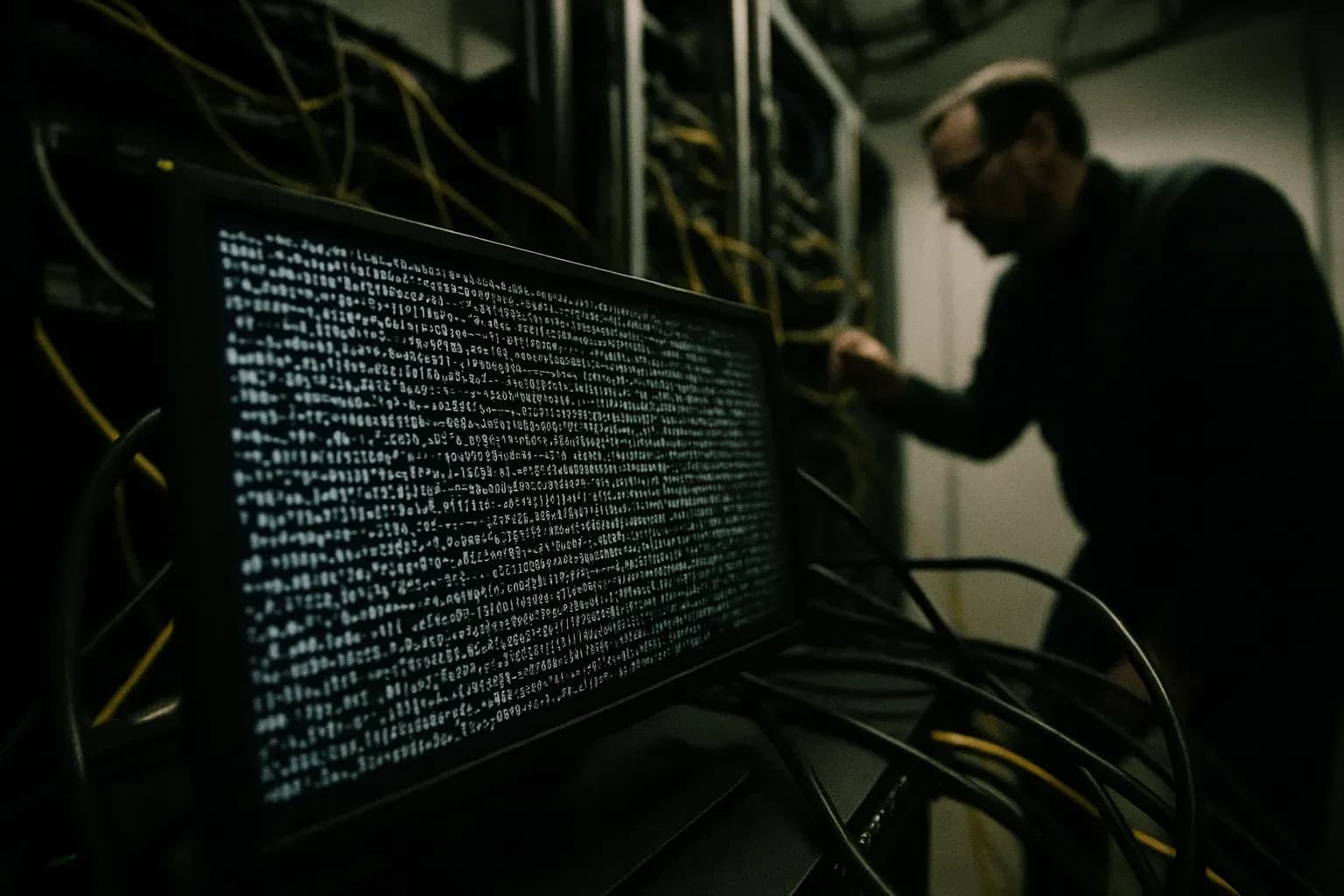
Hafnium: How China Hacked Microsoft Exchange in 2021
The 2021 Hafnium attack: Chinese state hackers compromised thousands of Exchange servers globally. From espionage to worldwide ransomware chaos. Read the full story here.

The Great Escape: Colonel Rose's Tunnel Out of Libby Prison
On February 9, 1864, Colonel Thomas E. Rose of the 77th Pennsylvania Infantry led one of the Civil War's most audacious prison escapes from Libby Prison in Richmond, Virginia. Working in secret for 17 days, Rose and fellow officers dug a narrow 50-60 foot tunnel from the dungeon-like basement to freedom—an feat so remarkable that 109 men followed them out.