Austin Yogurt Shop Murders — 1991 Texas Quadruple Killing
Austin, Texas, December 1991 — solved in 2025 via DNA linking serial killer Robert Eugene Brashers
Published June 2, 2026
The Case
The Austin Yogurt Shop Murders are a 1991 quadruple homicide in Austin, Texas, in which four teenage girls were gagged, shot execution-style and left inside a burning yogurt shop. For more than three decades the case was treated as one of America's most notorious cold cases, marred by a chaotic investigation, false confessions and wrongful convictions. In September 2025, the Austin Police Department announced a significant breakthrough in the 1991 I Can't Believe It's Yogurt! murders, naming serial killer and rapist Robert Eugene Brashers as the offender based on a Y-STR DNA match.
The Crime
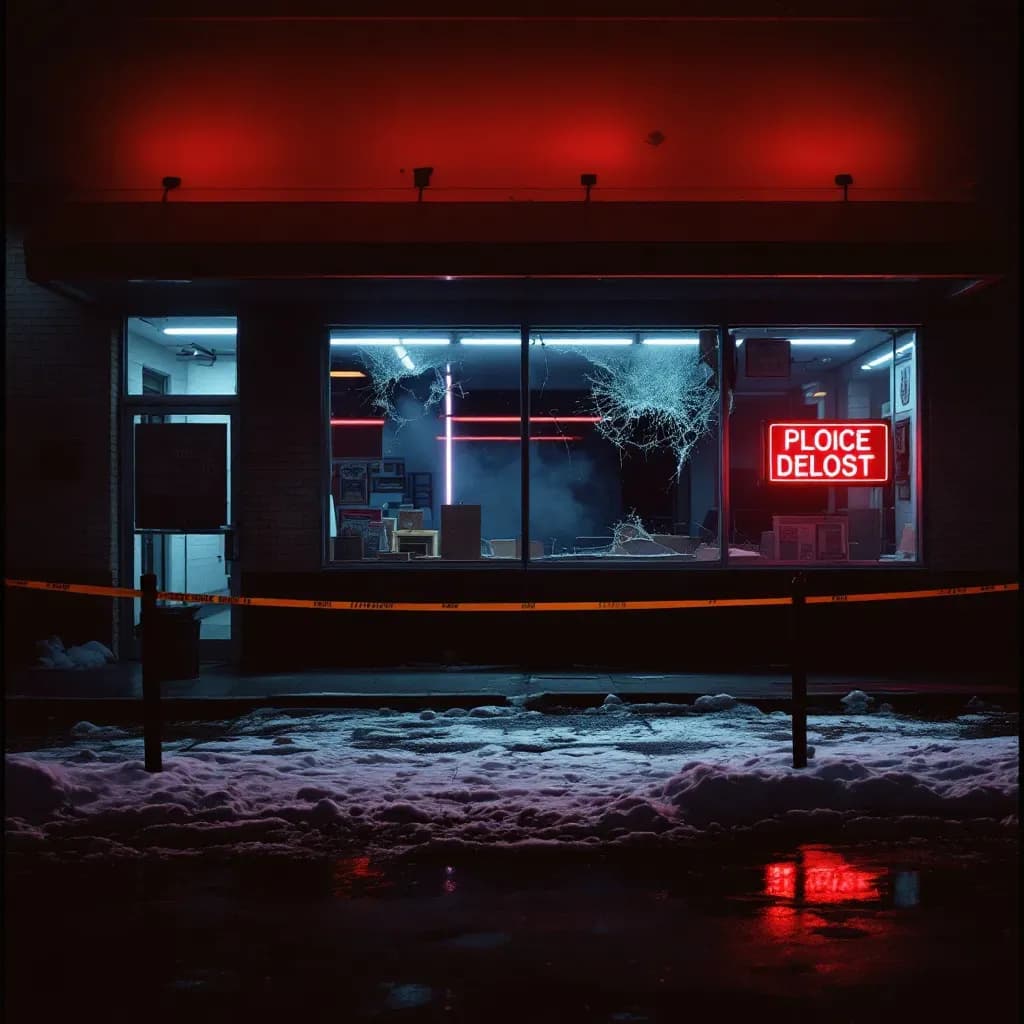
On the night of December 6, 1991, four teenage girls were inside the I Can't Believe It's Yogurt! shop on West Anderson Lane in Austin's South Lamar area as the store closed for the evening. A patrolman driving past noticed flames coming from the building and called the fire department. After firefighters extinguished the blaze, investigators discovered the bodies of the four girls inside. They had been stripped, gagged and shot in the head execution-style before the fire was set in what appeared to be an attempt to destroy evidence. Forensic examination later showed that at least one of the victims, 13-year-old Amy Ayers, had been raped, and biological evidence recovered from her body would ultimately become the key to solving the case, as detailed in A&E's account of how DNA solved the yogurt shop murders.
The Victims
The four victims were Jennifer Harbison, 17, and her younger sister Sarah Harbison, 15, along with Jennifer's friend Eliza Thomas, 17, and Sarah's friend Amy Ayers, 13. Jennifer and Eliza were both employees of the yogurt shop and were closing up that Friday night. Sarah and Amy had stopped by to wait for a ride home. The deaths of four young girls in a familiar suburban setting traumatized Austin and became, for a generation of Texans, the defining local crime story of the 1990s, as recounted in ABC News's coverage of the haunting yogurt shop killings.
Timeline
Four teenage girls killed in Austin, Texas
On December 6, 1991, Amy Ayers, Jennifer Harbison, Sarah Harbison and Eliza Thomas were shot and killed in the yogurt shop on West Anderson Lane. The shop was set on fire; police found the bodies via the fir
Suspect Robert Eugene Brashers commits suicide
In 1999, Robert Eugene Brashers died by suicide. His possible connection to the killing had not been identified at this point.
Four men arrested and charged
In 1999, Maurice Pierce, Michael Scott, Robert Springsteen and Forrest Welborn were arrested and charged in connection with the killing of the four girls.
Springsteen sentenced to death, Scott to life
Robert Springsteen was convicted of capital murder and sentenced to death by a Texas court. Michael Scott was likewise convicted and sentenced to life imprisonment.
Convictions overturned on appeal
Appeals courts overturned the convictions of both Springsteen and Scott, citing constitutional errors related to the confessions used as evidence.
DNA analysis points to Robert Eugene Brashers
In 2025, Austin police announced that DNA analysis had identified Brashers as the likely perpetrator. Since he is dead, no charges can be brought against him.
All four indicted men formally acquitted
On February 19, 2026, a judge formally declared Maurice Pierce, Michael Scott, Robert Springsteen and Forrest Welborn innocent and officially acquitted them.
Investigation
The investigation was troubled from the beginning. Within a week, police arrested 16-year-old Maurice Pierce after he was caught carrying a handgun, but his confession did not match key crime-scene facts and ballistics could not tie his weapon to the murders. Years later, police turned to a group of young men whose statements — obtained under heavy interrogation — led to the prosecutions of Michael Scott and Robert Springsteen. Both convictions were eventually overturned, and the Austin Police Department later acknowledged there had been no physical evidence linking them to the crime scene.
The true break came from advances in forensic DNA analysis. APD investigators developed a Y-STR profile from biological material recovered at the scene and uploaded it for comparison against other cases. The profile matched DNA from a 1990 sexual assault and murder in Greenville, South Carolina, a case that had already been attributed to serial offender Robert Eugene Brashers. Investigators also discovered that Brashers had been stopped by Border Patrol on December 8, 1991 — less than 48 hours after the Austin murders — while driving a stolen car from Georgia and carrying a .380 pistol. The serial number on that pistol matched the gun Brashers used to take his own life in Missouri in 1999.
Trial and Verdict
Because Brashers died by suicide in 1999, he was never tried for the yogurt shop murders. Michael Scott, who had received life without parole, and Robert Springsteen, who was also convicted in the earlier prosecutions, were freed years before the DNA identification, and as of early 2026 a Texas judge had formally declared the four wrongfully accused men innocent. The case has become a textbook example of how false confessions and tunnel vision can produce wrongful convictions even in extremely serious cases, a theme explored on the Wikipedia entry for The Yogurt Shop Murders.
Today
The identification of Brashers brought a measure of closure to the victims' families after 34 years and reframed the case as both a solved homicide and a major wrongful-conviction scandal. Documentaries and news specials, including extended video coverage of the breakthrough and follow-up reporting on the investigation, have revisited the failures of the original investigation alongside the forensic work that ultimately solved it. Investigators in other jurisdictions continue to review unsolved cases against Brashers's profile, and the Austin Yogurt Shop Murders are now cited as a milestone in the use of Y-STR DNA testing to resolve decades-old crimes.
Media coverage
TV series
- DNA Solves Austin Yogurt Shop Murders 34 Years Later(2026)
Podcasts
- DNA Breakthrough Solved the Yogurt Shop Murders After 33 Years(2026)
Ask about this case
Answers from KrimiNyt's coverage onlyFollow this case
Get an email when a new documentary, podcast or book about Austin Yogurt Shop Murders — 1991 Texas Quadruple Killing appears, or when a verdict is reached.