Velma Barfield: The Arsenic Mercy Killer
How a caregiver's addiction led to a deadly poisoning spree and America's first female execution by lethal injection
Published June 6, 2025
Classification:
Quick Facts
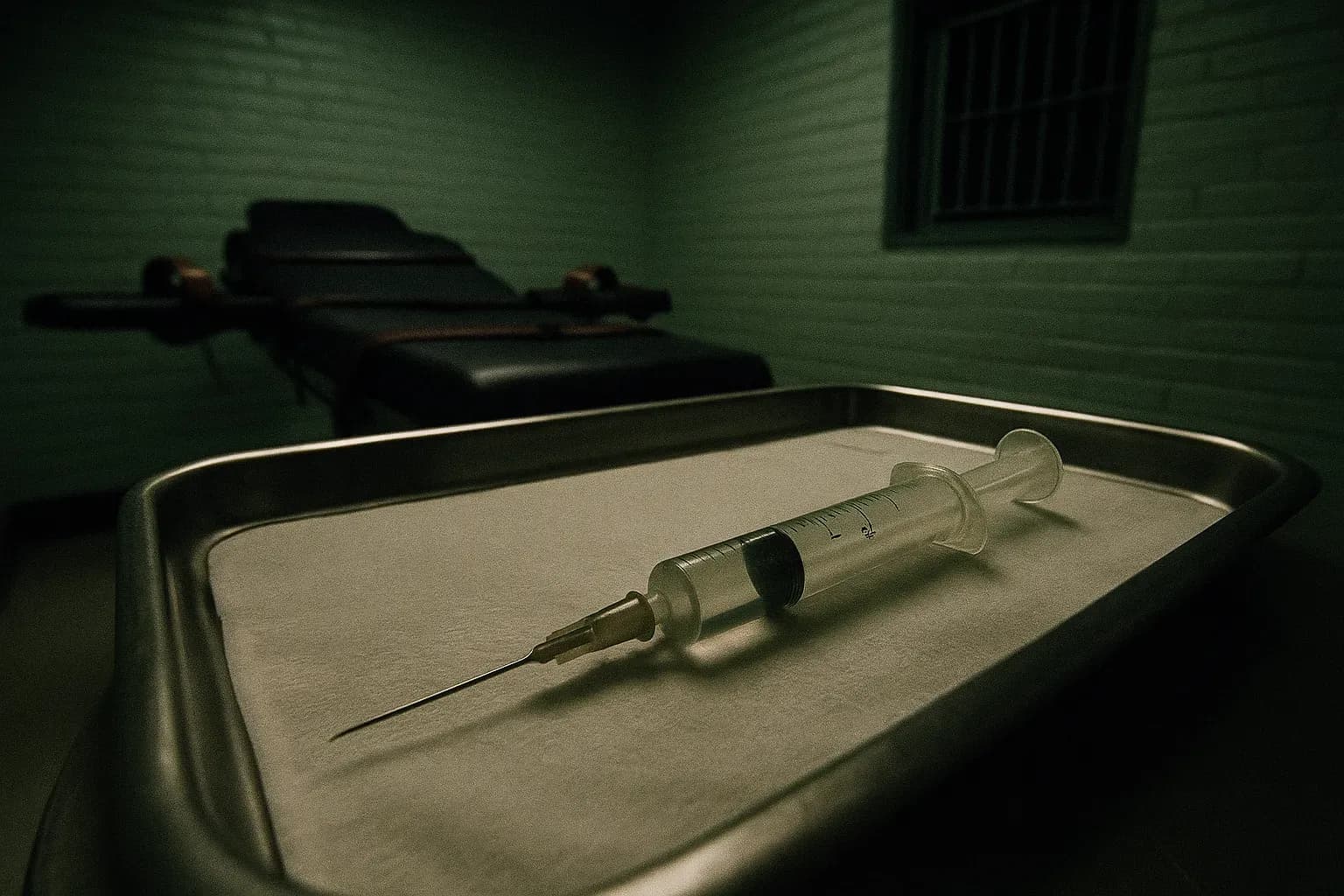
On November 2, 1984, Velma Barfield walked into the execution chamber at Central Prison in Raleigh, North Carolina. The 52-year-old former caregiver was about to become the first woman executed in the United States in over two decades—and the first to die by lethal injection.
Born Margie Velma Bullard on October 23, 1932, on a small tobacco and cotton farm in rural South Carolina, Barfield grew up in a strict Pentecostal Christian household as one of nine children. At 17, she dropped out of school and married Thomas Burke. The couple settled in Parkton, North Carolina, where they started a family that initially seemed stable.
That facade cracked in 1965 when Thomas suffered a serious car accident. Velma's behavior changed dramatically afterward. She began abusing prescription drugs, a dependency that would shape the rest of her life and lead to a string of poisonings.
Timeline
Stuart Taylor dies of arsenic poisoning
Velma Barfield's fiancé Stuart Taylor dies on February 3, 1978. A subsequent autopsy reveals arsenic in his body.
Barfield sentenced to death in North Carolina
On December 2, 1978, Margie Velma Barfield is found guilty of first-degree murder and sentenced to death by the North Carolina Superior Court.
Conviction upheld on appeal in 1979
Barfield's appeal of the conviction is rejected in 1979, and the death sentence is upheld by the North Carolina appellate court.
Velma Barfield executed – first ever by lethal injection
On November 2, 1984, Barfield is executed at Central Prison in Raleigh, NC. She is the first woman executed by lethal injection in the US and the first woman executed in the US since 1962.
The Caregiver's Arsenal
In 1975, Barfield served six months in prison for writing bad checks—a crime fueled by her drug addiction. After her release, she found work as an in-home caregiver for elderly patients, a position that gave her access to vulnerable people and, crucially, their medications.
In 1976, Barfield began caring for Montgomery and Dollie Edwards, an elderly couple in Lumberton. Montgomery, 94, died on January 29, 1977. Dollie, 84, followed two months later on March 1, 1977, after developing severe gastrointestinal symptoms. Barfield confessed to poisoning both with arsenic.
Later that year, she took another caregiving job for 76-year-old Record Lee, who had broken her leg. Record's husband, John Henry Lee, soon fell gravely ill with stomach pain, chest pain, vomiting, and diarrhea. He died on June 4, 1977. Barfield would later confess to his murder as well.
By this time, arsenic had become Barfield's weapon of choice. She also confessed to poisoning her own mother, Lillie Bullard, claiming she did so to cover up money she had stolen to feed her addiction.
The Arrest
The unraveling began with Stuart Taylor, Barfield's boyfriend. In 1978, Taylor fell ill and died from arsenic poisoning. An autopsy revealed the poison in his system, and Barfield's sister—alarmed by the pattern of deaths surrounding her—contacted police.
When questioned, Barfield confessed to poisoning Taylor. As detectives dug deeper, she admitted to the other murders as well. In total, she confessed to four confirmed arsenic poisonings, though authorities suspected her involvement in other deaths.
Two earlier deaths raised questions but yielded no convictions. Her first husband, Thomas Burke, died in a house fire in 1969; another fire destroyed the house months later. Authorities suspected Barfield's involvement, but she denied it and was never charged. Her second husband, Jennings Barfield, died suddenly of a heart attack after an argument with Velma, but no formal charges were brought.
The Execution
Barfield was convicted of murder and sentenced to death. On November 2, 1984, she was executed by lethal injection—a method that would become standard in American executions. Her case marked a turning point in capital punishment and sparked national debate about the death penalty, particularly as it applied to women.
Velma Barfield's story remains one of America's most chilling examples of how addiction, access, and opportunity can converge into tragedy. The woman once bound by Pentecostal faith had become a serial killer whose arsenic poisonings claimed at least four lives, possibly more.
Sources
https://en.wikipedia.org/wiki/Velma_Barfield
https://www.dncr.nc.gov/blog/2016/11/02/velma-barfield-serial-killer
https://www.ncpedia.org/barfield-margie-velma
https://exhibits.lib.unc.edu/exhibits/show/capital-punishment/biographies/barfield
https://www.alcatrazeast.com/crime-library/serial-killers/velma-barfield/
Ask about this case
Answers from KrimiNyt's coverage onlyFollow this case
Get an email when a new documentary, podcast or book about Velma Barfield: The Arsenic Mercy Killer appears, or when a verdict is reached.