The Tonka the Chimpanzee Case — Federal Court Fraud
Festus, Missouri, 2016–2025, solved
Published June 3, 2026
The Case
The Tonka the Chimpanzee case is a federal criminal prosecution arising from a Missouri woman's elaborate deception in an animal welfare lawsuit. Tonia Haddix, age 55 at sentencing, repeatedly lied to a federal court that Tonka—a chimpanzee actor who appeared in Hollywood films including George of the Jungle, Babe: Pig in the City, and Buddy—had died, when in fact she was keeping him concealed in a cage in her basement near Festus, Missouri.
The underlying dispute began in 2016 when People for the Ethical Treatment of Animals (PETA) filed a federal civil lawsuit over the care and conditions of chimpanzees at a facility operated by Haddix in connection with the Missouri Primate Foundation. Rather than comply with court orders to surrender Tonka to a sanctuary, Haddix fabricated an elaborate story about his death and maintained the falsehood for years, even filing false documents with the court. The deception unraveled when U.S. Marshals discovered Tonka alive during enforcement of a court order.
In March 2025, Haddix pleaded guilty to two counts of perjury and one count of obstruction of justice. U.S. District Judge Stephen R. Clark sentenced her to 46 months in federal prison, concluding one of the most unusual court fraud cases in recent federal criminal history.
Timeline
Civil animal custody case against Haddix begins
A civil case involving PETA as a party begins in 2016 concerning Tonka's placement and welfare under Tonia Haddix's custody.
Haddix makes false statements about Tonka's death under oath
In 2021, Haddix repeatedly states to the federal court that Tonka is dead and cremated. Tonka is in fact alive in the basement.
Haddix pleads guilty to perjury and obstruction of justice
On March 31, 2025, Tonia Haddix pleaded guilty to two counts of perjury and one count of obstruction of justice in federal court in St. Louis.
Sentence: 46 months in prison and 3 years supervised release
In August 2025, U.S. District Judge Stephen R. Clark sentenced Haddix to 46 months in prison, 3 years of supervised release, and payment of PETA's legal costs.
The Crime
The criminal conduct at the heart of this case was not violence against a person, but rather systematic deception of a federal court over several years. Haddix's facility near Festus, Missouri had become the subject of federal litigation when PETA filed suit in 2016 alleging violations of the Endangered Species Act in the care and housing of chimpanzees including Tonka.
As the civil case progressed and court orders were issued directing the transfer of the chimpanzees to appropriate sanctuaries, Haddix allegedly began planning to hide Tonka rather than surrender him. According to PETA's case summary, she repeatedly told the court that Tonka had died, making these false statements both orally in proceedings and in written filings submitted under penalty of perjury.
The deception required ongoing effort to maintain. Haddix had to conceal Tonka's presence at her property, continue to care for him in secret, and persist in the false narrative whenever questioned by the court or opposing counsel. PETA investigators reported evidence that Haddix had been administering large doses of drugs to Tonka during this period, raising additional animal welfare concerns beyond the court fraud itself.
The FBI investigation that followed would document the extent of Haddix's false statements and her deliberate obstruction of the court's orders. The charges ultimately filed—two counts of perjury and one count of obstruction of justice—reflected the most serious criminal aspects of her conduct in the federal civil proceeding.
The Victim
Tonka, born October 5, 1991, was not an ordinary chimpanzee but an animal actor with a notable Hollywood career. He appeared in several major motion pictures during the 1990s, including roles in George of the Jungle, Babe: Pig in the City, and Buddy. His work in the entertainment industry made him recognizable to audiences and later contributed to the significant media attention the case would receive.
Born at a facility called Working Wildlife, Tonka was transferred to Missouri in 2003, where he would spend the next two decades. As with many chimpanzees used in entertainment, questions arose about the appropriateness of his living conditions as he aged beyond his performing years. Chimpanzees are highly social, intelligent primates with complex emotional and physical needs that can be difficult to meet in private captivity.
By the time of the PETA lawsuit in 2016, Tonka was in his mid-twenties—still relatively young for a chimpanzee, which can live 50 years or more in proper care. The conditions at Haddix's facility became the subject of the litigation, with PETA arguing that the chimpanzees deserved transfer to accredited sanctuaries with appropriate facilities for their species.
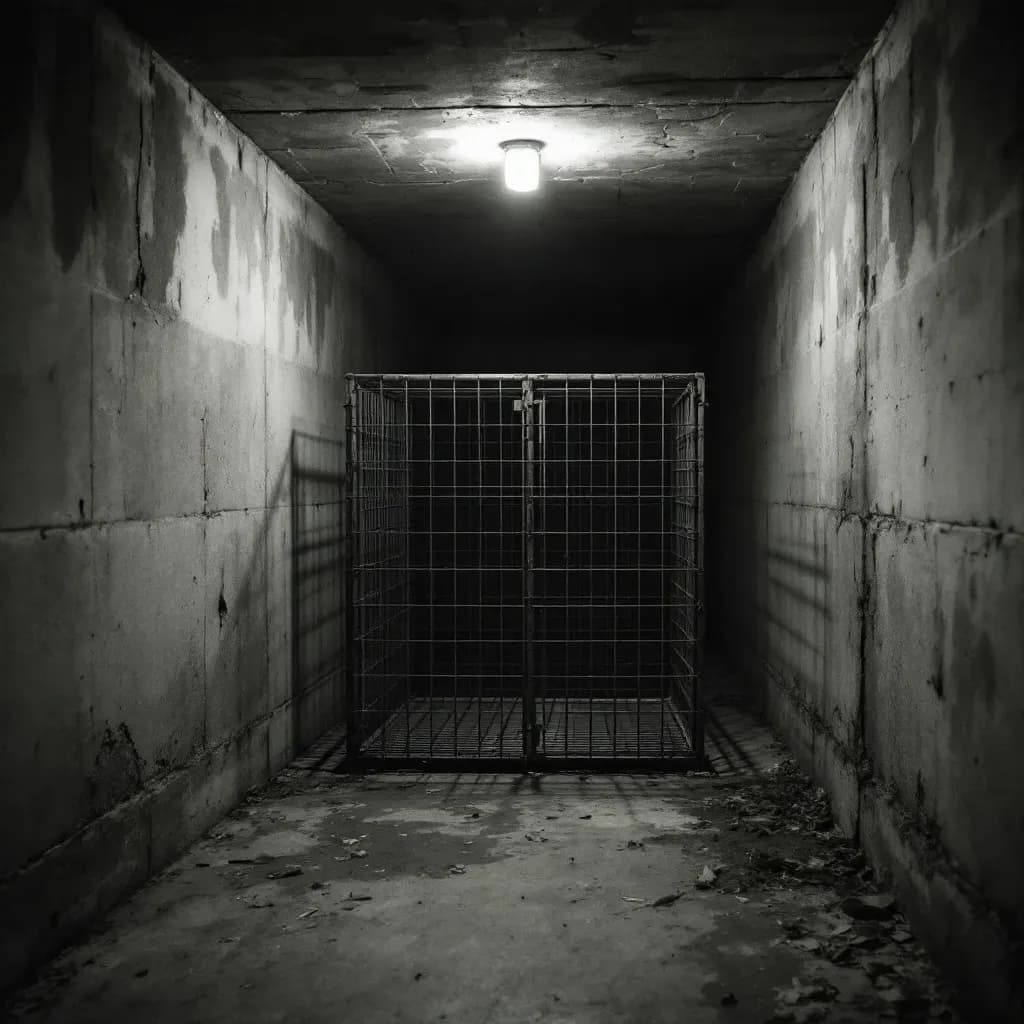
When U.S. Marshals finally discovered Tonka alive, he was found confined in a small cage in Haddix's basement—a far cry from the social environment and space that chimpanzees require for psychological and physical health. The discovery proved that Haddix's court testimony about his death had been entirely fabricated.
Investigation
The investigation into Haddix's conduct had two distinct phases: the civil animal welfare litigation led by PETA, and the subsequent criminal investigation conducted by the FBI into the court fraud itself.
The civil case began in 2016 when PETA filed suit in federal court alleging violations of the Endangered Species Act. During years of litigation, PETA's legal team gathered evidence about the conditions at Haddix's facility and pressed for court orders requiring transfer of the chimpanzees to appropriate sanctuaries. As Haddix began claiming that Tonka had died, PETA's attorneys expressed skepticism and continued to seek proof.
The breakthrough came when the U.S. Marshals Service was tasked with serving and enforcing a court order related to the civil case. During their service of the order at Haddix's property near Festus, Missouri, marshals conducted a search and discovered Tonka alive, hidden in a cage in the basement. This discovery immediately transformed the civil dispute into a potential criminal matter.
The FBI then opened a criminal investigation focusing on Haddix's false statements to the court. Federal investigators documented the timeline of her claims about Tonka's death, gathered her sworn testimony and written filings, and built a case for perjury and obstruction of justice charges. The investigation revealed that Haddix had maintained the deception over an extended period, making multiple false statements under oath.
The evidence was sufficiently strong that Haddix ultimately chose to plead guilty rather than proceed to trial, acknowledging her criminal conduct in lying to the federal court.
Trial and Verdict
Rather than face trial, Tonia Haddix entered a guilty plea on March 31, 2025, to two counts of perjury and one count of obstruction of justice. The plea agreement spared the court a trial but did not spare Haddix from significant prison time.
The sentencing hearing took place in the U.S. District Court for the Eastern District of Missouri before Judge Stephen R. Clark. The court considered the seriousness of lying under oath in federal proceedings—conduct that strikes at the heart of the judicial system's ability to function. Perjury and obstruction of justice are treated seriously by federal courts because they undermine the truth-seeking process essential to justice.
Judge Clark sentenced Haddix to 46 months in federal prison, a substantial sentence reflecting the deliberate and sustained nature of her deception. Unlike many state systems, federal prisoners typically must serve at least 85% of their sentences, meaning Haddix faces approximately three to four years of actual incarceration.
The sentence sends a clear message about the consequences of lying to federal courts, even in civil proceedings. While the underlying dispute involved animal welfare rather than traditional criminal matters, Haddix's decision to deceive the court rather than comply with its orders transformed the case into serious federal crimes carrying mandatory prison time.
Today
Tonka now lives at Save the Chimps sanctuary in Florida, where he has been integrated into a social group with other chimpanzees and has access to proper facilities designed for his species' needs. The sanctuary reports that he has adapted well to his new environment after years in inadequate captivity.
The case received extraordinary media attention through the Netflix documentary series *Chimp Crazy*, which chronicled Haddix's obsession with Tonka, her elaborate deception, and the efforts to locate and rescue him. The documentary brought the case to a global audience and sparked broader discussions about the ethics of keeping chimpanzees and other great apes in private captivity.
Tonia Haddix will serve her federal prison sentence and likely face supervised release following her incarceration. The facility she operated near Festus no longer houses chimpanzees, and the Missouri Primate Foundation matter that sparked the original lawsuit has been resolved through the courts.
The case stands as an unusual intersection of animal welfare law, federal court procedure, and criminal justice. It demonstrates that obstruction of justice and perjury charges can arise from any type of federal proceeding, and that courts have powerful tools to punish those who lie under oath, regardless of the underlying subject matter of the litigation.
For animal welfare advocates, the case represents both a victory in rescuing Tonka and a cautionary tale about the challenges of enforcing proper care standards for exotic animals in private hands. The criminal prosecution of Haddix may serve as a deterrent to others who might consider similar deceptions when faced with court orders they wish to avoid.
Media coverage
TV series
- Chimp Crazy(2026)
Ask about this case
Answers from KrimiNyt's coverage onlyFollow this case
Get an email when a new documentary, podcast or book about The Tonka the Chimpanzee Case — Federal Court Fraud appears, or when a verdict is reached.