The Solingen Arson Attack 1993: Racist Attack Killed Five
Racistisk brandattentat mod tyrkisk familie i Tyskland
Published May 7, 2026
Quick Facts
The Attack
On 29 May 1993, four German far-right extremists carried out one of the most brutal racist attacks in post-war German history. At around 11:45 p.m., a single-family home in the Unterbarmen district of Solingen was set alight. The house was the home of the Gürsese Genç family, who were of Turkish descent and had been living in Germany for several generations.
The fire spread rapidly through the building, and five people lost their lives in the flames: three children — Gözde, aged 9, Emre, aged 8, and Yeliz, aged 4 — their mother Gürsese Genç, 37, and their aunt Hatice Genç, 81. Fourteen other family members were critically injured. Emergency responders arrived within a short time but were unable to save those who perished.
Timeline
The Arson Attack
At around 11:45 pm, right-wing extremists set fire to a residential building in Solingen. Five members of the Genç family die in the flames.
Nationwide Protests
Over 100,000 people demonstrate in Solingen in solidarity with the victims' family and against racist violence.
Arrests
Four right-wing extremists are arrested in connection with the investigation. Markus Gartmann, Felix Köhler, Christian Buchholz and Günter Wald are placed in pre-trial detention.
Trial Begins
The trial against the four men begins at the high court in Düsseldorf. Due to public interest, extensive security measures are taken.
Conviction
The four perpetrators are convicted of murder and terrorist activity. Sentences range from 10 to 15 years in prison.
First Memorial Ceremony
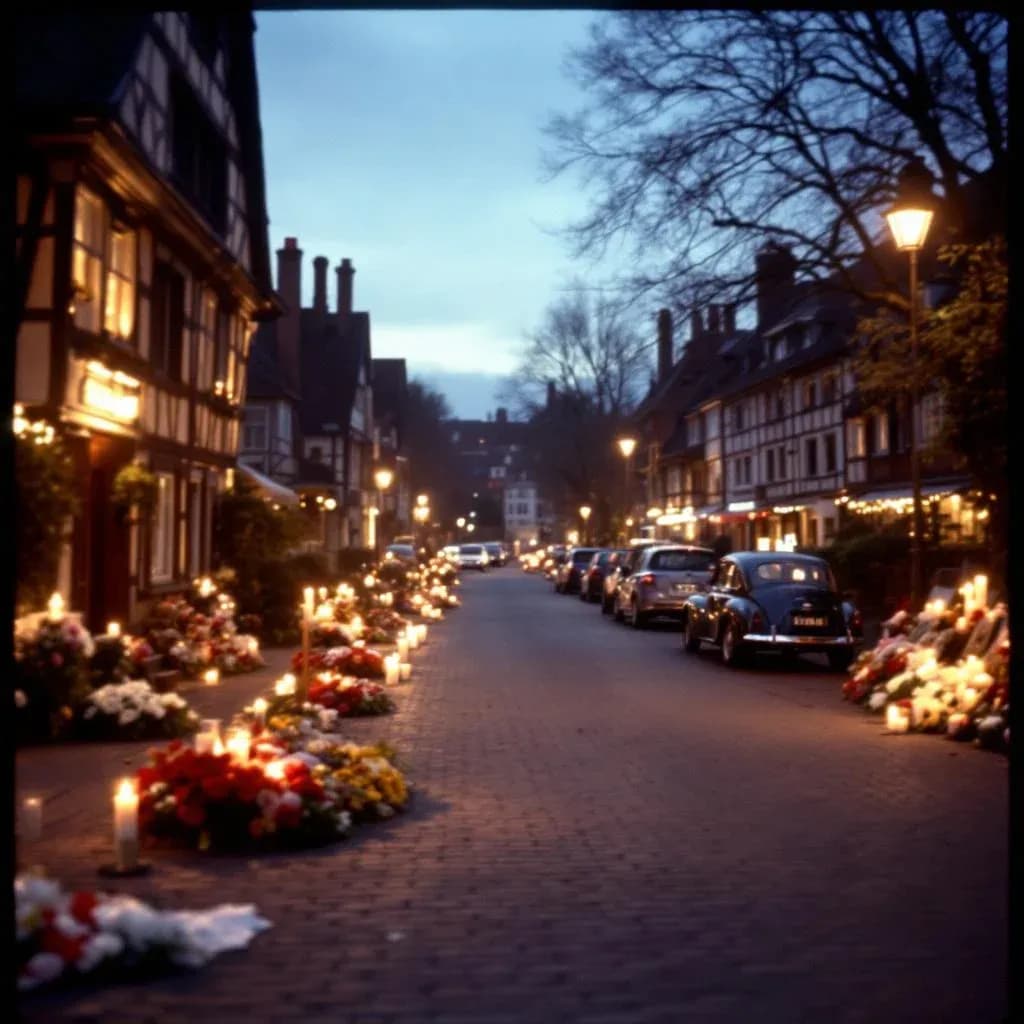
A permanent memorial is inaugurated at the crime scene. Thousands gather every year on May 29 for a memorial commemoration.
The Investigation
Police launched a massive investigation that quickly pointed toward a network of far-right extremists. The Turkish-Kurdish organisation KOMKAR and residents of Solingen responded with both grief and anger. Urgent questions arose: How had this been possible? Who had carried out the attack?
Criminal investigators from across North Rhine-Westphalia were mobilised. After an intensive investigation, four men were identified and arrested: Christian Reher, Felix Krueger, Markus Mehringer and Stefan Weiß. All four were members of various far-right extremist cells.
The four men either confessed or were convicted on the strength of the evidence against them. They had planned the attack as an expression of their racist ideology, which cast Turks and other immigrants as a threat to Germany. The motive was pure terrorism driven by hatred.
The trial was a significant event, followed closely by both the German and international press. Racist terror in Germany became the subject of national debate. In 1994–1995, the four men were sentenced:
- Christian Reher: 10 years' imprisonment for murder - Felix Krueger: 10 years' imprisonment for murder - Markus Mehringer: 12 years' imprisonment for murder - Stefan Weiß: 15 years' imprisonment as the ringleader
The sentences reflected each individual's role in planning and carrying out the attack.
Reactions and Political Consequences
The attack triggered massive protests and a national reckoning with far-right extremism in Germany. More than 100,000 people took part in peaceful marches in Solingen the day after the attack, with both German and immigrant communities united in grief and anger.
Chancellor Helmut Kohl visited Solingen and acknowledged the national shame. Debate over immigration, integration and far-right extremism in 1990s Germany moved to the centre of political life. The consequence was heightened scrutiny of neo-Nazi networks and tougher legislation against hate propaganda.
The case became symbolic of the dangers of political negligence in the face of racist violence. Many regarded Solingen as a turning point — a moment at which Germany was compelled to take a more open and uncompromising stand against extremism.
Legacy
Today, the Solingen arson attack is remembered as one of the darkest chapters in modern German history. A memorial was erected at the site, and the anniversary is marked every year. The Genç family became a symbol of innocent victims claimed by ideological terror.
Hatred of immigrants and terrorism in Europe became a growing field of research and public debate. Solingen lent its name to an important legal and political discussion about institutional accountability and the deep cultural work required to combat racist extremism.
The case also inspired European cooperation against far-right extremist networks, and has been documented in numerous films and books examining German post-war history and post-Cold War racism.
Ask about this case
Answers from KrimiNyt's coverage onlyFollow this case
Get an email when a new documentary, podcast or book about The Solingen Arson Attack 1993: Racist Attack Killed Five appears, or when a verdict is reached.