The Mostly Harmless Case — Identification of an Unknown Hiker
Big Cypress National Preserve, Florida, 2018 — Solved identification
Published June 5, 2026
Quick Facts
The Case
The Mostly Harmless case is not a conventional crime investigation, but rather the mysterious death and subsequent two-year identification effort surrounding a hiker found deceased in Big Cypress National Preserve in Florida on July 23, 2018. The deceased man, who carried no identification and went by trail names including "Mostly Harmless" and "Denim," was eventually identified in December 2020 as Vance John Rodriguez, a 42-year-old technology worker originally from Louisiana who had been living in Brooklyn, New York.
What made this case extraordinary was not the presence of foul play, but rather the complete absence of identity. The hiker's body was discovered in his tent with notebooks full of computer code, cash, and camping equipment, but nothing that could immediately reveal who he was. The case captured widespread attention online as amateur sleuths, hikers, and concerned citizens attempted to solve the mystery of the man who had walked hundreds of miles through the Appalachian Trail and into Florida, leaving barely a trace of his former life.
The Discovery
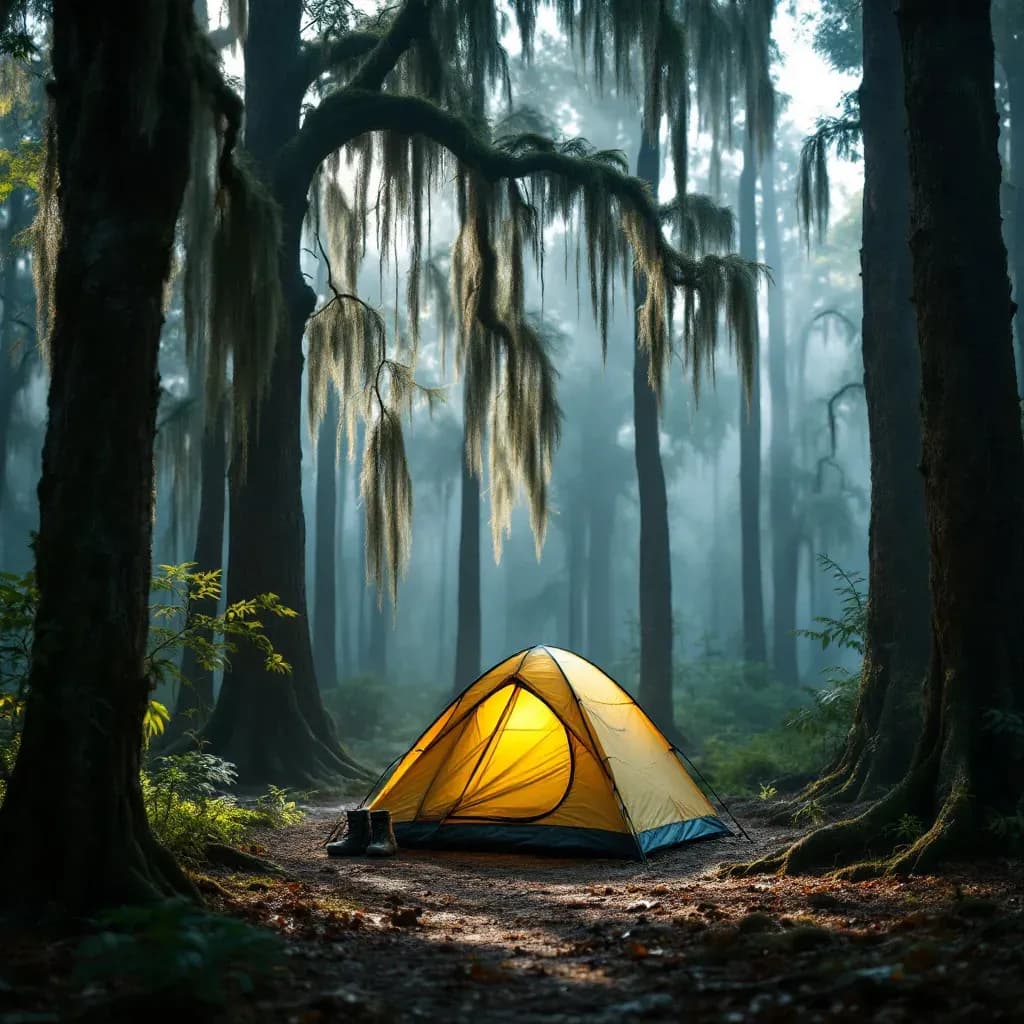
On July 23, 2018, authorities found the body of an adult male in a tent at Big Cypress National Preserve in Florida. The circumstances of death were not immediately clear, though there was no evidence of violence or foul play reported in publicly available sources. What was immediately apparent, however, was that identifying the deceased would prove extraordinarily difficult.
Timeline
Human remains found in Big Cypress
On July 23, 2018, authorities found unidentified human remains in Big Cypress National Preserve, Collier County, Florida. The identity was unknown at the time.
Former colleague provides crucial tip
In December 2020, a former colleague of Rodriguez contacted authorities with a tip that set the final identification process in motion.
Identification announced: Vance John Rodriguez
On January 12, 2021, the Collier County Sheriff's Office announced that the unidentified remains belonged to Vance John Rodriguez, identified through DNA and forensic genetic genealogy.
The man had been hiking for months, and fellow hikers remembered encountering him along the Appalachian Trail and other routes. He had introduced himself by various trail names, most commonly "Mostly Harmless" and "Denim." Some also knew him as "Ben Bilemy." These trail names, common among long-distance hikers who adopt pseudonyms for their journeys, would become the primary identifiers used in the investigation and subsequent media coverage.
Inside his tent, investigators found notebooks filled with what appeared to be computer code, as well as cash and camping gear. Despite these belongings, there was no wallet, no identification documents, and no obvious clues to his legal name or home address. His fingerprints did not match any records in law enforcement databases.
The Victim
Vance John Rodriguez was eventually identified as a technology worker who had worked in the tech industry before embarking on his final hiking journey. Originally from Louisiana, Rodriguez had been living in Brooklyn, New York, before he began his long-distance hike. At the time of his death and subsequent identification, he was described as being 42 years old.
Those who encountered Rodriguez on the trail remembered him as a solitary figure who kept largely to himself. He appeared knowledgeable about technology and coding, consistent with his professional background. However, he seemed to have deliberately severed ties with his former life, carrying no identification and using only trail names during his months-long journey.
Rodriguez's decision to hike without identification and under assumed names raised questions about whether he was intentionally trying to disappear or simply embracing the freedom and anonymity that long-distance hiking can provide. The notebooks full of computer code suggested he maintained some connection to his technical skills even while living a transient outdoor lifestyle.
Investigation
The investigation to identify the deceased hiker lasted more than two years and involved both traditional law enforcement methods and unprecedented crowdsourced detective work. Photos of the unidentified man were widely circulated online, shared across hiking forums, social media platforms, and missing persons networks. The case attracted particular attention within the long-distance hiking community, where members felt a connection to the mysterious figure who had walked among them.
Collier County Sheriff's Office led the official investigation, but the breakthrough came from an unexpected source. In December 2020, a former coworker of Rodriguez recognized photos that had been circulated online. This recognition provided investigators with the critical lead they needed—a potential name and geographic location to pursue.
With this information, investigators obtained DNA samples from Rodriguez's relatives in Lafayette Parish, Louisiana. The DNA comparison was conducted by Othram, a laboratory specializing in forensic genetic genealogy. Othram confirmed the match, definitively identifying the deceased hiker as Vance John Rodriguez.
On January 12, 2021, the Collier County Sheriff's Office publicly announced the identification, bringing closure to a mystery that had captivated thousands of people online and raising awareness about the challenges of identifying individuals who die without documentation.
Legal Status
Unlike typical true crime cases, the Mostly Harmless case involves no criminal charges, no trial, and no convicted offender. Publicly available sources do not indicate that Rodriguez's death was the result of a crime. No one has been arrested or charged in connection with his death, and there is no publicly identified suspect or perpetrator.
The case is classified as a death under unknown circumstances rather than a homicide investigation. While the exact cause and manner of death have not been extensively detailed in public sources, there is no indication in the available records that authorities treated this as a criminal matter requiring prosecution.
This distinguishes the Mostly Harmless case from conventional true crime narratives. Rather than focusing on identifying a perpetrator, the entire investigation centered on identifying the victim himself—a reverse mystery where the question was not "who did this?" but "who was this person?"
Media Coverage and Cultural Impact
The Mostly Harmless case generated significant media attention, particularly after the identification was announced. Wired magazine journalist Nicholas Thompson wrote an extensive feature on the case, exploring both the investigation and Rodriguez's life story. The case became a touchstone for discussions about identity, privacy, and the modern phenomenon of people who choose to disconnect from their former lives.
In 2024, the documentary film "They Called Him Mostly Harmless" was released on Max/HBO, providing an in-depth examination of the case. The documentary explored Rodriguez's background, the investigation that led to his identification, and the online community that formed around solving the mystery. CBS News Sunday Morning also featured coverage of the case, bringing it to a broader audience.
The case has become a notable example of how modern technology, particularly DNA analysis and social media, can solve identification mysteries that would have remained unsolved in previous eras. It also highlighted the power of crowdsourced investigation, as internet users shared information, compared photographs, and kept the case in public consciousness until the breakthrough occurred.
Today
The Mostly Harmless case is considered solved as an identification mystery. Vance John Rodriguez has been definitively identified through DNA comparison, and his family has been notified. However, many questions about Rodriguez's final months remain unanswered. Why did he choose to hike without identification? What led him to leave his life in Brooklyn? What were his plans, if any, for after his hiking journey?
These questions may never be fully answered, as they died with Rodriguez in his tent in Big Cypress National Preserve. The case serves as a reminder that even in an age of constant connectivity and digital surveillance, it is still possible for individuals to slip away from their documented lives, at least temporarily.
The case has had lasting impact on how law enforcement and the public approach unidentified persons cases. The successful identification of Rodriguez demonstrated the effectiveness of combining traditional investigative methods with modern genetic genealogy and crowdsourced information gathering. It has also raised awareness about the number of people who die each year without identification and the importance of efforts to give them back their names.
For the hiking community, the Mostly Harmless case remains a poignant reminder of both the freedom and the risks of long-distance hiking. Rodriguez's story has prompted discussions about the balance between the desire for solitude and anonymity on the trail and the practical necessity of carrying identification in case of emergency.
Media coverage
TV series
- They Called Him Mostly Harmless(2026)
Ask about this case
Answers from KrimiNyt's coverage onlyFollow this case
Get an email when a new documentary, podcast or book about The Mostly Harmless Case — Identification of an Unknown Hiker appears, or when a verdict is reached.