The Mario Biondo Case — Contested Death in Madrid
Madrid, Spain, 2013 — officially closed as suicide, disputed as possible homicide
Published June 9, 2026
Case Details
Quick Facts
Classification:
The Case
The Mario Biondo case is a contested death investigation from Madrid, Spain, that has remained unresolved in public debate for over a decade. Mario Biondo, an Italian television cameraman and husband of Spanish TV presenter Raquel Sánchez Silva, was found dead in his Madrid apartment on May 30, 2013. Spanish authorities rapidly concluded the death was suicide by hanging, closing the investigation within approximately two months. However, the case has since become the subject of intense scrutiny, with Biondo's family and Italian judicial authorities arguing the scene may have been staged to simulate suicide and that the evidence points toward homicide by an unknown perpetrator.
The case represents a rare international legal conflict, with Spanish and Italian authorities reaching diametrically opposite conclusions about the same death. While no offender has been officially convicted, and Spanish authorities maintain their suicide determination, an August 2022 resolution by Palermo Judge Nicola Aiello stated that the evidence suggests Biondo was "murdered by a hand that remains unknown." This judicial finding has formed the basis for a new complaint filed in Madrid, which remains pending admissibility review as of the latest reporting.
The Crime
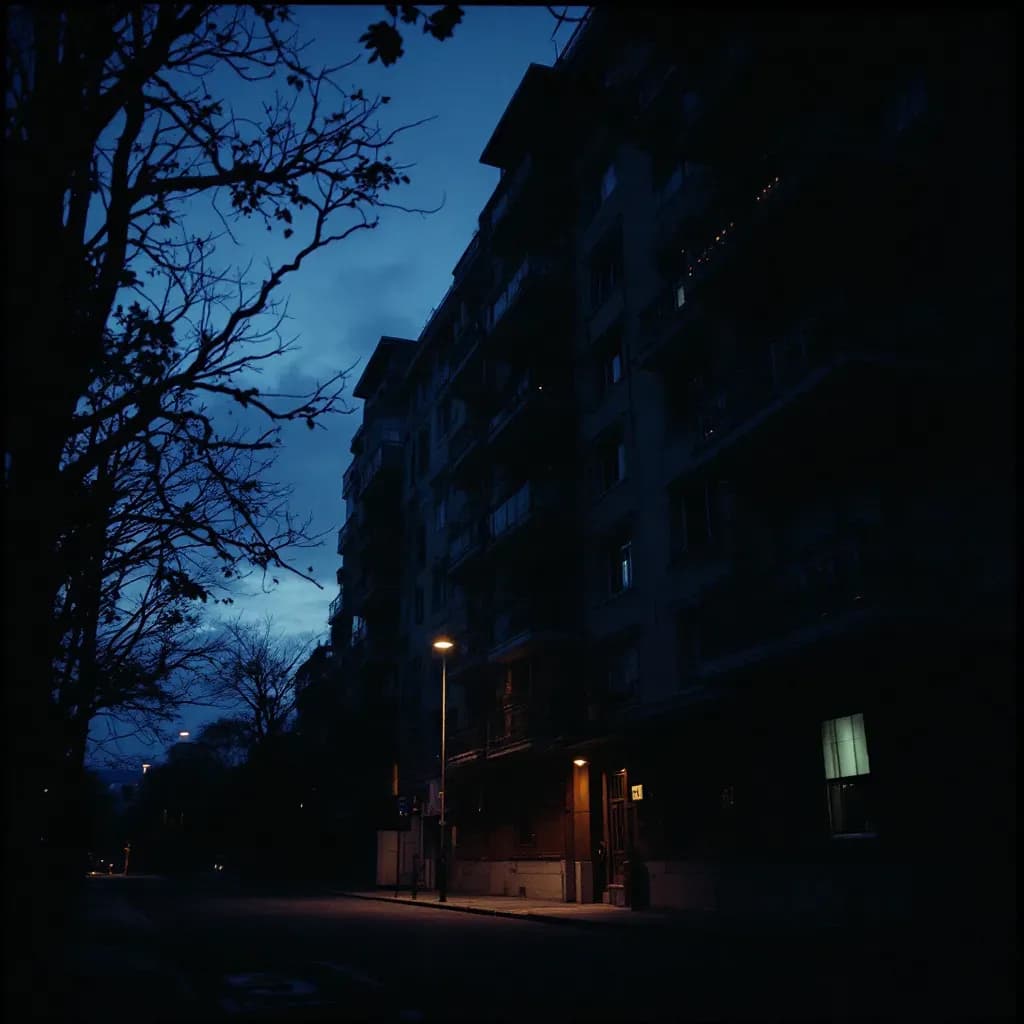
On May 30, 2013, Mario Biondo's body was discovered in the apartment he shared with his wife on Calle de La Magdalena in central Madrid. The scene presented to investigators was that of an apparent hanging, with Biondo's body positioned near a bookshelf with a pashmina or scarf around his neck. Spanish forensic investigators who initially examined the scene concluded that the death was consistent with suicide by hanging, and this determination led to the rapid closure of the case.
Timeline
Mario Biondo found dead
The body of Italian cameraman Mario Biondo is found in his apartment on Calle de La Magdalena in Madrid, Spain.
However, the physical evidence at the scene would later become the subject of fierce dispute. The Biondo family commissioned independent forensic experts who challenged nearly every aspect of the Spanish conclusion. These experts argued that the neck injuries were more compatible with strangulation by a cable than with the pashmina found at the scene. Additionally, forensic pathologists retained by the family suggested evidence of blunt-force trauma that could have resulted from a strike to the head, potentially from an ashtray found in the apartment.
The alternative theory presented by the family's legal team is that Biondo may have been rendered unconscious through a blow to the head, then strangled with a cable, and the scene subsequently staged to appear as a suicide by hanging with the pashmina. This theory would explain what family experts characterize as inconsistencies in the positioning of the body, the nature of the ligature marks on the neck, and other forensic details that they argue are incompatible with self-inflicted hanging.
The Victim
Mario Biondo was an Italian television cameraman who had built a career working on major productions in both Italy and Spain. His professional credits included work on popular reality television programs such as L'Isola dei Famosi (the Italian version of Survivor) and MasterChef, where he worked behind the camera on productions in both countries. His work in the television industry had brought him to Spain, where he met and married Raquel Sánchez Silva, a well-known Spanish television presenter.
At the time of his death, Biondo was living in Madrid with his wife. The couple's relationship and the circumstances of their marriage would later become part of the contested narrative surrounding his death, though no specific allegations have resulted in criminal charges. The lack of detailed biographical information about Biondo's age in public reporting has been noted by his family's legal representatives, though case materials confirm he was an adult professional at the time of his death.
Biondo's family in Italy has been the driving force behind the continued investigation into his death, refusing to accept the Spanish suicide determination and pursuing alternative legal avenues through Italian courts. Their decade-long campaign has included commissioning independent forensic reports, engaging legal representation in both countries, and maintaining media attention on the unresolved questions surrounding the case.
Investigation
The initial Spanish investigation was notably brief, concluding within approximately two months of Biondo's death with a determination of suicide. Spanish authorities found no evidence of forced entry to the apartment, no signs of struggle that would indicate a violent confrontation, and no immediate reason to suspect foul play. The positioning of the body and the presence of the ligature led investigators to conclude that Biondo had taken his own life.
However, this rapid closure would prove controversial. The Biondo family, dissatisfied with the Spanish investigation, initiated their own inquiries and retained independent forensic experts to review the available evidence. These experts identified what they characterized as numerous inconsistencies and overlooked details that should have prompted a more thorough homicide investigation. Among the concerns raised were questions about the mechanics of the hanging, the nature and pattern of injuries to Biondo's neck and body, and the absence of certain investigative steps that would be standard in a potential homicide case.
The case took a significant turn in August 2022 when Judge Nicola Aiello in Palermo, Italy, issued a judicial resolution after reviewing the evidence presented by the Biondo family's legal team. This resolution represented the first official judicial finding that contradicted the Spanish suicide determination, stating that the evidence suggested Biondo had been murdered by an unknown perpetrator. The Italian judicial finding did not identify a specific suspect or definitively prove homicide, but it provided legal grounds for the family to file a new complaint in Madrid seeking to reopen the Spanish investigation.
Trial and Verdict
There has been no criminal trial in the Mario Biondo case, as Spanish authorities closed the matter as a suicide without identifying or charging any suspect. The Spanish investigation did not result in an arrest or criminal prosecution, and the case was officially archived after the two-month investigation period. This means there has been no convicted offender, no criminal verdict, and no sentence imposed in connection with Biondo's death.
The absence of a trial has been a central frustration for the Biondo family, who argue that a proper criminal investigation was never conducted. Their legal efforts have focused on challenging the administrative closure of the case and seeking to have it reopened as a homicide investigation. The 2022 Palermo judicial resolution, while not constituting a criminal conviction, represents the most significant legal validation of the family's position that the death should be investigated as a potential murder.
The complaint filed in Madrid following the Italian judicial resolution is currently pending admissibility review, meaning Spanish authorities have not yet determined whether they will reopen the investigation based on the new legal arguments and forensic interpretations presented by the family's representatives. This procedural limbo means the case remains officially closed in Spain while simultaneously being contested through legal channels.
Today
More than a decade after Mario Biondo's death, the case remains unresolved in terms of public understanding and legal finality. While Spanish authorities maintain their original suicide determination and have not reopened the criminal investigation, the Italian judicial system's contradictory finding has created an unprecedented international legal standoff. The Biondo family continues to pursue justice through legal channels, with their Madrid complaint awaiting a decision on whether Spanish courts will admit it for consideration.
The case has received extensive media coverage in both Italy and Spain, with documentaries and investigative reports examining the conflicting evidence and competing theories about what happened in the Madrid apartment on May 30, 2013. The public attention has kept pressure on authorities and maintained awareness of the unresolved questions surrounding Biondo's death.
The fundamental questions remain unanswered: Was Mario Biondo's death truly a suicide, as Spanish authorities concluded, or was it a staged homicide, as Italian proceedings and the victim's family contend? If it was murder, who was responsible, and why has no suspect been identified? Without a reopened investigation or new evidence that definitively resolves these questions, the Mario Biondo case stands as a troubling example of how conflicting forensic interpretations and jurisdictional boundaries can leave a death permanently contested, with neither closure for the family nor accountability for a potential crime.
Media coverage
TV series
- Las últimas horas de Mario Biondo(2026)
Ask about this case
Answers from KrimiNyt's coverage onlyFollow this case
Get an email when a new documentary, podcast or book about The Mario Biondo Case — Contested Death in Madrid appears, or when a verdict is reached.