Las últimas horas de Mario Biondo
Netflix, 2023 — the disputed death of an Italian cameraman in Madrid
Quick facts
What is the series about?
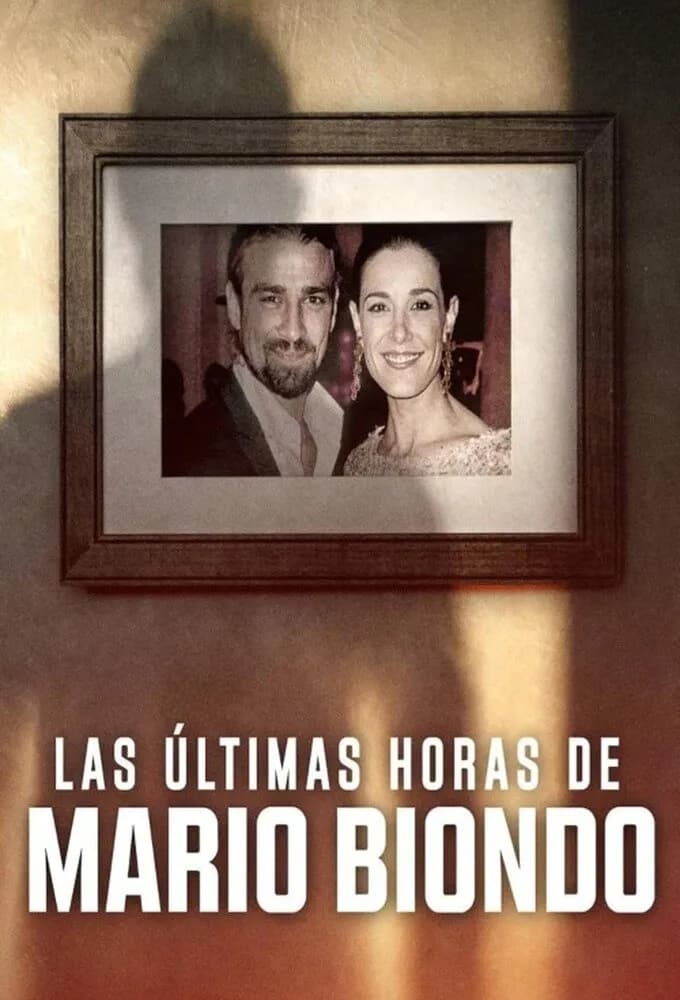
Las últimas horas de Mario Biondo is a three-episode Netflix documentary series about the disputed 2013 death of Italian cameraman Mario Biondo in Madrid. Directed by María Pulido and released on 3 August 2023, the series examines one of Spain's most contentious recent cases of suspicious death — a case that generated two exhumations, three autopsies, parallel Spanish and Italian judicial proceedings, and a decade of public argument about whether Biondo died by suicide or was murdered and the scene staged to conceal a homicide.
The series is built on more than 200 hours of footage, approximately 20 interviews, and research conducted between 2021 and 2023, according to reporting by El Mundo. It arrived on Netflix amid intense anticipation in Spain, partly because of the celebrity profile of Biondo's widow, television presenter Raquel Sánchez Silva, and quickly climbed to number one on the platform's Spanish charts.
The Case
On 30 May 2013, Mario Biondo — an Italian cameraman who had worked in television production and had married prominent Spanish TV presenter Raquel Sánchez Silva — was found dead in the couple's Madrid apartment. Spanish authorities investigated and concluded that Biondo had died by suicide. The case was closed without charges.
Biondo's Italian family rejected this conclusion from the outset. They argued that the physical evidence was inconsistent with suicide and that the scene may have been staged by unknown persons to simulate a self-inflicted death. Their refusal to accept the Spanish verdict set off a prolonged transnational legal battle. Italian judicial proceedings were opened, and over the following years the case accumulated a remarkable paper trail: multiple investigating judges and prosecutors, two separate exhumations of Biondo's body, and three autopsies — with forensic experts on different sides reaching contradictory findings about the cause of death.
Italian judicial reasoning, as cited in press coverage of the documentary, at one point referenced the possibility of homicide by "unknown authors" — but no individual was ever named as a suspect, charged, or convicted in either Spain or Italy. According to Screen Rant's detailed true-story breakdown, the Italian case was ultimately closed in 2022 with zero convictions, leaving the official record unresolved and the public debate very much alive.
The Netflix series also addresses the controversial "Emme Team," a private investigative group that became involved in the case and whose methods and conclusions are themselves disputed. According to Netflix's own synopsis, after Spanish justice closed its inquiry, Biondo's family continued to investigate independently — a thread the documentary follows closely.
Production
The series was directed by María Pulido, whose previous work includes other Spanish documentary productions. The production process was extensive by any measure: reporting on the series describes a research and filming phase lasting from 2021 to 2023, resulting in more than 200 hours of raw footage that was edited down to three episodes. Around 20 individuals were interviewed on camera, reportedly including people connected to the original investigation, forensic experts, and members of Biondo's family network.
The documentary's structure follows a broadly chronological arc — from the discovery of Biondo's body in 2013, through the Spanish judicial process, the family's decision to pursue action in Italy, the exhumations, and finally the Italian case's closure in 2022 — while interspersing expert testimony and contested forensic evidence throughout. According to AdoroCinema, the series also revisits the role of media coverage in shaping public perception of Raquel Sánchez Silva's culpability or innocence.
Reception
The series generated immediate and significant attention upon its Netflix release on 3 August 2023. In Spain and Latin America, entertainment outlets reported that it entered Netflix's Top 10 within days and reached the number-one position in some rankings, according to coverage by SensaCine.
Critical reception was more divided. A review in Libertad Digital acknowledged the documentary's power in revisiting unresolved contradictions between the Spanish and Italian court versions of the case, but noted that the series operates on contested terrain where no judicial authority has reached a definitive conclusion. Other critics and online commentators argued more forcefully that the documentary presents a one-sided narrative and omits documents or testimony that would complicate its apparent thesis — a charge that became a flashpoint in Spanish media discourse throughout August and September 2023.
An IMDb rating for the series had not been confirmed in available sources at the time of publication.
The Case Today
As of the documentary's release and subsequent reporting, the death of Mario Biondo remains officially unresolved. Spanish courts closed their inquiry years ago. Italian courts closed theirs in 2022. No perpetrator has been identified, charged, or convicted in any jurisdiction. The official position, such as it is, remains that no criminal homicide has been proven.
The documentary itself became a legal flashpoint almost immediately after its premiere. In September 2023, El Mundo reported that Mario Biondo's family — the same family that had spent a decade fighting for a homicide ruling — had filed legal action against Netflix and/or the production company, alleging that the documentary was deceptive and manipulative in its presentation of the facts. The lawsuit underscored the extraordinary complexity of the case: a family that sought truth through the courts for ten years, only to then dispute the version of events presented by the very documentary that took their side of the story as its starting point.
The case of Mario Biondo remains, a decade after his death, one of the most disputed and emotionally charged unresolved deaths in recent Spanish true-crime history — and Las últimas horas de Mario Biondo ensures that it will continue to be discussed, argued over, and scrutinized for years to come.