The John Mulligan Murder Case — Boston Detective Killing
Roslindale, Boston, 1993 — legally unresolved after Sean Ellis's convictions were vacated
Published June 2, 2026
Case Details
Quick Facts
Classification:
The Case
The John Mulligan murder case is one of the most contested police-killing investigations in modern Massachusetts history. On September 26, 1993, veteran Boston Police Detective John J. Mulligan was shot five times in the face while sitting in his vehicle on a paid security detail outside a Walgreens drugstore in Roslindale. Two young Black men from Dorchester — Sean K. Ellis and Terry Patterson — were arrested, prosecuted, and convicted, but both convictions later collapsed amid evidence of investigative misconduct and unreliable forensic science. Today, more than three decades after the killing, no one stands legally convicted of murdering Detective Mulligan.
The Crime
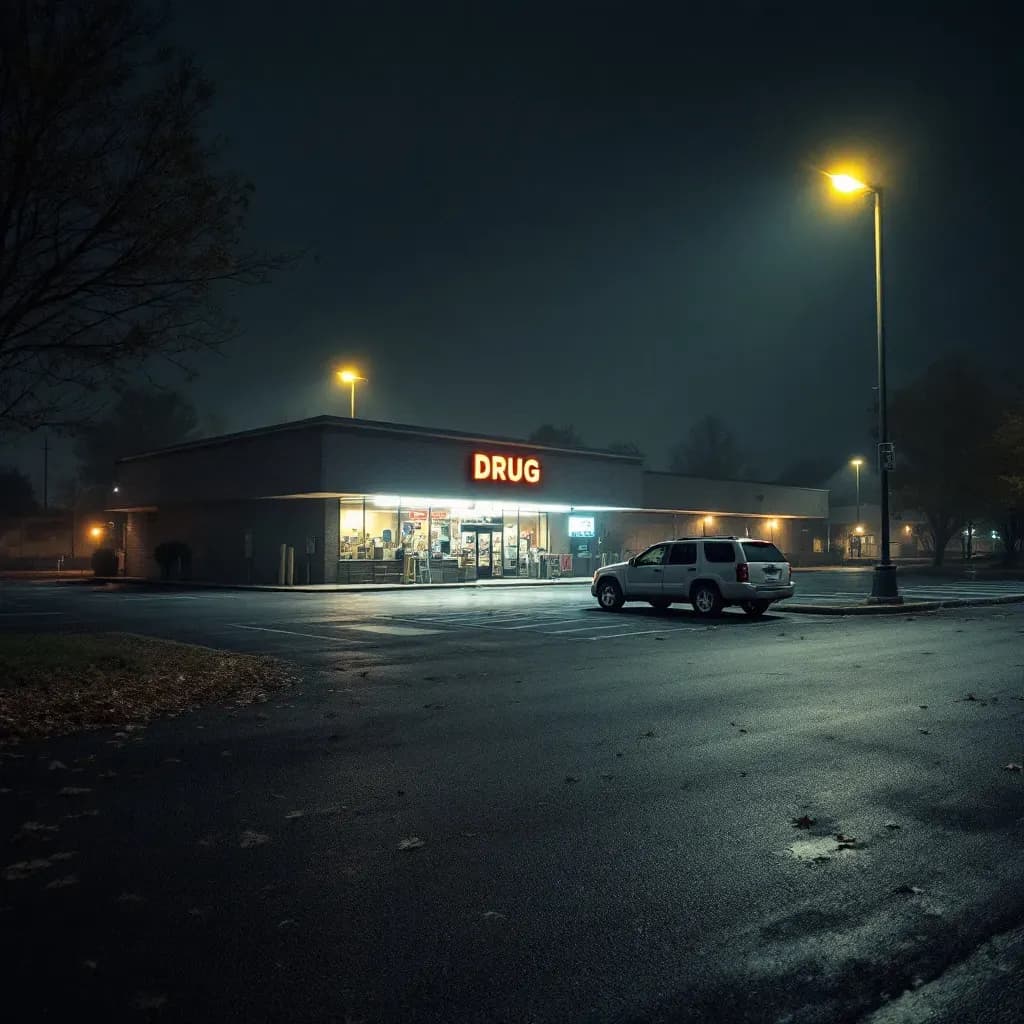
In the early hours of September 26, 1993, Detective Mulligan was working a private security detail in the parking lot of a Walgreens at 972 American Legion Highway in the Roslindale neighborhood of Boston. He was sitting in his Ford Explorer, reportedly asleep, when an assailant or assailants approached the driver's side window and shot him five times in the face — an attack described by multiple sources as execution-style.
A Walgreens employee returning from a break discovered Mulligan slumped in his SUV at approximately 3:49 a.m. Investigators concluded that the motive was the theft of Mulligan's service weapon, which was missing from the scene.
Timeline
Detective Mulligan shot and killed
Boston police detective John J. Mulligan was found shot five times in the face while sitting in his SUV outside a Walgreens at 972 American Legion Highway in Roslindale, during a paid security detail.
Ellis and Patterson arrested
Police arrested 19-year-old Sean Ellis and co-defendant Terry Patterson, alleging they killed Mulligan to steal his service weapon.
Patterson convicted
Terry Patterson was convicted in February 1995, with the prosecution relying heavily on latent fingerprint evidence taken from Mulligan's Ford Explorer.
Ellis convicted after three trials
After two trials ended without a verdict, Sean Ellis was convicted of murder and armed robbery in his third trial, along with two weapons possession charges.
Fingerprint method ruled unreliable
The Massachusetts Supreme Judicial Court ruled that the latent fingerprint method used against Patterson was constitutionally unreliable, undermining his conviction.
Patterson released
Patterson's convictions were overturned; he later pleaded to reduced charges and was released from prison.
Ellis' murder conviction vacated
A judge at Suffolk Superior Court vacated Sean Ellis' murder conviction, citing withheld evidence of corruption among the Boston police investigators on the case.
Charges against Ellis dropped
The Suffolk County District Attorney's office dropped the remaining murder and armed robbery charges against Ellis, ending the prosecution after 25 years.
Netflix releases 'Trial 4'
The eight-part Netflix documentary series 'Trial 4' brought international attention to the Mulligan case and the wrongful prosecution of Sean Ellis.
Weapons convictions overturned
Ellis' remaining weapons possession convictions were overturned, leaving the murder of detective Mulligan officially unsolved as to who killed him.
The Victim
John James Mulligan was a 52-year-old detective with the Boston Police Department who had served the city for 27 years. According to his memorial on the Officer Down Memorial Page, he was on a secondary employment detail — a common arrangement in which Boston officers earned extra income guarding businesses during off-duty hours — when he was killed. He left behind family and colleagues in a department that would be shaken not only by his death but by the corruption allegations that later emerged from the investigation into it.
Investigation
Police moved quickly. On October 6, 1993, just ten days after the killing, Boston detectives arrested 19-year-old Sean Ellis and his acquaintance Terry Patterson. Prosecutors alleged the two had spotted Mulligan asleep in his vehicle and decided to ambush him to steal his firearm.
The case against Patterson rested largely on latent fingerprint evidence said to have been recovered from the driver's door of Mulligan's Ford Explorer. The case against Ellis was built on witness testimony placing him near the Walgreens that night, together with the alleged recovery of a firearm linked to the killing.
What the defense did not learn until years later was that several of the Boston Police detectives who built the case against Ellis were themselves under federal investigation for serious corruption — including theft, evidence tampering, and ties to drug dealers. Defense lawyers have argued that Commissioners William Bratton and Paul Evans were aware of mitigating information about the investigators' misconduct that was never disclosed to Ellis's defense at trial.
Trial and Verdict
Sean Ellis was tried three times. The first two trials ended in hung juries; in his third trial in 1995, he was convicted of first-degree murder, armed robbery, and two counts of unlawful possession of a firearm, and sentenced to life in prison without the possibility of parole.
Terry Patterson was convicted in February 1995 in a separate trial. His case began to unravel when the Massachusetts Supreme Judicial Court ruled in 2005 that the latent fingerprint identification method used against him was not sufficiently reliable to be admitted as evidence. Patterson's convictions were overturned, and he was eventually freed in 2006 after pleading guilty to reduced charges in exchange for time already served.
Ellis's path took longer. In 2015, a Superior Court judge vacated his murder conviction, citing the prosecution's failure to disclose exculpatory information about the corrupt detectives who had built the case. In December 2018, after 25 years, the Suffolk County District Attorney's Office dismissed the murder and armed robbery charges entirely. His remaining weapons convictions were vacated in 2021.
Today
The killing of Detective John J. Mulligan remains, in the strictest legal sense, unsolved. No one currently stands convicted of his murder, and the Suffolk County District Attorney's Office has not announced any new suspects. For the Mulligan family and for many in the Boston Police Department, that outcome is a continuing source of pain.
For Sean Ellis, the case became a symbol of wrongful prosecution. His story was the subject of the 2020 Netflix documentary series Trial 4, which examined the corruption allegations against the original investigators and the long fight to overturn his convictions. The case continues to be cited in debates over police accountability, prosecutorial disclosure obligations, and the reliability of fingerprint identification in Massachusetts courts.
Media coverage
TV series
- Trial 4(2026)
Ask about this case
Answers from KrimiNyt's coverage onlyFollow this case
Get an email when a new documentary, podcast or book about The John Mulligan Murder Case — Boston Detective Killing appears, or when a verdict is reached.