Trial 4
Netflix, 2020 — Sean Ellis, wrongful conviction, and Boston police corruption
Quick facts
What Is the Series About?
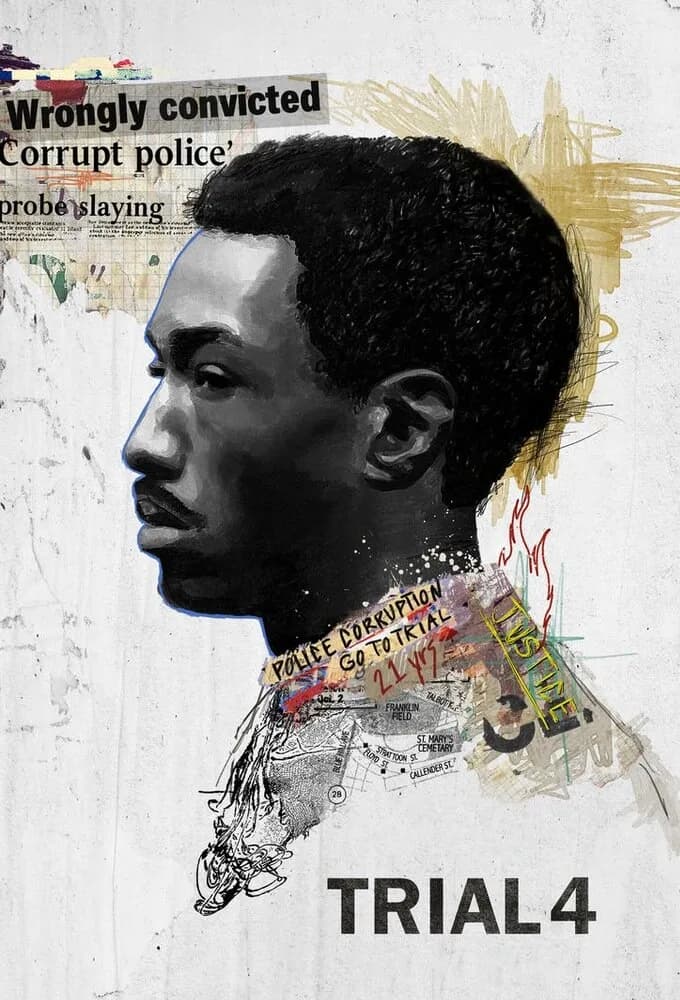
*Trial 4* is a Netflix limited documentary series that chronicles one of Boston's most contested wrongful conviction cases: the prosecution of Sean K. Ellis for the 1993 murder of Boston Police detective John J. Mulligan. Directed by Rémy Burkel and released on November 11, 2020, the eight-episode series traces the full arc of the case — from the original homicide investigation through three trials, a life sentence, 22 years behind bars, and, ultimately, Ellis's freedom. It is a story about one man's fight for exoneration, but it is equally a portrait of institutional failure: corrupt policing, systemic racism, coerced evidence, and a criminal justice system that took more than two decades to correct its course.
The Case
On a night in 1993, Boston Police detective John J. Mulligan was shot and killed outside a Walgreens pharmacy in the Roslindale neighborhood of Boston, Massachusetts. Mulligan was a veteran officer, and his murder sent shockwaves through the Boston Police Department. Investigators moved quickly, and their attention fell on Sean K. Ellis, a 19-year-old from the area, who was charged with first-degree murder, armed robbery, and unlawful possession of a firearm.
What followed was one of the most prolonged and disputed prosecutions in Massachusetts history. Ellis faced not one, not two, but three separate trials. The first two ended in hung juries — juries unable to agree on a verdict — suggesting that the evidence against him was far from overwhelming. The third trial, in 1995, produced a conviction, and Ellis was sentenced to life in prison.
For the next two decades, Ellis maintained his innocence. His legal team, led by attorney Rosemary Scapicchio, steadily built a case that the original investigation had been tainted by police misconduct, witness coercion, and the concealment of exculpatory evidence. Crucially, allegations emerged that some of the officers involved in the case — including detectives who had worked the Mulligan homicide — were themselves implicated in serious corruption, including ties to drug trafficking. The argument was stark: the investigators who put Ellis away could not be trusted.
After years of appeals, the Massachusetts Supreme Judicial Court ordered a fourth trial. Ellis had already been released from prison in 2015 after serving 22 years. Before the fourth trial could begin, prosecutors moved to dismiss all charges. Sean K. Ellis walked free, and by 2018 he was widely described as exonerated.
Production
Director Rémy Burkel constructed Trial 4 from an extensive archive of materials: court records, legal documents, archival video footage, and on-camera interviews with Ellis, his legal team, family members, journalists, and others connected to the case. The result is a methodical, episode-by-episode reconstruction of the legal saga, from the original crime scene to the courtroom battles that stretched across more than two decades.
Boston.com reported that Ellis himself agreed to participate in the documentary, speaking at length about his experience in the justice system and his years in prison. His willingness to put his story on record — in his own words — gives the series much of its emotional weight. Burkel's approach is deliberate and evidence-led, allowing the accumulated documentation of misconduct and institutional failure to build its own case for the viewer.
The series runs to eight episodes, a length that allows Burkel to examine not just the facts of the Mulligan murder but the broader ecosystem of corruption within the Boston Police Department that Ellis's defense team argued had contaminated the entire investigation.
Reception
Critical reception to Trial 4 was broadly positive, with reviewers consistently praising its thorough treatment of a complex legal history and its unflinching examination of institutional racism and police corruption. *Decider* recommended the series as a compelling true-crime docuseries, describing Ellis's path as a "corruption-filled road to exoneration." CNN framed it as yet another documentary exposing police misconduct and systemic injustice in the American legal system. The Hindu called it "a case study in systemic corruption," while The Independent highlighted it as a powerful wrongful-conviction narrative centered on the real-life ordeal of Sean K. Ellis.
Some reviewers noted that the documentary's eight-episode structure occasionally allowed the pacing to slow, but the consensus was that the breadth of the story — spanning more than 25 years of legal proceedings — justified the runtime. The series arrives on IMDb as tt13363298, catalogued as a TV mini series from 2020. An official IMDb rating was not available in verified sources at the time of publication.
Audience reaction, particularly among viewers already familiar with wrongful conviction documentaries, focused heavily on the role of Boston Police corruption in Ellis's case and on the broader implications for how detective misconduct can determine the outcome of a murder trial before a jury ever hears the evidence.
The Case Today
Sean K. Ellis is free. The charges against him were dismissed before the fourth trial could be held, and he has been publicly vocal about his experience in the years since his release — including his participation in Trial 4 itself. His case has become a reference point in discussions about wrongful convictions, police corruption, and the disproportionate impact of systemic racism on young Black men in the American criminal justice system.
The murder of Detective John J. Mulligan technically remains an open case in the sense that no individual has been definitively convicted and sentenced for the homicide following Ellis's exoneration. Whether the Boston Police Department or prosecutors have pursued alternative leads since the dismissal of charges against Ellis is not clearly established in available reporting.
For those looking to understand how a teenager could spend 22 years in prison for a crime the justice system ultimately declined to prosecute further, Trial 4 remains one of the most detailed and accessible accounts available — a documentary that is less interested in courtroom drama than in the slow, painstaking work of dismantling a wrongful conviction brick by brick.