The DeFeo Family Murders — Amityville mass killing of 1974
Amityville, New York, November 1974 — solved family mass murder behind The Amityville Horror
Published June 2, 2026
Case Details
Quick Facts
Classification:
The Case
The DeFeo family murders are an American mass killing that took place on the night of November 13, 1974, at 112 Ocean Avenue in Amityville, a quiet waterfront village on the south shore of Long Island, New York. In a single burst of violence, 23-year-old Ronald Joseph DeFeo Jr. — known to friends and family as "Butch" — shot dead his parents and his four younger siblings as they slept. The case was solved within roughly 24 hours by Suffolk County police, who secured a confession after DeFeo's initial story about a mafia hitman fell apart under questioning.
While the crime itself was quickly resolved in court, it became permanently fused in public memory with the fictionalized paranormal claims later made about the house by the Lutz family, giving rise to The Amityville Horror franchise. The underlying true crime, however, is a domestic mass murder — six members of a single family executed in their beds.
The Crime
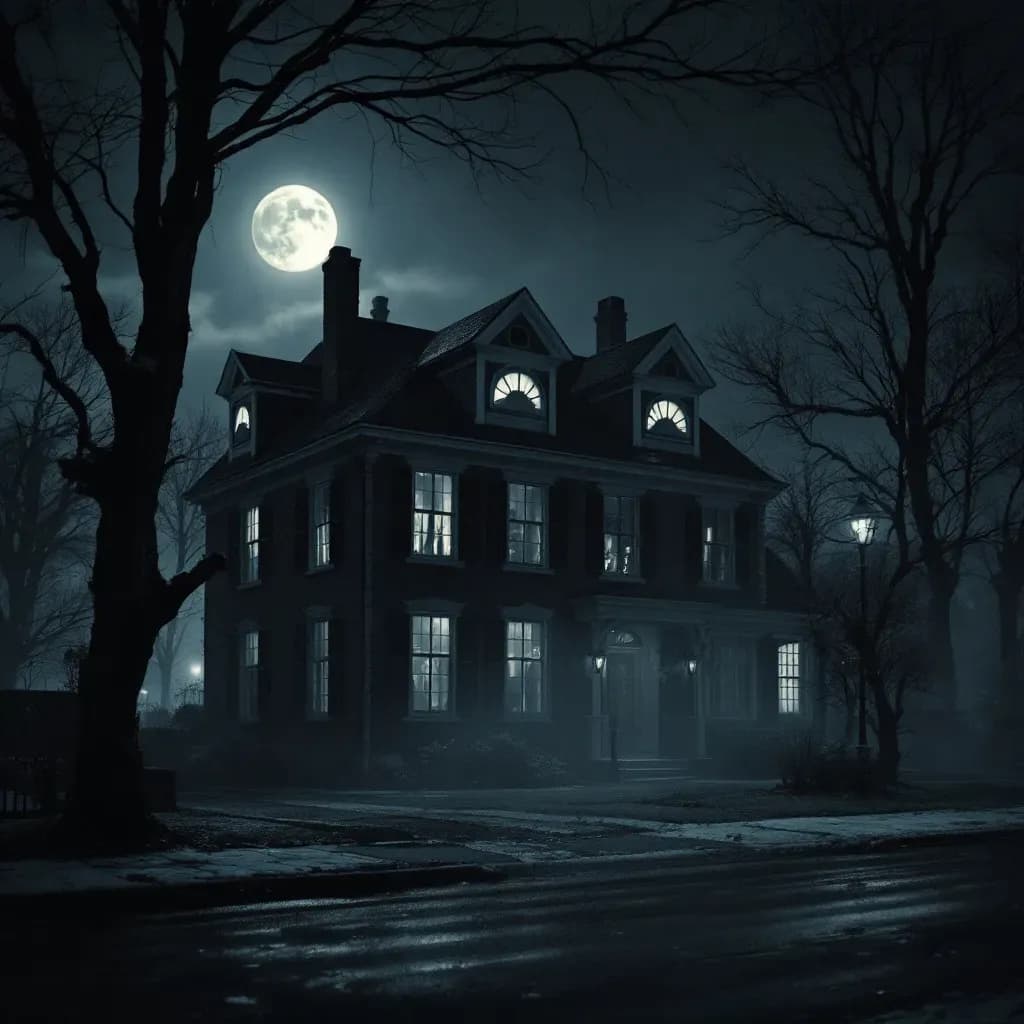
According to investigators, the killings took place in the early hours of November 13, 1974, inside the three-story Dutch Colonial home the DeFeos called "High Hopes." Ronald DeFeo Jr. used a .35-caliber Marlin lever-action rifle to shoot each member of his family as they lay in bed. The parents were each shot twice; the four children were each shot once.
Timeline
Six DeFeo family members shot dead
Ronald DeFeo Jr. shoots his parents and four siblings while they sleep in their beds at 112 Ocean Avenue in Amityville, using a .35-caliber Marlin lever-action rifle.
DeFeo raises alarm at local bar
Later the same day, DeFeo runs into Henry's Bar in Amityville claiming his family has been shot. Police accompany him to the house and find the six bodies.
Confession after mob-hit story collapses
After first telling investigators that a mob hitman had murdered his family, DeFeo confesses to the killings during questioning the following day.
Murder trial begins
DeFeo's trial opens in Suffolk County Court, where his defense argues insanity while prosecutors present his confession and the recovered rifle.
Jury convicts DeFeo of six murders
The jury finds Ronald DeFeo Jr. guilty on six counts of second-degree murder for the killings of his parents and four siblings.
Sentenced to six terms of 25 years to life
Judge Thomas Stark sentences DeFeo to six concurrent terms of 25 years to life in state prison.
The Amityville Horror published
Jay Anson's book about the Lutz family's brief stay in the DeFeo house makes 112 Ocean Avenue one of the most notorious addresses in American true crime.
Ronald DeFeo Jr. dies in prison
DeFeo dies at age 69 while still serving his sentence in New York State, never having been released on parole.
What puzzled investigators from the outset was that none of the victims appeared to have woken up or tried to flee. There were no signs of a struggle, no evidence that the neighbors heard the unsuppressed rifle fire, and the bodies were found face down in their beds. Those details have fueled decades of speculation about sedation, timing, and whether DeFeo acted entirely alone, but no alternative scenario has ever been substantiated in court.
Later that evening, DeFeo burst into Henry's Bar in Amityville, claiming that he had come home to find his family shot. A group of locals accompanied him back to the house, where they discovered the bodies and called police.
The Victims
Six members of the DeFeo family were killed:
- Ronald Joseph DeFeo Sr., 43, a service manager at a Brooklyn Buick dealership owned by his father-in-law.
- Louise DeFeo, 42, his wife and the mother of the household.
- Dawn DeFeo, 18, the eldest daughter.
- Allison DeFeo, 13.
- Mark DeFeo, 12.
- John Matthew DeFeo, 7, the youngest child.
The family was middle-class and well-known in the local Italian-American community. Friends and relatives described the household as outwardly comfortable, though later reporting pointed to long-running tension between Ronald Sr. and his eldest son.
Investigation
Suffolk County detectives interviewed DeFeo at police headquarters within hours of the bodies being discovered. He initially told them that a mob hitman named Louis Falini had carried out the murders as part of a feud. Detectives quickly found inconsistencies in his account and confirmed that Falini had a verifiable alibi.
As A&E later reported, DeFeo confessed the following day, reportedly telling investigators, "Once I started, I just couldn't stop. It went so fast." Police recovered the Marlin rifle and bloodstained clothing he had discarded, evidence that became central to the prosecution's case. A Biography.com retrospective on the house notes that investigators were never able to settle on a definitive motive, though family conflict, a possible insurance payout, and DeFeo's heavy drug use were all discussed.
Trial and Verdict
DeFeo's trial opened in Suffolk County Court in October 1975. His defense attorney, William Weber, argued that DeFeo was legally insane at the time of the killings and claimed he had heard voices commanding him to kill. Prosecutors countered with psychiatric testimony that DeFeo had an antisocial personality disorder but understood the nature of his actions, and they relied heavily on his confession and the physical evidence.
On November 21, 1975, the jury convicted DeFeo of six counts of second-degree murder. On December 4, 1975, Judge Thomas Stark sentenced him to six terms of 25 years to life in state prison. DeFeo would later attempt to recant and revise his account multiple times over the following decades, at various points blaming his sister Dawn or unnamed accomplices, but he was repeatedly denied parole.
Today
Ronald DeFeo Jr. died in March 2021 while still in the custody of the New York State Department of Corrections, having spent more than 45 years in prison. The case is officially closed and classified as solved, even though the precise motive has never been firmly established.
The house at 112 Ocean Avenue was sold roughly a year after the murders to George and Kathy Lutz, whose claims of paranormal activity formed the basis of Jay Anson's 1977 bestseller and the subsequent film franchise. As an Investigation Discovery documentary and the Morbid podcast's deep dive into the killings have emphasized, the supernatural mythology has often overshadowed the underlying reality: a family mass murder committed by one of its own. The address has since been changed and the house's distinctive quarter-moon windows altered to discourage tourists, but the DeFeo case remains one of the most heavily covered domestic mass killings in American true-crime history.
Media coverage
TV series
- Amityville Horror House(2026)
Ask about this case
Answers from KrimiNyt's coverage onlyFollow this case
Get an email when a new documentary, podcast or book about The DeFeo Family Murders — Amityville mass killing of 1974 appears, or when a verdict is reached.