The £26.5 Million Northern Bank Heist: Crime or IRA Operation?
Twenty years after one of the UK's largest bank robberies, questions remain about who orchestrated the Belfast theft and why no one has faced justice
Published June 6, 2025
Case Details
Quick Facts
Classification:
Quick facts
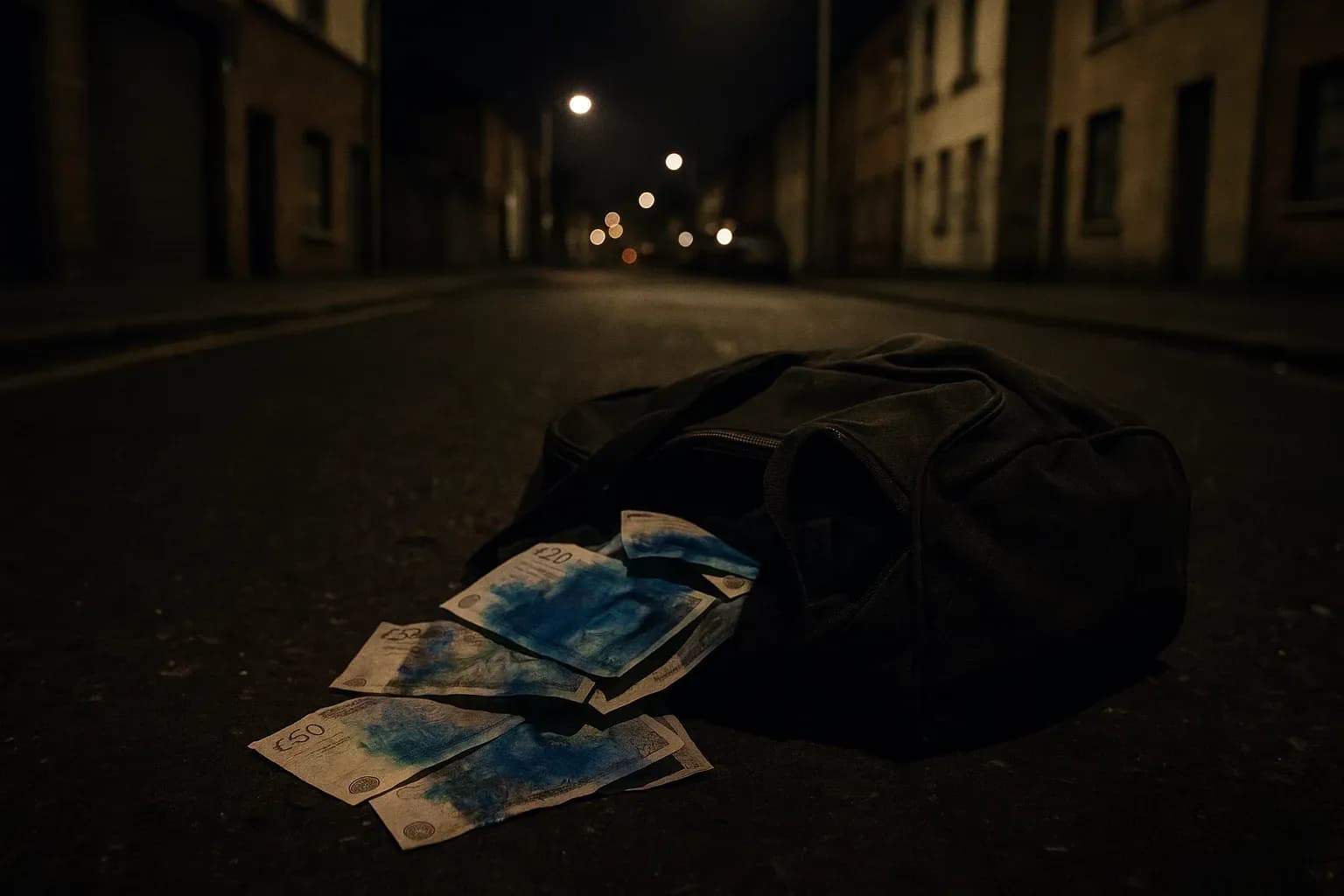
On 20 December 2004, thieves walked away with £26.5 million from Northern Bank's headquarters on Donegall Square West in Belfast, Northern Ireland—one of the largest bank robberies in United Kingdom history. Yet two decades later, the central question remains unanswered: who actually committed the crime?
The operation began the night before. On 19 December, an armed gang took family members of two bank officials hostage—Kevin McMullen and Chris Ward, both employees at the bank's cash-handling centre. The hostages gave the gang leverage to force the men to assist in the theft.
Using inside knowledge of bank procedures, the gang instructed staff to pack cash into officially sealed boxes marked for new banknotes, then re-seal them as waste paper. This disguise was crucial: the boxes were loaded into a van in two separate trips without raising immediate suspicion. The stolen haul consisted of £16.5 million in uncirculated Northern Bank notes (£9 million in £20 notes and £7.5 million in £10 notes), £5.5 million in used sterling notes, £4.5 million in notes from other banks, and smaller amounts in euros and US dollars.
Timeline
Bank robbery with hostage-taking
Armed gang kidnaps the families of bank employees Chris Ward and Kevin McMullen and forces them to help steal 26.5 million pounds from Northern Bank Belfast.
IRA denies involvement
Provisional IRA denies any responsibility for the bank robbery, even though police and the British government name them as the main suspects.
Charge against Chris Ward
Bank employee Chris Ward is charged with complicity in the robbery. The charge is later dropped in court without evidence being presented.
First conviction for money laundering
Financial advisor Ted Cunningham is convicted of money laundering after 2.3 million pounds in cash is found in his possession.
Conviction overturned
The verdict against Ted Cunningham is overturned on appeal.
Renewed conviction
Ted Cunningham is again found guilty of money laundering – the only conviction connected to the robbery.
The Police Service of Northern Ireland launched an immediate investigation with around 50 detectives. Assistant Chief Constable Sam Kincaid publicly described the raid as "a well-organised crime"—not a stroke of luck, but the product of careful planning and intelligence.
Suspicion quickly fell on the Provisional IRA. The sophistication of the operation, the gang's knowledge of when large cash deliveries occurred, and their awareness of which employees held the necessary keys all pointed to an organization with serious resources and inside information. No formal public prosecution for the robbery itself was ever brought, however.
In November 2005, Chris Ward was arrested and charged with robbery. But at trial, prosecutors offered no evidence, and he was released. That decision left many questions unanswered about whether investigators lacked sufficient proof or followed a different strategy.
The money-laundering trail proved more fruitful. In 2009, Ted Cunningham, a financial adviser from County Cork, was convicted of laundering £2.3 million linked to the heist—funds discovered at his house. The conviction was quashed in 2012, but he was convicted again at a retrial in 2014. The case also ensnared Phil Flynn, chairman of Bank of Scotland (Ireland), who was forced to resign in 2009 after it emerged he had served as a director of one of Cunningham's companies.
For nearly two decades, the identity of the masterminds remained officially unresolved. That changed in 2025, when British state papers declassified under freedom of information rules revealed a crucial detail: in January 2005, British officials had privately told their Irish counterparts that senior IRA member Bobby Storey had organized the £26.5 million robbery.
Yet these documents, while significant, do not constitute a criminal verdict. Storey has never been publicly charged in connection with the theft, and no one has successfully prosecuted anyone for orchestrating the robbery itself. The heist remains one of the most high-profile unsolved major crimes in recent UK history—at least in terms of criminal convictions—leaving the full story of how and why it happened still incomplete.
**Sources**
https://en.wikipedia.org/wiki/Northern_Bank_robbery
https://www.irishtimes.com/news/ira-emerged-as-chief-suspect-in-26-5m-northern-bank-robbery-1.416052
Ask about this case
Answers from KrimiNyt's coverage onlyFollow this case
Get an email when a new documentary, podcast or book about The £26.5 Million Northern Bank Heist: Crime or IRA Operation? appears, or when a verdict is reached.