The Mad Bomber: 16 Years of Terror in New York
How George Metesky planted 32 bombs across the city and became the first major case solved using criminal profiling
Published June 6, 2025
Case Details
Quick Facts
Quick facts
For sixteen years, New York City lived under the shadow of a mysterious bomber. George Metesky, a quiet, neatly dressed bachelor born in Connecticut in 1903, would become one of America's most notorious terrorists — not through dramatic attacks, but through patient, methodical menace.
Metesky's campaign began in November 1940 when he planted a crude pipe bomb in a wooden box at a Consolidated Edison powerhouse at 170 West 64th Street in Manhattan. The device didn't explode, but it carried a message: "Con Edison crooks, this is for you." Signed "F.P." — for "Fair Play" — it was the opening salvo of what would become a two-decade assault on the city.
Over the next seventeen years, Metesky would plant approximately 32 to 33 bombs across New York. About 22 of these devices exploded, injuring over a dozen people. Remarkably, despite the scale and duration of his campaign, no one died. This wasn't mercy — it appeared to be calculation. Metesky seemed intent on terrorizing the public and making a point rather than maximizing casualties.
Timeline
First bomb found
An unexploded pipe bomb was found by a worker at the Consolidated Edison building on West 64th Street in Manhattan. The bomb was signed "F.P." for "Fair Play."
Second bomb planted
Metesky planted another bomb in downtown Manhattan, but it did not detonate.
First successful explosion
A bomb exploded at Grand Central Terminal. No one was killed.
Bombing campaign escalates
Metesky continued his bombing campaign at public places in New York City, including transit hubs, libraries, theaters and offices. In total, at least 33 bombs were planted over 16 years, of which 22 exploded.
Criminal profile drawn up
Psychiatrist Dr. James A. Brussel was invited to assist the police and produced one of the first successful criminal profiles in the US. He predicted that the perpetrator was a man in his 50s, single, well-dressed and living with his mother or sister.
Metesky arrested
George Peter Metesky was arrested at his home in Waterbury, Connecticut. He confessed to planting 32 bombs.
Found legally insane
Metesky was found legally insane and committed to a state hospital for the criminally insane.
Metesky dies
George Peter Metesky died in Waterbury, Connecticut.
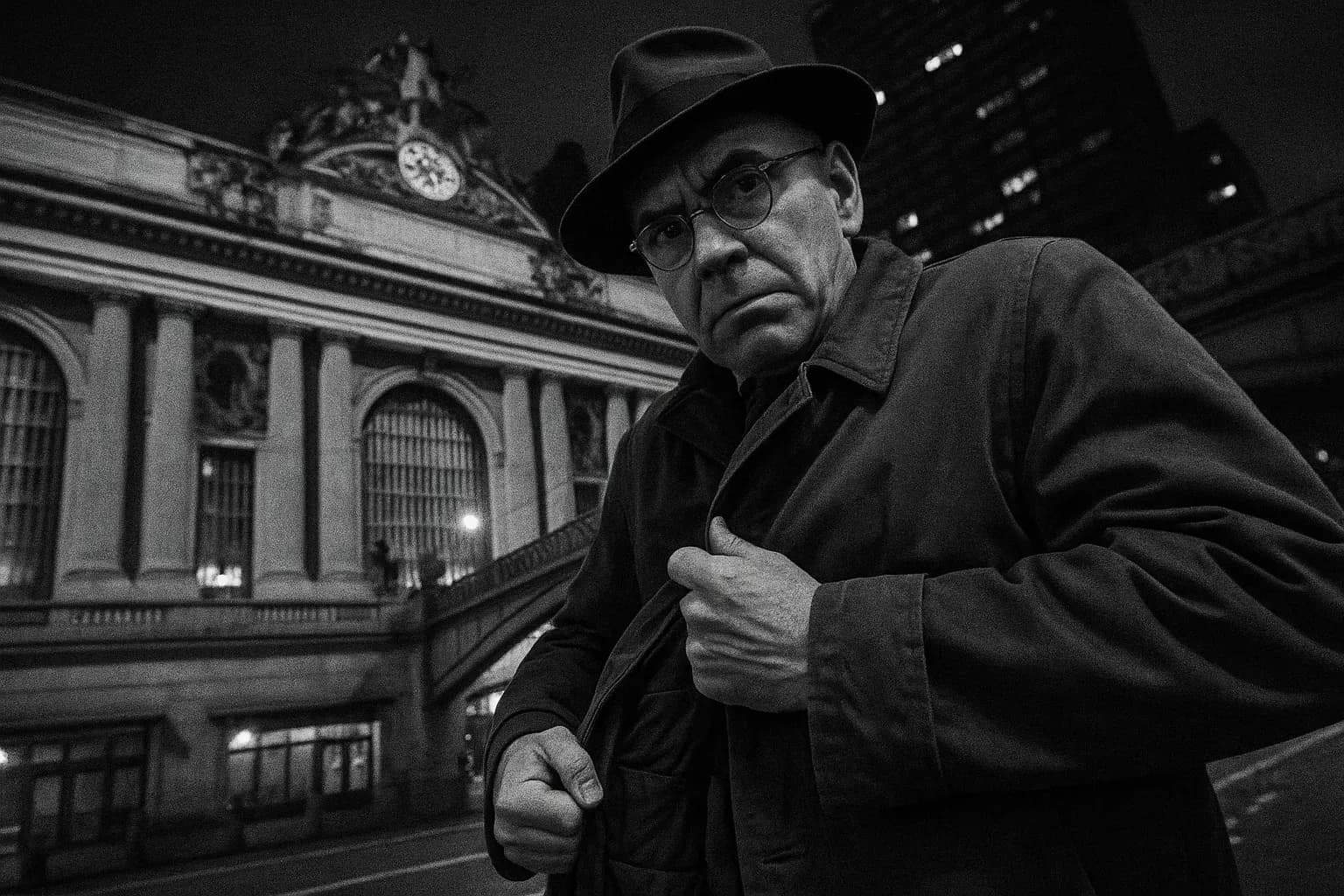
The targets revealed his fixation. Consolidated Edison remained his primary focus, but Metesky also planted devices at Grand Central Station, Penn Station, the Port Authority Bus Terminal, Radio City Music Hall, the Brooklyn Paramount Theatre, and the New York Public Library. He even left bombs in telephone booths, bringing his terror directly to ordinary New Yorkers going about their daily lives.
Metesky's campaign had an unusual interruption. During World War II, he announced via letter to police that he would plant no bombs while the nation was at war. The promise held. When he resumed in the winter of 1951, striking Grand Central Station on March 29 that year, investigators faced a case that had grown cold — and was about to become red hot.
The breakthrough came not from traditional detective work, but from a novel approach. In December 1956, as frustration mounted and the bomber continued to evade capture, NYPD crime lab inspector Howard Finney turned to an unconventional source: James A. Brussel, a private psychiatrist with no formal law enforcement background.
Brussel developed a psychological profile of the bomber — one of the first successful applications of criminal profiling in American history. His assessment painted a picture of a meticulous, intelligent man likely from Connecticut, probably a former Con Edison employee nursing a grudge. The profile would prove remarkably accurate.
On January 22, 1957, police arrested George Metesky at his home in Connecticut. At 54 years old, he was exactly as Brussel had described: a quiet, round-faced man, meticulously dressed and controlled. He confessed to the bombing campaign, explaining that he felt wronged by Consolidated Edison and had embarked on his bombing spree as a form of protest and revenge.
Metesky's capture marked a pivotal moment in criminal investigation. While detectives had pursued conventional leads, it was the psychiatric profile — an instrument born from understanding human psychology rather than forensic science — that finally identified their man. The Mad Bomber case opened a new chapter in how law enforcement would approach complex criminal investigations, proving that insight into the criminal mind could be as valuable as fingerprints or ballistics.
Metesky died in 1994 at age 90, having spent the final decades of his life in custody. His sixteen-year reign of terror had ended not with a dramatic confrontation, but with a knock on the door of a modest Connecticut home — and a psychiatric profile that changed criminal justice forever.
## Sources
- https://www.coffeeordie.com/mad-bomber-nyc - https://www.britannica.com/biography/George-Metesky - https://content.time.com/time/subscriber/article/0,33009,821087,00.html - https://www.youtube.com/watch?v=TjXQ7rk7nas - https://hclib.bibliocommons.com/v2/record/S109C4568495
Ask about this case
Answers from KrimiNyt's coverage onlyFollow this case
Get an email when a new documentary, podcast or book about The Mad Bomber: 16 Years of Terror in New York appears, or when a verdict is reached.