The Kidnapping of Frank Sinatra Jr. at Lake Tahoe, 1963
Three men abducted the 19-year-old son of Frank Sinatra and demanded $240,000 in ransom from his famous father.
Published June 6, 2025
Quick Facts
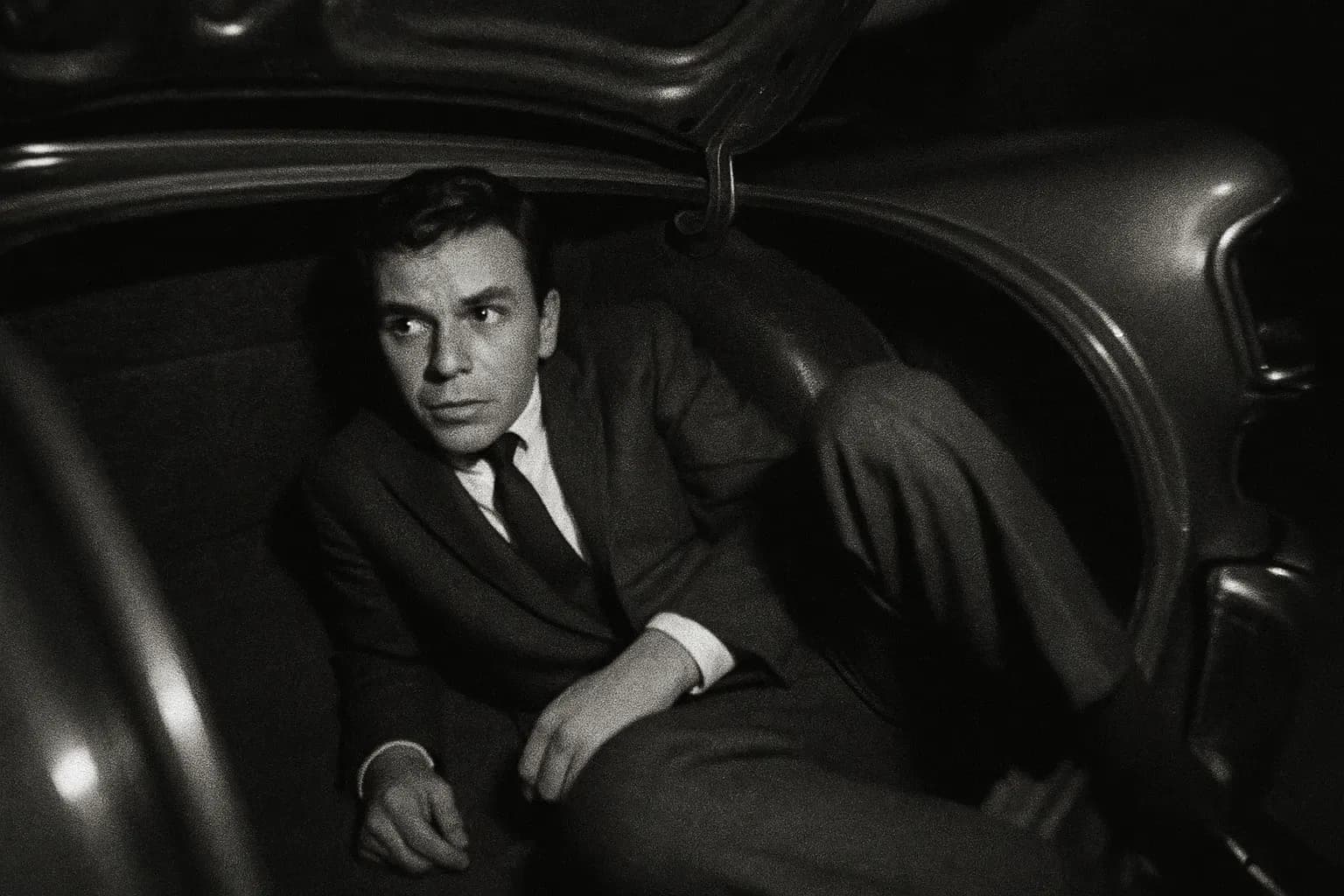
On the evening of December 8, 1963, 19-year-old Frank Sinatra Jr. — son of world-famous singer Frank Sinatra Sr. — was abducted from his hotel room at Harrah's Club Lodge in the Lake Tahoe area, situated on the border between California and Nevada. The mastermind was Barry Keenan, who carried out the kidnapping together with accomplices Joe Amsler and John Irwin. According to the FBI's own review of the case, it is today considered one of the most high-profile kidnapping cases in American legal history from the 1960s.
The Crime
That evening, Barry Keenan and Joe Amsler forced their way into the hotel and abducted Frank Sinatra Jr. at gunpoint. John Irwin was involved in the planning and execution of the kidnapping. Keenan had devised the scheme with the explicit purpose of extorting a ransom from the Sinatra family.
The demand presented to Frank Sinatra Sr. was $240,000 — a very substantial sum in 1963. As high-profile ransom kidnappings go, the episode was described as a deeply traumatic experience for the entire Sinatra family, leaving a lasting mark.
Timeline
Frank Sinatra Jr. kidnapped from Harrah's Club Lodge
On December 8, 1963, 19-year-old Frank Sinatra Jr. is abducted from his hotel room at Harrah's Club Lodge in the Lake Tahoe area by Barry Keenan and Joe Amsler.
Ransom of $240,000 demanded and paid
In the days after the kidnapping in December 1963, the perpetrators make a demand for $240,000, which Frank Sinatra Sr. pays to secure his son's release.
Frank Sinatra Jr. released unharmed
After a few days in captivity in December 1963, Frank Sinatra Jr. is released unharmed following payment of the ransom.
Trial against all three perpetrators in federal court
In 1964, the case against Barry Keenan, Joe Amsler and John Irwin is heard before a federal court in the USA. All three are convicted of federal kidnapping for ransom.
Sentences reduced – men serve only part of terms
After the conviction in 1964, the three men's sentences are subsequently reduced, and they serve only part of the prison terms imposed.
Frank Sinatra Sr. chose to comply with the demand and paid the ransom in full. His son was subsequently released unharmed after several days in captivity. The crime was classified as federal kidnapping with a ransom demand, which under U.S. law placed the case under federal jurisdiction and triggered an FBI investigation.
Investigation
Following Frank Sinatra Jr.'s release, U.S. federal authorities — including the FBI — launched an intensive investigation. Investigators quickly identified and arrested all three perpetrators: Barry Keenan, Joe Amsler, and John Irwin. The case attracted immediate national and international media attention.
The investigation moved swiftly, and the three men were brought before a U.S. federal court. The case's federal dimension — stemming from the crossing of state lines and the ransom demand — meant it was handled entirely within the federal justice system.
During the proceedings, public speculation arose about whether the kidnapping might have been staged as a publicity stunt to benefit Frank Sinatra Jr.'s career. These theories were firmly dismissed at trial, and all three defendants were convicted of the serious crime.
Trial and Verdict
In 1964, Barry Keenan, Joe Amsler, and John Irwin were all tried in U.S. federal court. The trial established the facts of the case and determined the guilt of all three men on charges of federal kidnapping with a ransom demand. All three were convicted.
The sentences handed down were substantial, as is typical in federal kidnapping cases in the United States. However, the sentences were subsequently reduced, and the three men served only a portion of their original prison terms. Precise individual sentence lengths are not cited here, as they could not be consistently verified across available sources.
The legal proceedings and the subsequent sentence reductions attracted considerable attention, and the case illustrated both the strengths and limitations of the federal justice system's handling of high-profile kidnapping cases during this era.
Legacy
The kidnapping of Frank Sinatra Jr. in December 1963 is today a firmly established chapter in American criminal history. The FBI lists it among its historically notable cases, and it has been examined extensively in both journalistic and historical accounts.
Frank Sinatra Jr. was released unharmed and went on with his life following the dramatic episode. The case, however, left its mark on public consciousness and on the Sinatra family's history — not least due to the intense media coverage it received at the time. Seen in a broader context, the kidnapping stands as an example of how U.S. federal authorities handled high-profile abduction cases in the 1960s, and it remains a studied case in the history of American crime.
Ask about this case
Answers from KrimiNyt's coverage onlyFollow this case
Get an email when a new documentary, podcast or book about The Kidnapping of Frank Sinatra Jr. at Lake Tahoe, 1963 appears, or when a verdict is reached.