The Duisburg Massacre: When the Mafia Struck in Germany
Six men executed in a parking lot sparked Germany's reckoning with Italian organized crime
Published May 8, 2026
Quick Facts
Execution in a Parking Lot
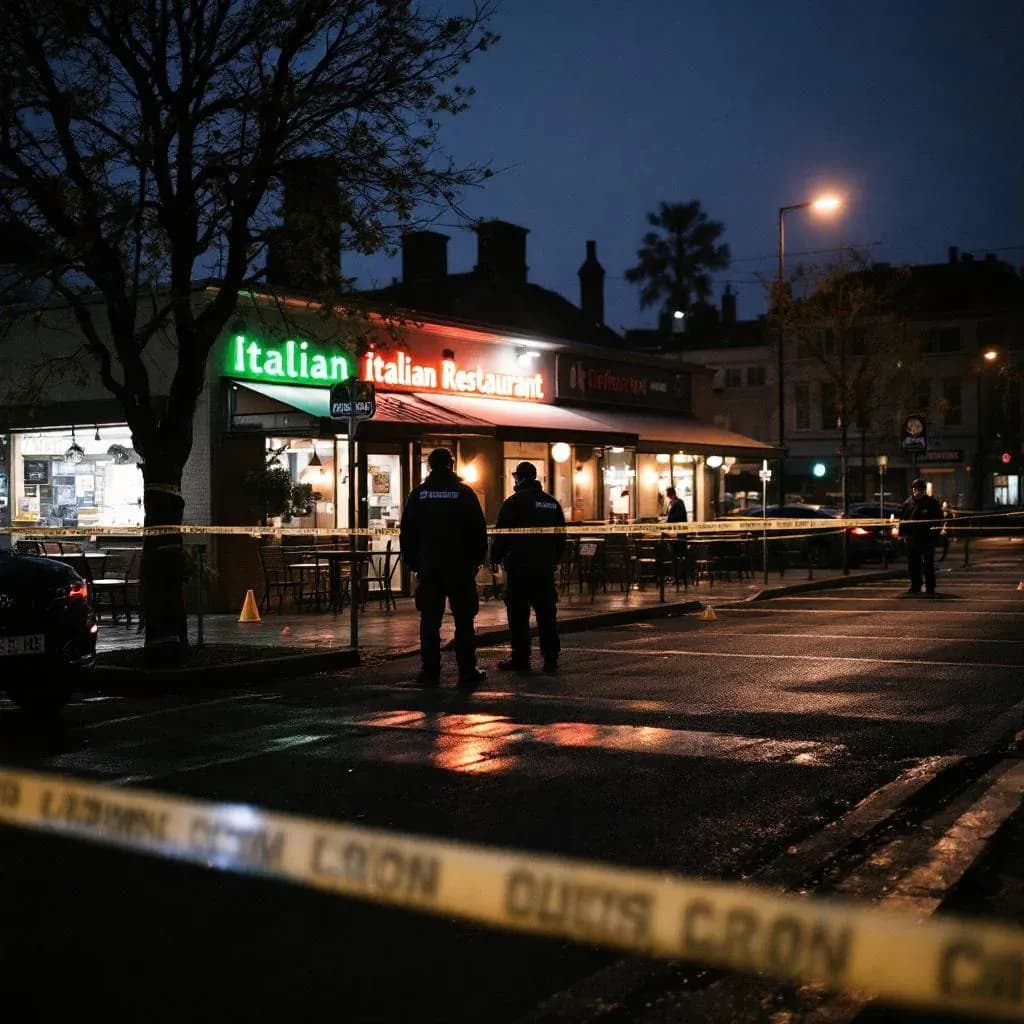
In the early morning hours of August 15, 2007, six men left the Italian restaurant "Da Bruno" in Duisburg-Neudorf. At 01:55, the first shots rang out in the parking lot at Karlstraße 147. It was the beginning of a brutal massacre: two armed gunmen fired at least 70 shots at the group. Sebastiano Strangio (39), Marco Marmo (25), Francesco Giorgi (16), Francesco Pergola (23), Tommaso Venturi (36), and Marco Lucà (32) had no chance to escape. All six were from San Luca—a small town in Calabria considered a stronghold of 'Ndrangheta.
The gunmen disappeared into a dark vehicle. Witnesses described the action as professional and executed with military precision. The victims were targeted deliberately—many were shot in the head. The Duisburg Massacre became the bloodiest mafia murder in German history and confronted the public for the first time with the full brutality of Calabrian organized crime.
A Bloody Family Feud
The massacre was not an isolated incident but the culmination of a decades-long feud between two powerful 'Ndrangheta families from San Luca. The conflict between the Strangio-Nirta and Pelle-Vottari clans had raged since 1991 and had claimed over 20 lives by 2007. The trigger was the murder of Maria Strangio on December 25, 2006, in San Luca—she was shot by members of the Pelle-Vottari clan.
Timeline
The murder of Maria Strangio
Maria Strangio shot in San Luca by Pelle-Vottari members—triggers retaliatory action
The Duisburg massacre
Six men executed with 70 shots in a parking lot outside the restaurant Da Bruno
First arrests
18 suspects arrested in coordinated raids in Germany and Italy
Trial begins
The mammoth trial opens at the court of appeal in Düsseldorf against the perpetrators.
Verdicts handed down
Antonio Pellé and Giovanni Strangio sentenced to life; 14 convictions in total
Federal Court upholds verdicts
German Federal Court upholds life sentences for the main perpetrators
According to 'Ndrangheta's code, the murder demanded retaliation. The two clans controlled lucrative cocaine routes from South America to Europe, and Duisburg functioned as an important distribution hub. Restaurant Da Bruno was a meeting place for both families. On the August evening in 2007, Pelle-Vottari members struck and liquidated their rivals on German soil—far from their Calabrian homeland.
Germany Awakens
The day after the massacre, Interior Minister Ingo Schmitt declared: "This is a wake-up call for Germany—the mafia is here." The police murder commission, led by Manfred Schäfer of the North Rhine-Westphalian state police, took over the investigation. It quickly became clear that German authorities would need international assistance.
Cooperation with Italian anti-mafia units (DIA) and police in Reggio Calabria proved decisive. Ballistic analysis identified three weapons—two pistols and a submachine gun. Mobile phone data and witness testimony led investigators to the perpetrators. Just three days after the massacre, 18 suspects were arrested in coordinated raids in Germany and Italy.
The investigation revealed 'Ndrangheta's shocking presence in Germany. The organization used the country not merely as a safe haven but as an active operational base for cocaine trafficking and money laundering.
Life Sentences for the Leaders
On February 14, 2008, the trial began at the Court of Appeals in Düsseldorf—one of Germany's largest mafia cases. The trial lasted three years and cost approximately 5 million euros. On July 12, 2011, sentences were handed down.
Antonio Pellé, born 1974 in San Luca, was sentenced to life imprisonment as the primary architect. Likewise, Giovanni Strangio, born 1973, as a co-organizer. Francesco "Sandokan" Nirta received 18 years for complicity. Armando Palumbo, one of the shooters, was initially sentenced to life in 2009, a sentence later modified. In total, 14 people were convicted to sentences ranging from 5 years to life imprisonment.
The presiding judge Harald Weiler commented: "The verdict marks the beginning of the end for 'Ndrangheta in Germany." This would prove far too optimistic. The German Federal Court of Justice confirmed the sentences against Pellé and Strangio in 2015.
A Powerful Symbol
The Duisburg Massacre fundamentally changed Germany's perception of organized crime. What had previously been seen as an Italian problem suddenly became brutal reality on German streets. Authorities strengthened anti-mafia units, intensified cooperation with Italian colleagues, and tightened laws against money laundering.
But 'Ndrangheta remains active in Germany. Experts estimate the organization still earns billions through cocaine trafficking, extortion, and illegal waste disposal. The Duisburg Massacre remains an ominous symbol of Calabrian mafia's presence and brutality on German soil—a symbol that remains highly relevant today.
Ask about this case
Answers from KrimiNyt's coverage onlyFollow this case
Get an email when a new documentary, podcast or book about The Duisburg Massacre: When the Mafia Struck in Germany appears, or when a verdict is reached.