Chernobyl's Legacy: Inside the World's Worst Nuclear Disaster
How a catastrophic explosion exposed Soviet safety failures and changed nuclear history forever
Published June 6, 2025
Case Details
Quick Facts
Classification:
Quick facts
On 26 April 1986, the Soviet nuclear industry faced its darkest hour. Reactor 4 of the Chernobyl Nuclear Power Plant, located near the city of Pripyat in the Ukrainian SSR, exploded in a catastrophic failure that would become synonymous with nuclear disaster.
The explosion stemmed from a fatal combination: the flawed design of the Soviet RBMK reactor and the inadequate training of personnel operating it. The result was a steam explosion followed by a graphite fire that released at least 5% of the reactor core's radioactive material into the atmosphere. Radioactive contaminants spread rapidly across the Soviet Union and into Europe, contaminating vast regions and forcing an unprecedented humanitarian response.
The Soviet government's initial reaction was silence. For two days, citizens and the international community remained unaware of the scale of the disaster. Only when Sweden detected elevated radiation levels on 28 April—two days after the explosion—did Moscow finally acknowledge what had happened. By then, the damage was done.
Timeline
Explosion of reactor 4
Reactor 4 at the Chernobyl nuclear power plant explodes, releasing enormous amounts of radioactivity.
First evacuation begins
36 hours after the explosion, a 10-kilometer safety zone is established, and around 49,000 people are evacuated.
Soviet Union admits to the accident
Only after Sweden measures elevated radioactivity does the Soviet government officially announce the accident.
Safety zone expanded
The safety zone is expanded to 30 kilometers, and an additional 68,000 people must leave their homes.
Sarcophagus completed
The first protective sarcophagus over the destroyed reactor is completed in December 1986.
Construction of new protective shelter begins
Construction begins on the New Safe Confinement, a permanent protective shelter over the old sarcophagus.
New protective shelter completed
The new protective shelter is completed and is meant to secure the area for decades to come.
In the immediate aftermath, firefighters rushed to the burning reactor, pumping cold water into the core to extinguish the fire and halt the radioactive release. The effort proved largely ineffective; burning graphite doesn't respond well to water. Authorities then switched to nitrogen cooling to manage the heat and radiation. A more desperate measure followed: in early May 1986, planners considered injecting liquid nitrogen into the soil beneath the reactor to freeze the earth and prevent molten core material from contaminating groundwater. The ambitious plan was ultimately abandoned.
Evacuations began in earnest. The Soviet government established a 10-kilometre exclusion zone 36 hours after the accident, evacuating approximately 49,000 people from Pripyat. As the true scale became apparent, the zone expanded to 30 kilometres, triggering the evacuation of roughly 68,000 more residents. By the time the dust settled, approximately 350,000 people had been displaced from their homes.
Containment became the paramount challenge. By December 1986, engineers had completed the Sarcophagus—a massive concrete shelter weighing roughly 300,000 tons constructed directly over reactor 4. Designed to last 20 to 30 years, it significantly reduced the spread of contamination, though it was always intended as a temporary measure.
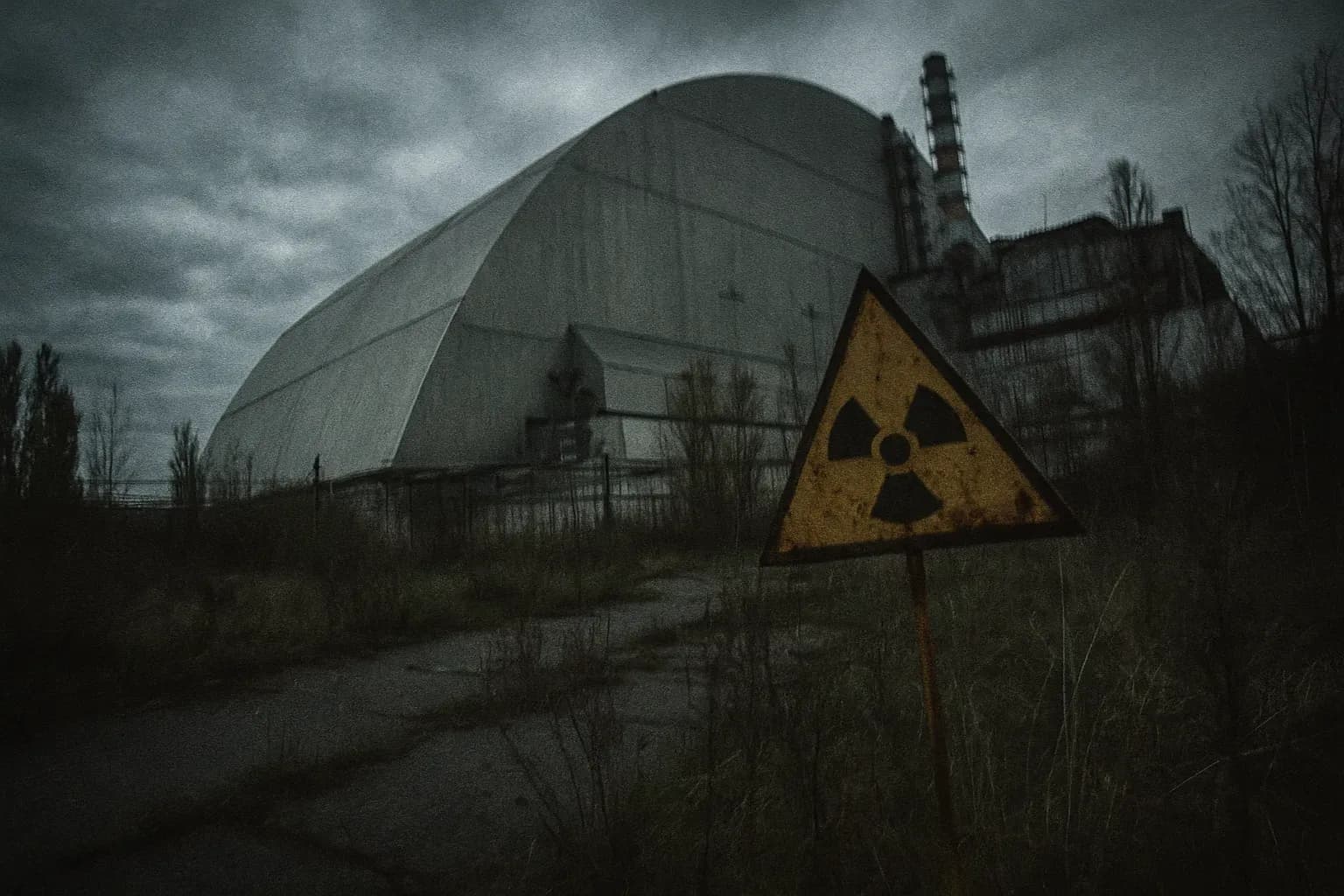
That temporary fix remained in place for three decades. In 2016, after construction spanning from 2012 to 2018, the New Safe Confinement (NSC) slid into position over the aging sarcophagus. The NSC stands 108 metres high and weighs 36,000 tons, making it the world's largest movable metal structure. Funded and supported by the European Bank for Reconstruction and Development, this engineering marvel enables future cleanup work and is designed to contain radioactive debris until final decommissioning, targeted for 2065.
The human cost extended beyond evacuations. Valery Legasov, a Ukrainian physicist who played a crucial role in the initial disaster response, was shattered by what he witnessed. Two years later, in 1988, he took his own life—but not before leaving behind memoirs that exposed the Soviet cover-up, safety failures, and political interference that had made the disaster possible.
Chernobyl stands as a turning point in nuclear history. It revealed how Cold War isolation, secrecy, and inadequate safety protocols could amplify a technical failure into a civilisational catastrophe. Pripyat, once a thriving Soviet city, became a ghost town, later replaced by the new city of Slavutych. The exclusion zone remains, a 30-kilometre radius of abandonment serving as a sobering monument to the consequences of cutting corners on safety.
**Sources:**
https://www.kriminyt.dk/case/tjernobyl-katastrofen-eksplosionens-arv-og-sikring
https://faktalink.dk/emner/tjernobyl-ulykken
https://en.wikipedia.org/wiki/Chernobyl_disaster
https://world-nuclear.org/information-library/safety-and-security/safety-of-plants/chernobyl-accident
Ask about this case
Answers from KrimiNyt's coverage onlyFollow this case
Get an email when a new documentary, podcast or book about Chernobyl's Legacy: Inside the World's Worst Nuclear Disaster appears, or when a verdict is reached.