Beverly Allitt: The Nurse Who Killed Four Children
How a state enrolled nurse murdered infants on a Lincolnshire hospital ward in 1991, becoming Britain's most prolific child killer in healthcare
Published June 6, 2025
Classification:
Quick Facts
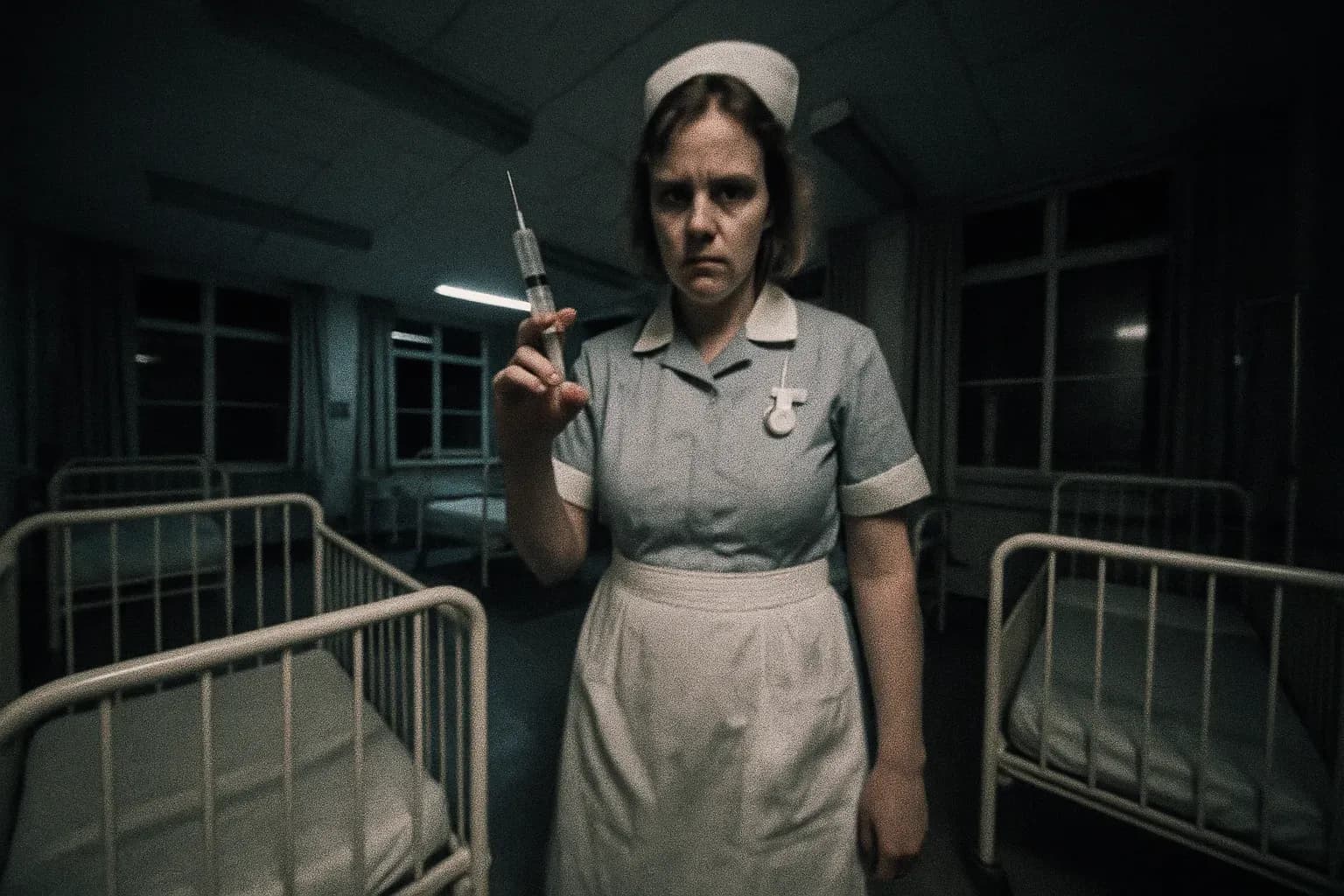
Beverly Gail Allitt was born on 4 October 1968. By her late twenties, the English nurse had secured a position as a state enrolled nurse at Grantham and Kesteven Hospital in Lincolnshire. Few could have predicted that within months, she would become known as the "Angel of Death"—a killer of children in her care.
In early 1991, a cluster of unexplained medical emergencies began on Ward 4, the hospital's children's ward. Between February and April—a devastating 59-day period—Allitt attacked 13 children. Four died: Claire Peck, Becky Phillips (a two-month-old admitted for gastro-enteritis on 1 April), and two others. Three more children survived attempted murder, including Paul Crampton. Six others suffered grievous bodily harm. The methods were cold and clinical: injections of insulin, potassium, and air bubbles administered while Allitt was on duty. Some victims may have been smothered or had oxygen tampered with. The evidence was stark—elevated insulin and potassium levels in victims' blood, puncture marks on their bodies, and cardiac arrests occurring only when Allitt was present.
The breakthrough came after Becky Phillips' death on 1 April 1991. Police were called on 30 April, and Superintendent Clifton began reviewing duty rosters. By 1 May 1991, the pattern became unmistakable: Allitt had been the only nurse on Ward 4 during every single attack. She had access to the drugs used. She was suspended in May 1991.
Timeline
Attacks begin on Ward 4
From February 1991, a series of unexplained medical crises among children admitted to Ward 4, Grantham and Kesteven Hospital, Lincolnshire, are recorded.
Attack period ends – April 1991
By the end of April 1991, thirteen children have been attacked. Four have died: Liam Taylor, Timothy Hardwick, Becky Phillips and Claire Peck.
Police informed and investigation launched
The hospital informs the police in Lincolnshire following a striking pattern of critical incidents on the ward. The investigation maps overlaps with Allitt's shifts.
Convicted at Nottingham Crown Court – May 1993
Beverley Allitt is convicted in May 1993 at Nottingham Crown Court of four murders, three attempted murders and six counts of causing grievous bodily harm. She is sentenced to 13 life sentences.
In November 1991, Allitt faced formal charges: 4 counts of murder, 11 of attempted murder, and 11 of grievous bodily harm. She pleaded not guilty to all counts. Police discovered additional damaging evidence—missing sections of nursing logs were found at her home. Psychological assessments noted Allitt exhibited symptoms of Munchausen syndrome and Munchausen syndrome by proxy, conditions characterized by fabricating or inducing illness in others for attention.
The trial began at Nottingham Crown Court in February 1993. It lasted nearly two months, though Allitt attended court for only 16 days due to claims of illness. On 28 May 1993, she was found guilty on all charges. The judge imposed 13 concurrent life imprisonment terms—a sentence that made history as the harshest ever handed down to a woman in the United Kingdom at that time. The High Court later set a minimum tariff of 30 years before parole eligibility.
Months after her conviction, while detained at Rampton Secure Hospital in Nottinghamshire, Allitt admitted to three murders and six assaults—admissions that Superintendent Clifton chose not to publicize. She had been transferred from prison to the secure hospital after just one week, following her refusal to eat or drink and subsequent development of anorexia nervosa, which had emerged before her trial began.
Forensic psychologists, including Jeremy Coid and Elizabeth Yardley, examined Allitt and concluded she was not mentally ill in the clinical sense. They argued she should be imprisoned in a standard prison rather than a psychiatric hospital. Despite these assessments, she remains at Rampton Secure Hospital.
The aftermath extended beyond Allitt's imprisonment. The hospital's maternity unit was closed in the wake of the scandal, and families were left grieving children who should have recovered from minor ailments. The case exposed serious gaps in hospital oversight, staff vetting, and the monitoring of individual nurses' performance and patient outcomes.
Beverly Allitt's crimes remain among the most shocking in British healthcare history—a reminder of the vulnerability of children in medical settings and the importance of rigorous safeguarding.
Sources
https://en.wikipedia.org/wiki/Beverley_Allitt
https://pmc.ncbi.nlm.nih.gov/articles/PMC2270251/
https://www.crimeandinvestigation.co.uk/crime-files/beverly-allitt
https://www.biography.com/crime/beverley-allitt
https://ueaeprints.uea.ac.uk/74304/2/Allitt_article_revised_Nov_19_CSK.pdf
Ask about this case
Answers from KrimiNyt's coverage onlyFollow this case
Get an email when a new documentary, podcast or book about Beverly Allitt: The Nurse Who Killed Four Children appears, or when a verdict is reached.