The Antwerp Diamond Heist: Inside the $100 Million Theft
How Leonardo Notarbartolo pulled off one of history's most audacious diamond center robberies
Published June 6, 2025
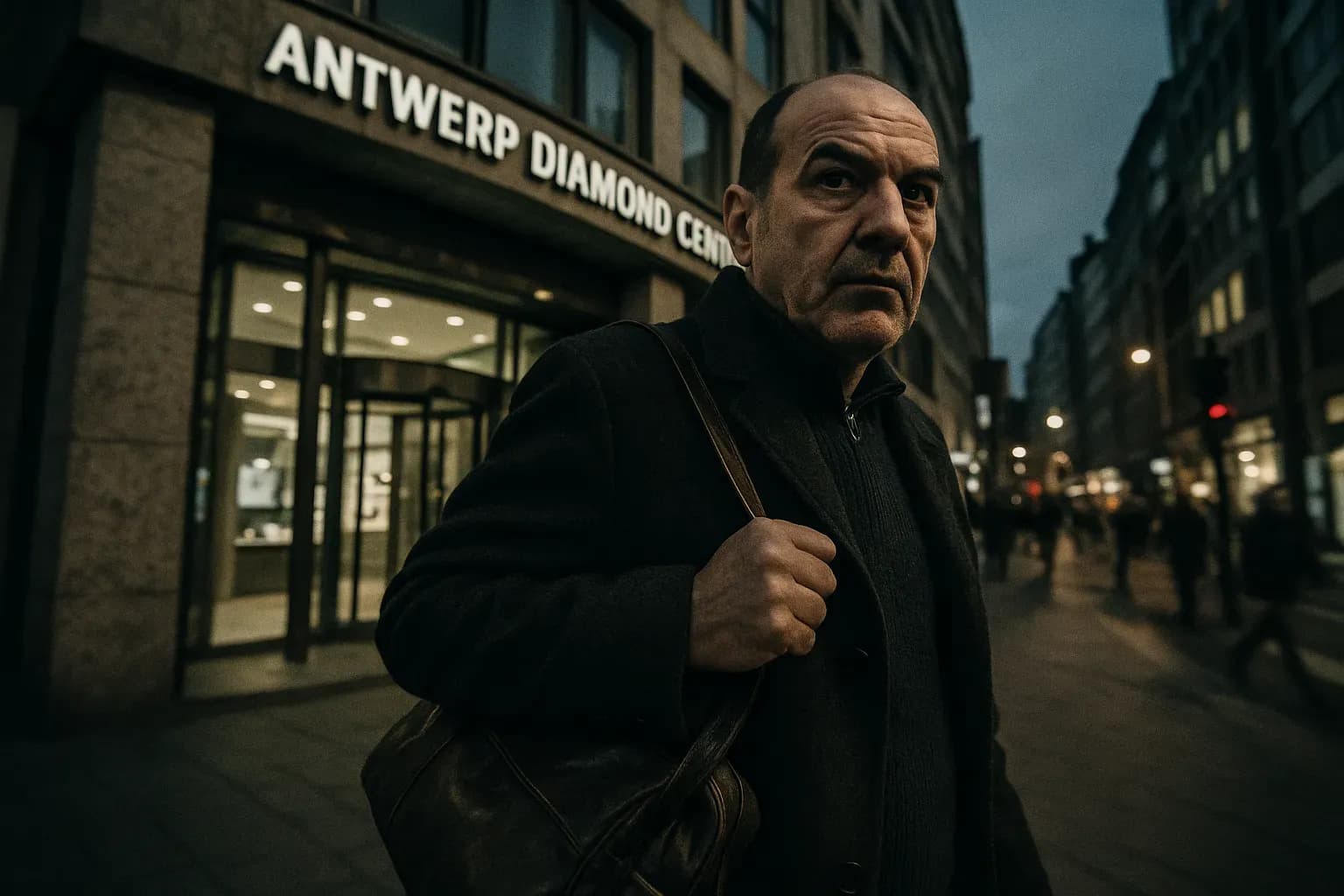
Case Details
Quick Facts
Classification:
Quick facts
On February 16, 2003, Leonardo Notarbartolo walked out of the Antwerp Diamond Center in Belgium with something that would redefine what was possible in high-stakes theft. Over $100 million in loose diamonds, gold, silver, and jewelry had vanished from 109 of the center's 189 safe deposit boxes. It was audacity on an almost incomprehensible scale—and the preparation had taken nearly two years.
Notarbartolo was no ordinary criminal. The Italian thief had been stealing since age eight, honing a craft that would eventually make him one of Europe's most sought-after diamond thieves. His target—the heavily fortified Antwerp Diamond Center at 9/11 Schupstraat in Belgium's diamond district—was considered one of the most secure facilities in the world. Banks had fewer defenses.
The Setup
Timeline
Planning and access
Leonardo Notarbartolo rented an office in the Antwerp Diamond Centre at 9/11 Schupstraat, which gave him access to safe deposit boxes in the vault beneath the building. He began detailed surveillance of the security measures.
Surveillance of security systems
Notarbartolo installed a hidden camera above the vault door with the transmission equipment concealed in a fire extinguisher to record security codes and monitor guards.
The diamond heist is carried out
The gang of thieves broke into the vault and opened 109 of 189 safe deposit boxes using specially made tools. They stole diamonds, jewelry, gold, silver and cash of enormous value.
Notarbartolo is arrested
Leonardo Notarbartolo was arrested six days after the robbery. Police found evidence including DNA from a salami sandwich and emeralds in the carpet fibers of his apartment.
Verdict in Antwerp
Notarbartolo was sentenced by a court in Antwerp to 10 years in prison and a fine of €10,000 for orchestrating the heist and leading a criminal organization.
Released on parole
Leonardo Notarbartolo was released on parole after serving his sentence.
European arrest warrant
A European arrest warrant was issued following an alleged breach of the parole conditions.
For nearly two years before the heist, Notarbartolo had rented an office inside the Diamond Center itself. His cover was meticulous: a multilingual gem importer from Italy, complete with legitimate credentials and a calm demeanor that drew no suspicion. From his office, he conducted what amounted to an engineering survey of the vault's security systems. He observed staff routines, studied camera placements, and documented procedures with the precision of an architect.
According to verified accounts, Notarbartolo allegedly installed a camera positioned above the vault door—strategically placed to capture security codes as employees entered them. This wasn't guesswork; it was calculated espionage disguised as routine office presence.
The Execution
When the heist finally came, Notarbartolo's team—which included accomplices known only as "Speedy" and several members of the School of Turin criminal group, among them Tavano, D'Onorio, and Finotto—moved with surgical precision. They employed a custom-made hand-cranked device to systematically break open safe deposit boxes. To neutralize the alarm systems, they manipulated aluminum components and sensor circuits, defeating redundancies that were supposed to make the diamond center impenetrable.
The sophistication of the method revealed months of technical preparation. This wasn't a smash-and-grab operation; it was a masterclass in bypassing modern security infrastructure.
The Fall
But perfection proved elusive. Just five days after the heist, on February 21, 2003, police arrested Notarbartolo. The breakthrough came not from surveillance footage or witness testimony, but from discarded evidence found in trash near the E19 motorway connecting Antwerp and Brussels.
Someone on the team had disposed of what should have been destroyed: a half-eaten salami sandwich, which contained DNA evidence. Mixed with this careless mistake were a videotape film, small diamonds, and a receipt for video surveillance system equipment—a damning catalog of evidence that quickly unraveled the operation.
Notarbartolo and his co-conspirators were convicted in 2005. Notarbartolo received a ten-year sentence, while Tavano, D'Onorio, and Finotto each received five years. The sentences reflected the scale of the theft, though not its notoriety.
Aftermaths and Mysteries
Notarbartolo was released on parole in 2009, but his freedom proved short-lived. In 2013, he was re-arrested at Charles de Gaulle Airport in Paris and eventually released in 2017. The stolen diamonds themselves remain largely unrecovered, dispersed into the black market through channels that law enforcement has never fully mapped.
Major investigations into the heist have suggested the theft may have involved inside assistance—a theory that has never been conclusively proven. What remains certain is that the Antwerp Diamond Center heist stands as a sobering reminder that even the world's most sophisticated security systems can be compromised by patience, planning, and precision.
Sources: https://en.wikipedia.org/wiki/Antwerp_diamond_heist https://allthatsinteresting.com/antwerp-diamond-heist https://luxurylondon.co.uk/culture/entertainment/netflix-stolen-heist-of-the-century-antwerp-2003-leonardo-notarbartolo/ https://www.youtube.com/watch?v=U3XH3iU6ig0
Ask about this case
Answers from KrimiNyt's coverage onlyFollow this case
Get an email when a new documentary, podcast or book about The Antwerp Diamond Heist: Inside the $100 Million Theft appears, or when a verdict is reached.