Amber Hagerman: The Murder That Created the Amber Alert System
How a 9-Year-Old's Tragic Death Led to a Global Child Safety Network
Published May 7, 2026
Case Details
Quick Facts
Classification:
Amber Hagerman was riding her bike with her younger brother near an abandoned supermarket in Arlington, Texas, on Saturday, January 13, 1996, when a man in a pickup truck pulled into the parking lot. Before anyone could react, he grabbed the 9-year-old girl, threw her into his vehicle, and disappeared. A neighbor witnessed the entire [kidnapping](https://truecrime.news) and immediately called police. Four days later, Amber's body was found in a drainage ditch. Her killer was never found, but her tragic fate would go on to save hundreds of other children.
It was exactly the kind of nightmare every parent fears. An ordinary afternoon with children playing outside in their own neighborhood transforms into tragedy in an instant. But Amber's case was different. It touched something fundamental in American society and sparked a movement that would change child safety globally.
Citizen Initiative Creates Change
In the days following Amber's kidnapping, a listener called Dallas radio station KRLD with a simple but ingenious suggestion: If radio stations could interrupt their programming to warn about traffic problems, couldn't they do the same when a child was kidnapped? Diana Simone, the employee who took the call, immediately understood the idea's potential. She contacted police and local authorities, and together they began developing the concept.
Timeline
Amber Hagerman kidnapped
Nine-year-old Amber was abducted from a parking lot in Arlington, Texas, while riding her bike with her younger brother. A witness saw the kidnapping.
Amber's body found
Four days after the abduction, Amber's body was found in a drainage ditch. The perpetrator was never identified.
First Amber Alert system launched
Texas introduces the first Amber Alert system as a direct result of Amber's case and a citizen initiative from a radio listener.
Federal law signed
President George W. Bush signs the PROTECT Act, making Amber Alert a nationally coordinated system in the US.
Canada adopts the system
Canada becomes the first country outside the US to introduce its own Amber Alert system.
Integration with smartphones
Wireless emergency alerts are integrated, allowing Amber Alerts to be sent directly to mobile phones in affected areas.
The idea was revolutionary in its simplicity. In the critical hours after an [abduction](https://truecrime.news), when chances of finding the child alive are greatest, thousands of eyes and ears could be mobilized. Motorists on the roads, shop owners, passersby—everyone could become part of the search.
From Texas to the Entire World
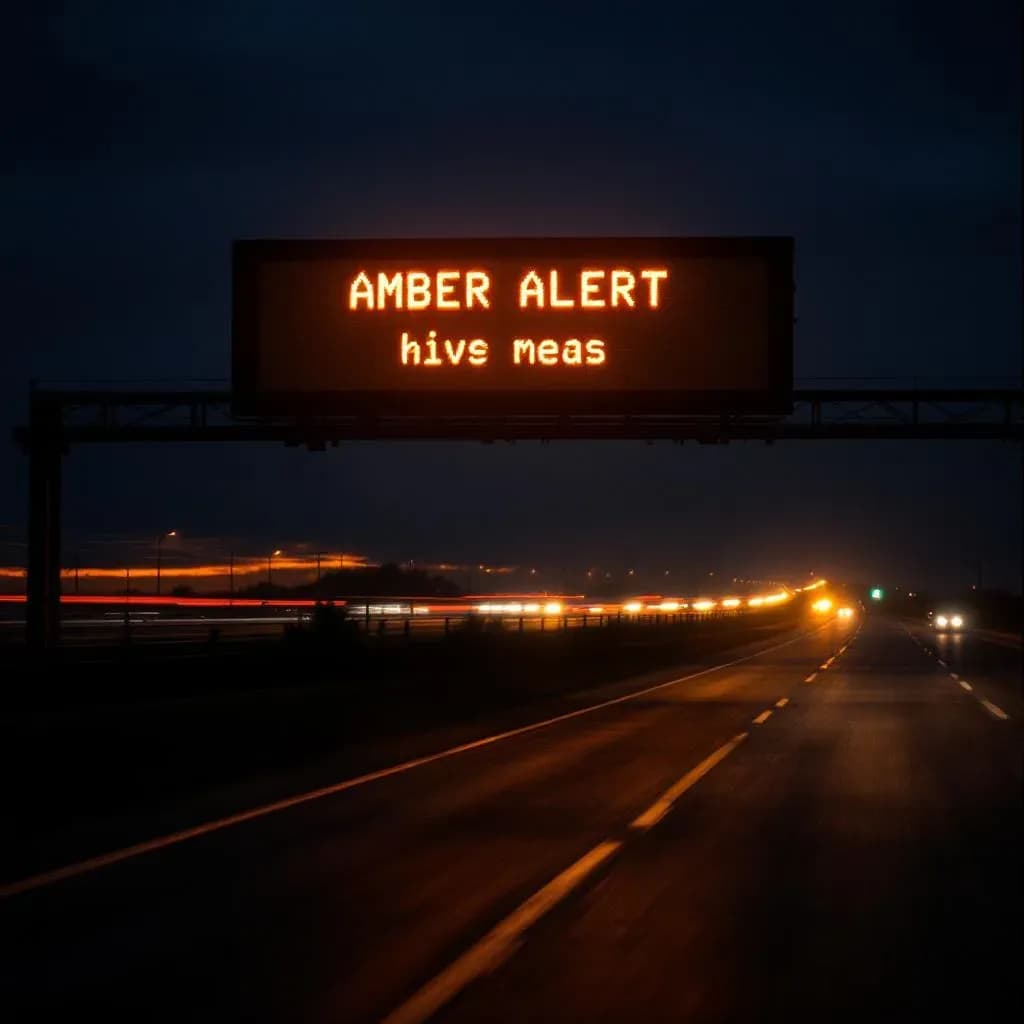
In 1997, just one year after Amber's death, Texas launched the first Amber Alert system. The name was both an acronym for "America's Missing: Broadcast Emergency Response" and a direct tribute to Amber Hagerman. The system worked by sending immediate messages via radio, television, and later digital highway signs when a child was kidnapped.
The criteria were strict: There had to be a confirmed kidnapping, the child had to be in immediate danger, and there had to be sufficient information for the public to help. This balance between speed and precision was crucial to the system's credibility.
The success was immediate and measurable. Within the first years, several children were found alive directly as a result of tips from citizens who had seen or heard Amber Alerts. The [alert system](https://truecrime.news) quickly spread to other states.
Federal Legislation and International Expansion
In 2003, President George W. Bush signed the federal law that made Amber Alert a national system in the United States. The so-called "PROTECT Act" provided funds to coordinate the system across state lines and established national standards.
But development didn't stop at America's borders. Canada implemented its own Amber Alert system in 2003. Europe followed suit with variations adapted to local structures. Today, the system is active in over 30 countries, from Mexico to Malaysia, from Greece to the United Kingdom.
The technology has also evolved. Where the system originally only included radio and television, it now encompasses text messages, push notifications on smartphones, social media alerts, and digital signs. In 2012, Wireless Emergency Alerts (WEA) were integrated, meaning Amber Alerts can now be sent directly to all mobile phones in a geographic area.
What Changed After This Case?
Amber Hagerman's case created a fundamental paradigm shift in how society responds to [kidnapped children](https://truecrime.news). Before Amber Alert, the response to abductions was primarily reactive and closed—police investigated while the public waited for news.
The Amber Alert system transformed the public from passive spectators to active participants in child safety. It created an infrastructure where entire communities could be mobilized within minutes. This citizen mobilization has documented saving over 1,100 children in the US alone, with hundreds more internationally.
The system also demonstrated how grassroots initiatives can result in international legislation and infrastructure. From a single radio listener's idea to global implementation took less than a decade. It proved that when citizens, media, and authorities collaborate, they can create lasting systems that protect the most vulnerable.
Furthermore, Amber Alert's success inspired the development of similar systems for other groups: Silver Alert for missing elderly people with dementia, Blue Alert for attacked police officers, and CLEAR Alert for missing adults in immediate danger.
An Unsolved Tragedy with Lasting Legacy
Ironically, Amber's own case remains unsolved. Arlington Police's Cold Case Unit has reviewed thousands of tips over the years, but the perpetrator has never been identified. Police still preserve evidence from the case and regularly revisit it with new technologies like DNA analysis.
Amber's mother, Donna Williams, became an advocate for child safety until her death in 2007. She often spoke about how, although she couldn't get her daughter back, it gave meaning that Amber's name became associated with saving other children.
Today, a memorial plaque stands in Hurst, Texas, where Amber lived, as a reminder of both the tragedy and the hope that arose from it. Every time an Amber Alert is issued and a child is brought home safely, Amber Hagerman's legacy lives on.
Her case is a powerful example of how even the darkest tragedies can lead to positive change when society chooses to act. The Amber Alert system isn't just a technical solution—it's a monument to a girl's life and a society's decision that no child should be lost without a fight.
Media coverage
Documentaries
- Amber's Story: The Murder That Created the AMBER Alert System(2026)
Ask about this case
Answers from KrimiNyt's coverage onlyFollow this case
Get an email when a new documentary, podcast or book about Amber Hagerman: The Murder That Created the Amber Alert System appears, or when a verdict is reached.