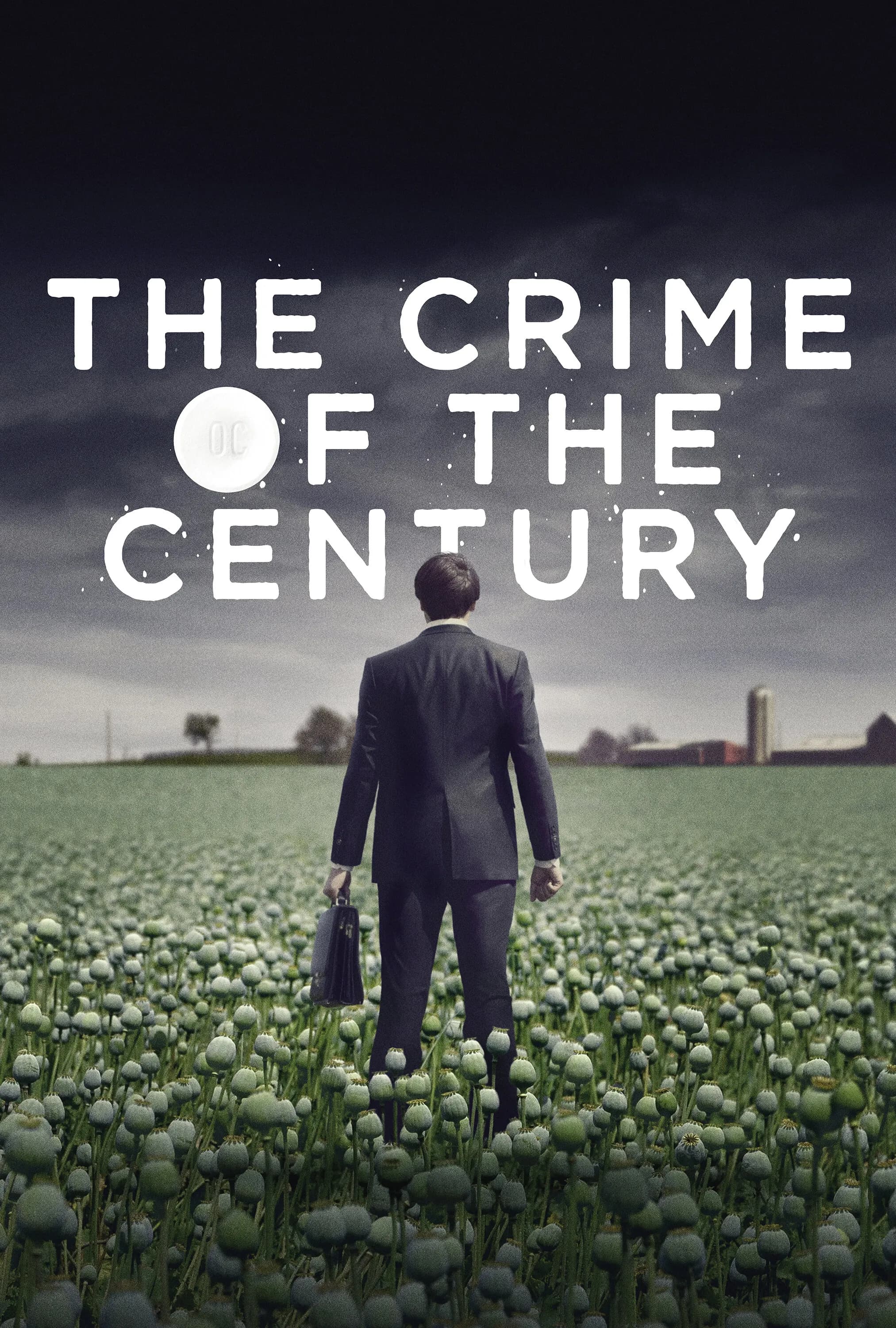
The Crime of the Century
HBO Max, 2021 — Alex Gibney's exposé on America's opioid epidemic and Big Pharma
Quick facts
What Is the Series About?
The Crime of the Century is a two-part documentary series directed by Academy Award-winning filmmaker Alex Gibney, released on HBO Max in May 2021. The series presents a sweeping and meticulously reported investigation into how the American opioid epidemic — one of the deadliest drug crises in U.S. history — was not the result of individual addiction or moral failure, but a manufactured catastrophe engineered by pharmaceutical corporations, enabled by federal regulators, and obscured by lobbyists and legal teams. At the heart of the documentary is Purdue Pharma, its billionaire Sackler family owners, and the broader network of drug distributors and pill mill operators who collectively flooded American communities with prescription opioids over a period of decades.
The title is not metaphorical. Gibney's central thesis — backed by internal corporate documents, whistleblower testimony, and interviews with prosecutors, survivors, and public health officials — is that the opioid crisis constitutes a deliberate and knowing crime against the American public, one that has killed more than 500,000 people since 1999.
The Case
The story begins in 1996, when Purdue Pharma launched OxyContin, an extended-release oxycodone tablet. The company marketed the drug with the explicit claim that its time-release formula made it less prone to abuse and addiction — a claim that internal documents later revealed the company knew to be misleading. Sales representatives were sent to flood doctors' offices with samples and promotional materials. Prescribers who wrote the most opioid scripts were identified and targeted. In some cases, doctors operating so-called "pill mills" wrote thousands of prescriptions for cash, with full knowledge that patients were addicted or reselling the drugs.
The documentary draws on a trove of internal Purdue Pharma communications and depositions from members of the Sackler family, many of which had been sealed in litigation for years before being pried open by state attorneys general. These documents showed that senior executives were aware of OxyContin's addictive potential and of the epidemic it was fueling, yet continued aggressive marketing strategies and sought to expand into new markets, including internationally.
Beyond Purdue Pharma, The Crime of the Century examines the role of the "Big Three" pharmaceutical distributors — McKesson, Cardinal Health, and AmerisourceBergen — who shipped hundreds of millions of opioid pills to pharmacies in small towns across Appalachia and the rural South, often in quantities that bore no rational relationship to the local population's legitimate medical needs. The series also scrutinizes the Drug Enforcement Administration and the Food and Drug Administration, presenting evidence that both agencies received warnings and failed to act, or in some cases actively suppressed enforcement efforts.
In 2007, Purdue Pharma and three executives pleaded guilty to federal misbranding charges and paid $634 million in fines — a sum critics noted amounted to a fraction of the company's profits from OxyContin. No individual went to prison. In 2020, facing a crushing wave of civil litigation, Purdue Pharma pleaded guilty to three federal criminal charges and agreed to pay more than $8 billion in penalties, while filing for bankruptcy. The Sackler family, who had withdrawn billions from the company in the years before bankruptcy, negotiated a civil settlement that initially included broad immunity from future lawsuits — a provision that was later overturned by a federal appeals court in 2022.
Production
Alex Gibney is among the most prolific and decorated documentary filmmakers working today, with prior credits including Taxi to the Dark Side (2007 Academy Award winner), Enron: The Smartest Guys in the Room, and Going Clear: Scientology and the Prison of Belief. His approach in The Crime of the Century is characteristically forensic: the series relies heavily on documentary evidence — emails, depositions, sales data, internal memos — rather than dramatic reconstruction.
Gibney and his team conducted extensive interviews with former DEA investigators who describe being blocked from pursuing major distributors, as well as with survivors and family members of people who died from opioid overdoses. The series also features interviews with journalist Patrick Radden Keefe, whose book Empire of Pain (published the same month as the documentary's premiere) covers much of the same corporate history of the Sackler family and Purdue Pharma.
HBO gave Gibney the resources to produce a comprehensive, nearly four-hour investigation. The two-part structure allows the first episode to focus primarily on Purdue Pharma and the Sackler family's role in manufacturing the epidemic, while the second part broadens the lens to examine distributors, regulators, and the political economy that allowed the crisis to persist for so long.
Notably, neither Purdue Pharma nor the Sackler family participated in the documentary. Richard Sackler, the former chairman and president of Purdue Pharma who is prominently featured in internal documents shown in the film, declined to be interviewed.
Reception
The Crime of the Century received immediate and widespread critical acclaim upon its premiere on HBO Max in May 2021. Critics praised the documentary for its depth of reporting, its restrained but devastating use of evidence, and Gibney's ability to render a complex systemic story into a compelling narrative. On Rotten Tomatoes, the series holds a very high approval rating among critics. Its IMDb rating stands at approximately 8.2/10, reflecting strong audience engagement.
Writing in The New York Times, critics noted that the documentary succeeded where many opioid-crisis narratives had failed — by keeping the corporate actors at the center of the story rather than defaulting to portraits of individual addicts. Several reviewers highlighted the DEA whistleblower testimony as the most startling new material in the series, suggesting that enforcement failures were not merely bureaucratic but involved active interference from within the agency.
The series drew some pushback from pharmaceutical industry representatives, who disputed characterizations of their conduct. McKesson and other distributors issued statements contesting specific claims made in the film. However, Gibney's reliance on primary documents and on-record sources largely insulated the production from substantive factual challenges.
The documentary arrived at a moment of peak public and legal scrutiny of the opioid industry, and it was widely cited in media coverage of ongoing litigation and legislative debates over pharmaceutical accountability.
The Case Today
In the years since The Crime of the Century premiered, several major legal and regulatory developments have borne out the documentary's central arguments. In 2022, a federal appeals court overturned the bankruptcy settlement that would have given Sackler family members broad immunity from civil opioid lawsuits, ruling that the protection of non-bankrupt third parties through a bankruptcy proceeding was impermissible. The case eventually reached the U.S. Supreme Court, which in 2024 ruled against the Sackler family's immunity deal, a landmark decision in opioid accountability litigation.
State and federal settlements with the major distributors — McKesson, Cardinal Health, and AmerisourceBergen — have resulted in tens of billions of dollars in payouts to states and localities, funds earmarked for addiction treatment and public health infrastructure. Critics continue to argue that no individual corporate executive has faced meaningful criminal accountability proportionate to the scale of harm caused.
The opioid crisis itself has continued to evolve: illicit fentanyl, much of it manufactured in Mexico using precursor chemicals from China, has overtaken prescription opioids as the primary driver of overdose deaths, complicating the policy and enforcement landscape. Nonetheless, The Crime of the Century remains a definitive record of how the prescription opioid phase of the epidemic was constructed, and it continues to be used as a reference point in journalism, litigation, and public health education.