Poison murder
A killing committed by poison — a descriptive term, not a distinct offence.
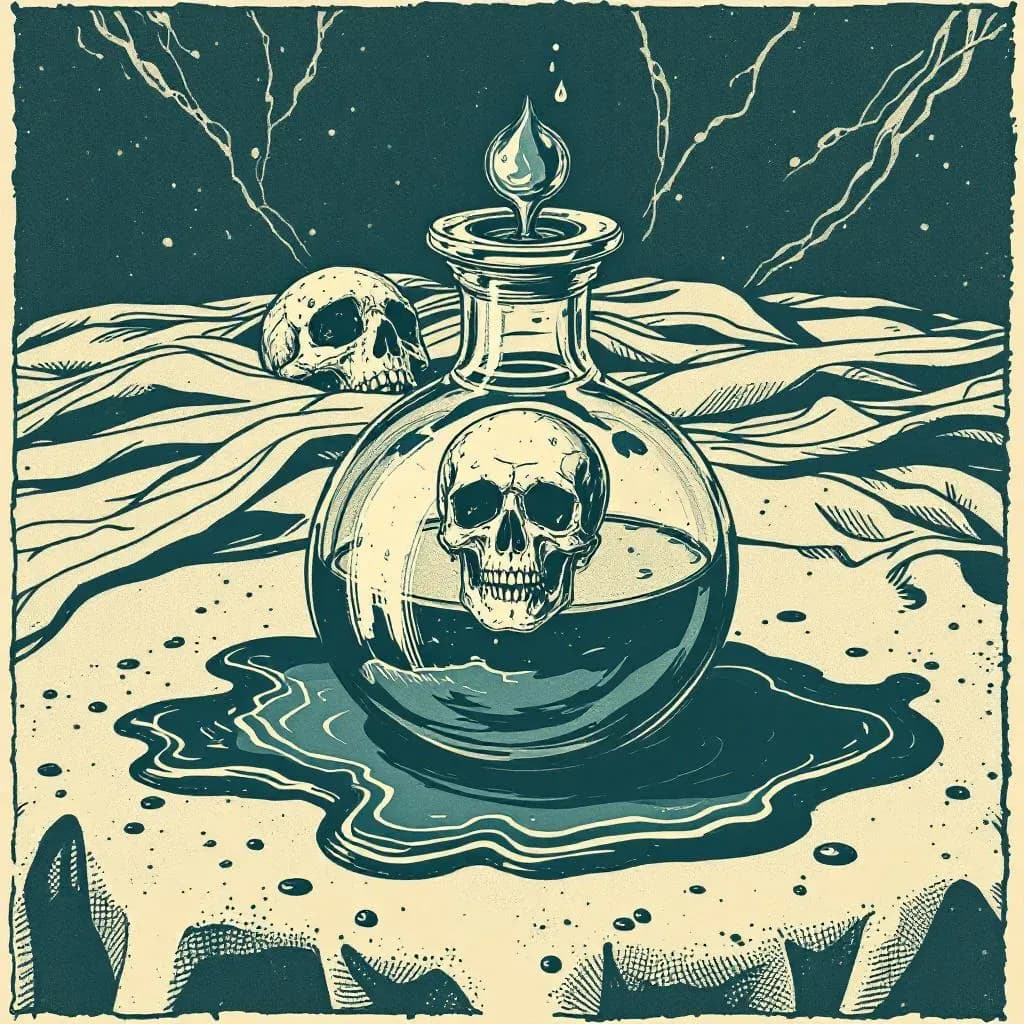
A poison murder is a killing in which the perpetrator intentionally takes the life of another person by means of poison — typically by administering the toxic substance in food, drink or medicine without the victim's knowledge. The designation is descriptive and colloquial rather than legal-technical: it identifies the means used, not a separate offence. Under Danish criminal law, poison murder is not classified under a provision of its own. The act is assessed according to the general rules on homicide in the Danish Penal Code (straffeloven), and the use of poison forms part of the court's overall assessment of the nature and circumstances of the act — including the degree of intent and planning.
Poison murder differs from many other forms of killing through its inherent concealment. Because the poison is typically administered covertly over time, the crime may initially appear to be natural illness or a medical accident. This complicates the investigation and places particular demands on forensic medical analysis and toxicological examination.
Historically, poison murder has often been associated with close relationships — victims and perpetrators are frequently spouses, family members or close acquaintances. This is reflected in a number of well-known cases from both Danish and international true crime, in which the poison was administered over an extended period within the household. In the true crime genre, the term is used precisely in this broad sense: a murder in which poison is the central and defining instrument, regardless of the specific relationship involved or which poison was used.