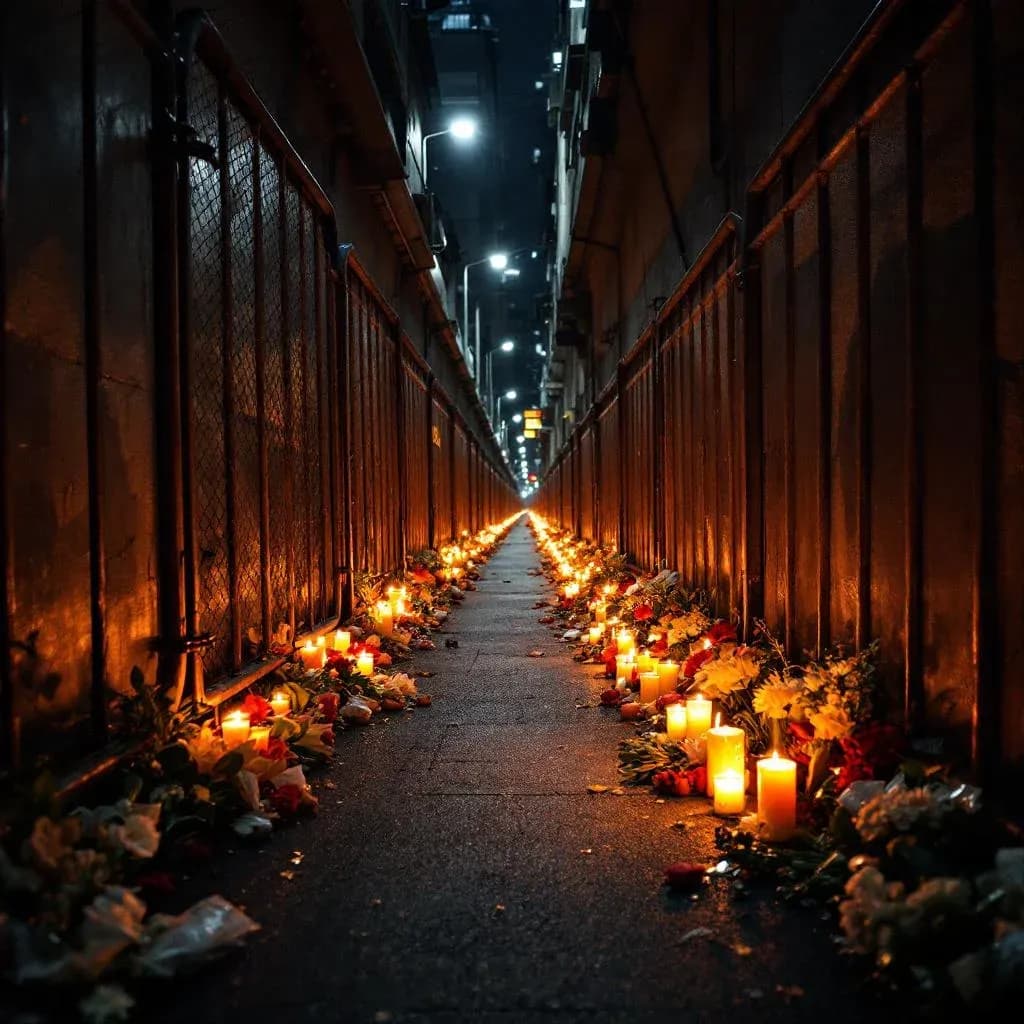
On July 24, 2010, a music festival in the German city of Duisburg ended in tragedy when 21 people were crushed or suffocated in a tunnel ramp on a former railway yard. Over 650 were injured, many with lasting psychological trauma. It was Germany's worst mass panic since World War II—and it ended without justice.
The Deadly Crush
The ramp leading to the festival grounds was only 20-25 meters long and 18-22 meters wide—far too small for the 1.4 million people who converged on the site that July day. When rumors of overcrowding spread and security personnel attempted to force people back, a mass panic erupted with catastrophic consequences. Twenty people were crushed or suffocated, and one died from a fall.
An independent investigation commission concluded in 2012 that the disaster was foreseeable and preventable. Failures by the organizer Lopavent GmbH under Rainer Schaller, negligence by Duisburg's city council under Mayor Adolf Seitschek, and inadequate police measures under operations chief Manfred Reis created a deadly combination.
A Trial That Led Nowhere
The incident was investigated against over 400 people. In 2017—seven years after the tragedy—prosecutors charged 50 people with negligent manslaughter. Among them were organizer Rainer Schaller, Mayor Adolf Seitschek, and several municipal officials.
But the trial stalled. The evidence was complex, and it proved difficult to establish causal chains. Who bore precisely which responsibility? Government failure and organizational chaos could be documented—but individual criminal guilt was harder to prove.
On December 17, 2020, the disappointing outcome came: Duisburg Regional Court dismissed the case. None of the 50 defendants were convicted. The reason: insufficient evidence, overly complex causal chains, and some charges had exceeded the statute of limitations.
Justice Without a Verdict?
The prosecutors emphasized that the dismissal did not mean there were no grounds for accusation—only that the evidence did not suffice for conviction. For the bereaved, this formulation was a slap in the face. Years of waiting, hope for clarification and justice, ended in legal evasion.
Chancellor Angela Merkel had called it "a dark day for Germany" the day after the disaster and promised that "those responsible will be held accountable." But this accountability never materialized. An appeal by victims' representatives was rejected by the Düsseldorf Appeals Court in 2021.
Prof. Götz Neuneck from the investigation commission had already formulated it prophetically in 2012: "No single person alone is responsible." This statement proved fateful—when everyone is responsible, legal accountability becomes practically unenforceable.
Duisburg's Legacy
The case raises fundamental questions about safety at major events. How can organizational failures be prevented from going unpunished? How does the legal system handle complex causal chains when many people are involved?
Organizer Rainer Schaller died in 2022 in a plane crash in Costa Rica—without ever facing trial. Civil compensation cases remain partially pending. But for many of the bereaved, the feeling persists: the 21 people from Duisburg have never received justice.
Loveparade was never held again. The colorful festival that once stood for freedom and joy ended in a narrow concrete ramp—a reminder of the limits of planning, responsibility, and legal accountability.