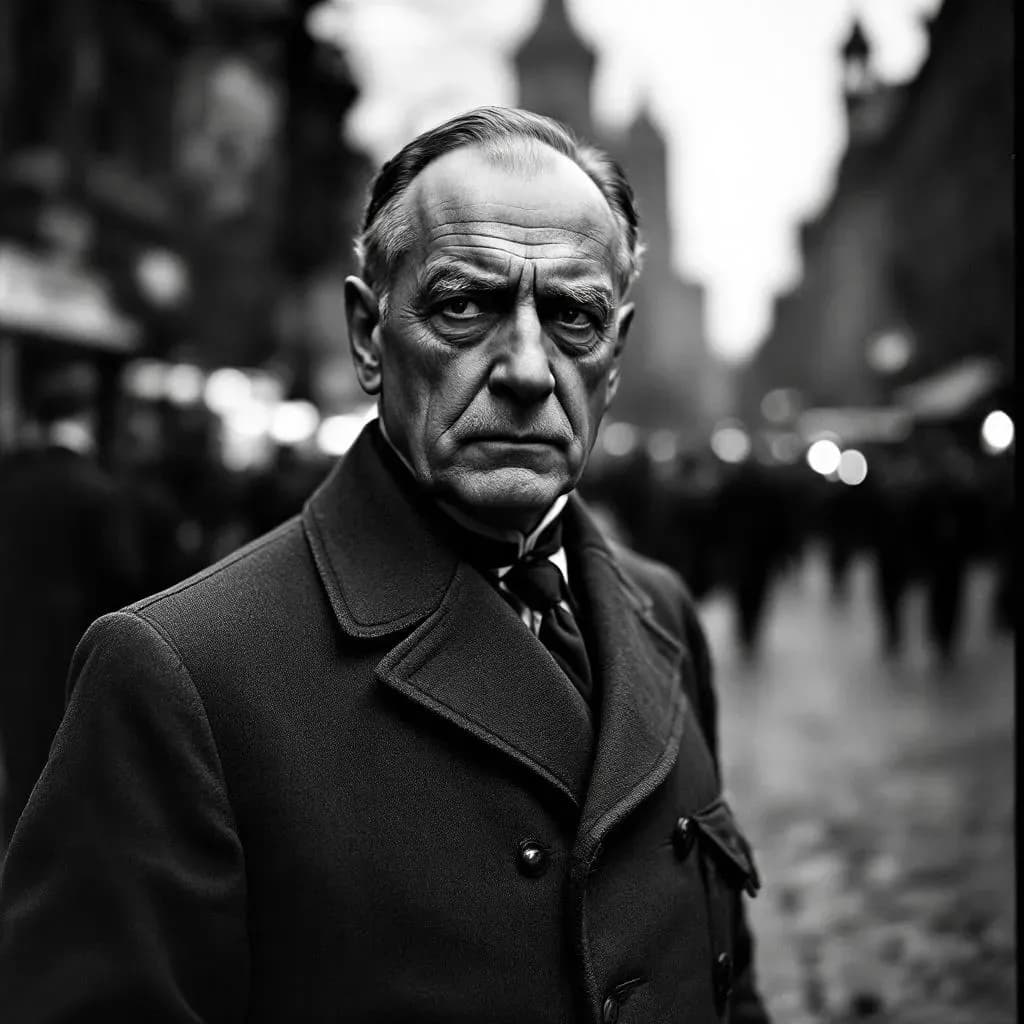
The Butcher of Hanover: How Fritz Haarmann Evaded Justice
A serial killer who preyed on vulnerable young men from Hanover's train station, selling their clothes while disposing of bodies in the river

Sagsdetaljer
Quick Facts
Quick Facts
Friedrich Heinrich Karl "Fritz" Haarmann stands among Europe's most prolific serial killers. Operating in post-World War I Hanover, this predator systematically hunted young men and boys—many of them homeless—from the city's central train station, luring them to his attic apartment with promises of shelter before murdering them in acts of extraordinary brutality.
Born on 25 October 1879 in Hanover, Haarmann had a criminal history predating his killing spree. He had previously been arrested for theft and child sexual abuse. By 1918, remarkably, he had become a police informant—a position that may have provided cover for his escalating crimes. Between 1918 and 1924, he murdered at least 24 victims, though the true number may have been higher. His victims ranged in age from 10 to 22 years old, predominantly young men and boys without family connections to report them missing.
Haarmann's hunting ground was Hanover's railway station, where transient youth congregated. He would identify vulnerable targets and offer them a place to sleep. Once in his attic apartment, victims fell into his trap. His preferred method of killing was savage and intimate: he would bite through his victims' throats—often targeting the Adam's apple—frequently during sexual assault. Death came by bleeding or strangulation.
After killing, Haarmann employed ruthless efficiency in disposing of evidence. He dismembered bodies using an axe, then scattered the remains across the Leine River, which ran through Hanover. Some body parts were burned in a gas oven; others were flushed down the communal toilet. In a grotesque display of opportunism, he sold his victims' clothing on the black market, converting their deaths into profit.