About This Episode
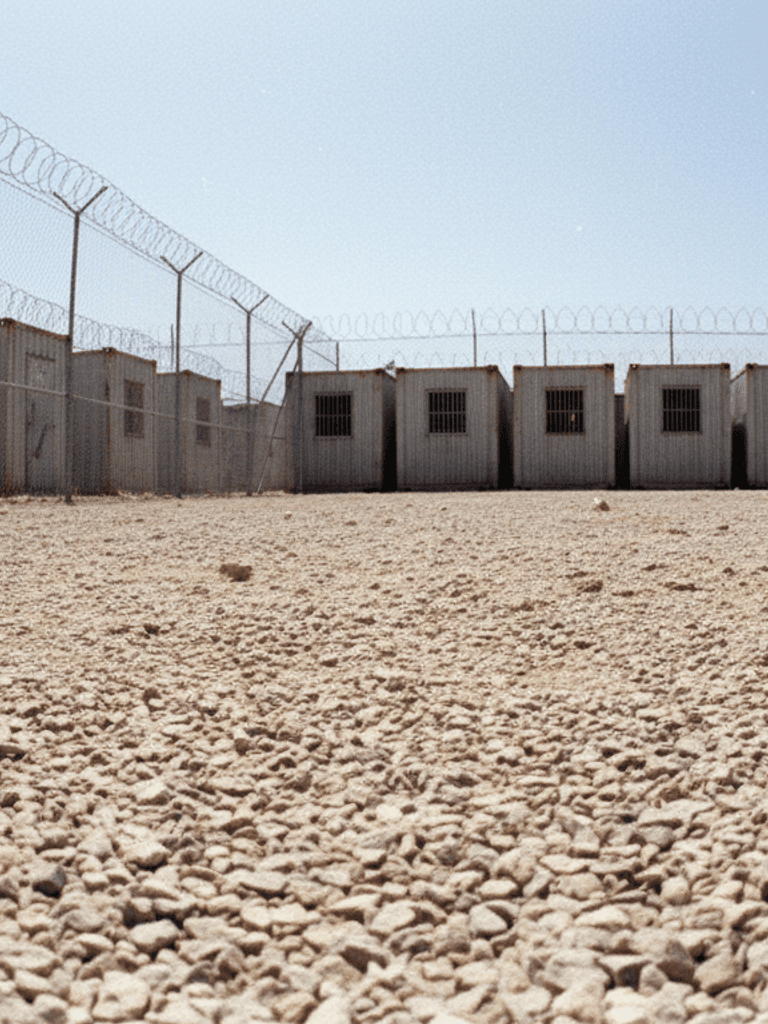
Since opening in 2002, Guantánamo Bay has detained approximately 780 men and boys from 48 countries. Remarkably, only about 2 percent—16 detainees—have ever been convicted of crimes. At least 9 detainees have died in custody. As of June 2023, 30 detainees remain, with 16 cleared for release.
The interrogation methods employed at the facility are extensively documented. Sleep deprivation emerged as a systematic tool: detainees endured up to 20-hour daily interrogations lasting months. The "frequent flier" program epitomized this approach—moving detainees between cells every few hours under constant bright lights. Mohammed Jawad, detained as a teenager, was relocated 112 times over just 14 days—approximately once every 2 hours and 50 minutes.
Physical abuse documented at the facility includes waterboarding, head trauma from impacts against concrete and walls, suspension with dislocated shoulders, beatings with electric cables, sexual assault, anal penetration, stress positions, and extreme temperature exposure. Some detainees were subjected to what officials termed "forced rectal feeding," characterized by human rights organizations as rape.
Psychological torture complemented these methods. Detainees faced prolonged solitary confinement, sensory deprivation, religious humiliation including Qur'an desecration, forced nudity, dog collars and leashes, simulated executions, and exposure to blaring music for extended periods.
Specific cases reveal the depth of abuse. Abd al-Rahim al-Nashiri endured over 22 years without trial, detained at CIA "black sites" across Lithuania, Morocco, Poland, Romania, and Thailand between 2002 and 2006 before transfer to Guantánamo. The UN Working Group on Arbitrary Detention called for his immediate release and compensation in November 2022. Juma Al Dossary was interrogated hundreds of times and tortured with broken glass, barbed wire, and burning cigarettes. Jamal al-Harith was exposed to extreme temperatures and confined in a cage 24 hours daily. David Hicks faced sensory deprivation, stress positions, forced drug injections, and routine sleep deprivation.
Medical professionals played an active role in torture practices. A 2013 report by the International Monitoring and Accountability Project documented that health professionals working with military and intelligence agencies "designed and participated in cruel, inhumane and degrading treatment and torture." Medical staff monitored vital signs during stress procedures, forced-fed hunger strikers, and provided interrogators with medical information for leverage during questioning.
International scrutiny has intensified. In June 2023, the first independent UN investigator permitted to visit Guantánamo found conditions "cruel, inhuman and degrading." The US Senate Intelligence Committee's December 2014 report documented CIA interrogation techniques employed post-9/11. Additional oversight emerged from a December 2003 BBC-leaked FBI email revealing that Defense Department interrogators impersonated FBI agents during interrogations.
Despite decades of documented abuse, accountability remains limited. Of the approximately 780 detainees held since the facility's opening, the vast majority were never charged. Medical complicity in torture has faced minimal prosecution. The facility continues operating with 30 detainees currently held, while 16 cleared for release remain confined.
For international observers, Guantánamo represents a critical case study in how democratic nations rationalized systematic torture during the post-9/11 era—and how institutional inertia allows such practices to persist despite documented evidence of widespread abuse.
Sources: https://ccrjustice.org/files/FOG_torture.pdf https://www.freedomfromtorture.org/news-and-stories/torture-in-guantanamo-bay-prison https://en.wikipedia.org/wiki/Guantanamo_Bay_detention_camp https://www.justiceinfo.net/en/137233-guantanamo-torture-legacy-abuse-still-haunts-america.html https://www.cvt.org/what-we-do/advocating-for-change/legacy-of-us-torture/the-men-who-remain-in-guantanamo/