About This Episode
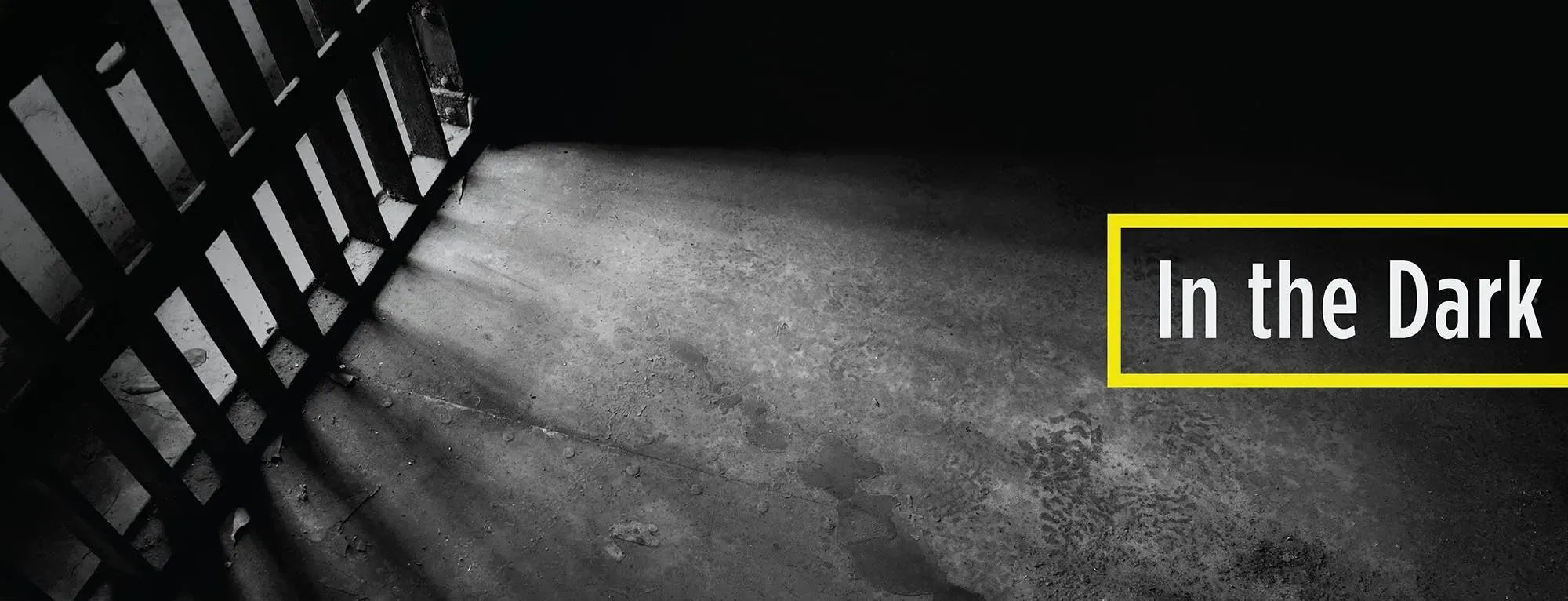
Madeleine Baran's investigative podcast *In the Dark* has become essential listening for anyone seeking to understand the cracks in America's criminal justice system. Launched in September 2016 by American Public Media, the series has evolved from a single-network production into a collaboration with *The New Yorker* and Condé Nast Entertainment—a rare achievement for a podcast that prioritises hard evidence over sensationalism.
Unlike conventional true crime narratives that focus on the perpetrators, *In the Dark* trains its lens on institutional failure: the negligence of law enforcement, the overreach of prosecutors, and the systemic barriers that prevent the innocent from receiving justice. This distinction has proven powerful.
Season 1: The Wetterling Case
The podcast's first season examined the abduction of Jacob Wetterling, an 11-year-old boy taken from St. Joseph, Minnesota, on 22 October 1989. For nearly three decades, the case remained unsolved, leaving a community in anguish. Baran's investigation scrutinised the decisions made by then-Sheriff Jerry Klein and his successor, Sheriff Kurt Graziano, revealing how poor investigative choices and lack of accountability delayed answers for the Wetterling family.
The investigation highlighted a structural problem: sheriffs in Minnesota operated with minimal public-records oversight, allowing investigative failures to compound unchecked. Episode 10 disclosed that Danny Heinrich, already in custody on unrelated child-pornography charges, had confessed to the crime in 2016. The podcast's impact extended beyond journalism—it helped catalyse policy reforms in Minnesota's child-abduction protocols, directly improving how authorities respond to such emergencies.
Season 2: Curtis Flowers and Racial Injustice
If Season 1 exposed negligence, Season 2 revealed deliberate misconduct. Between 1997 and 2010, Curtis Giovanni Flowers—an African-American man—faced trial six times for the June 1996 murders of four people in a Winona, Mississippi, furniture store. One prosecutor, Doug Evans, personally tried four of those six cases.
Baran's meticulous reporting documented a pattern of racial bias in jury selection, poor evidence handling, and witness coercion. The podcast showed how the same conviction could be overturned by the U.S. Supreme Court not once, but twice. In 2010, the Court threw out Flowers' fourth conviction under the Batson rule for unconstitutional jury exclusion. Nine years later, in a 7–2 decision, the justices again overturned his sixth conviction, this time citing the prosecutor's race-based use of peremptory strikes.
Meanwhile, *In the Dark* built a documentary record so compelling that Mississippi's attorney general eventually dropped the case entirely in 2020. Flowers walked free after spending more than two decades in prison for a crime he did not commit.
The impact was undeniable. Season 2 won the Peabody Award in 2018 and—in a historic first for podcasting—the George Polk Award for Justice Reporting in 2019. These accolades reflected not just excellence in journalism, but recognition of the podcast's material effect on the justice system itself.
Beyond Crime: The Broader Mission
The podcast extended its scope in 2020 with a special report on the COVID-19 crisis in the Mississippi Delta, examining how the pandemic exposed deep structural inequalities and failures in healthcare infrastructure and government response. This work reinforced *In the Dark*'s core mission: to investigate how systems fail ordinary people.
What distinguishes *In the Dark* in an oversaturated true crime landscape is its refusal to treat justice as entertainment. Each season is a methodical examination of how institutions—sheriffs' offices, district attorneys, courts—can fail the vulnerable, and how sustained reporting can force accountability.
For international audiences, the podcast serves as a window into American criminal procedure, racial disparities in prosecution, and the power of investigative journalism to achieve what the legal system sometimes cannot: truth and redress.
Sources
https://podcasts.apple.com/us/podcast/in-the-dark/id1148175292 https://en.wikipedia.org/wiki/In_the_Dark_(podcast) https://open.spotify.com/show/1aFyRYDJ1pHEaPMnZAGaOr