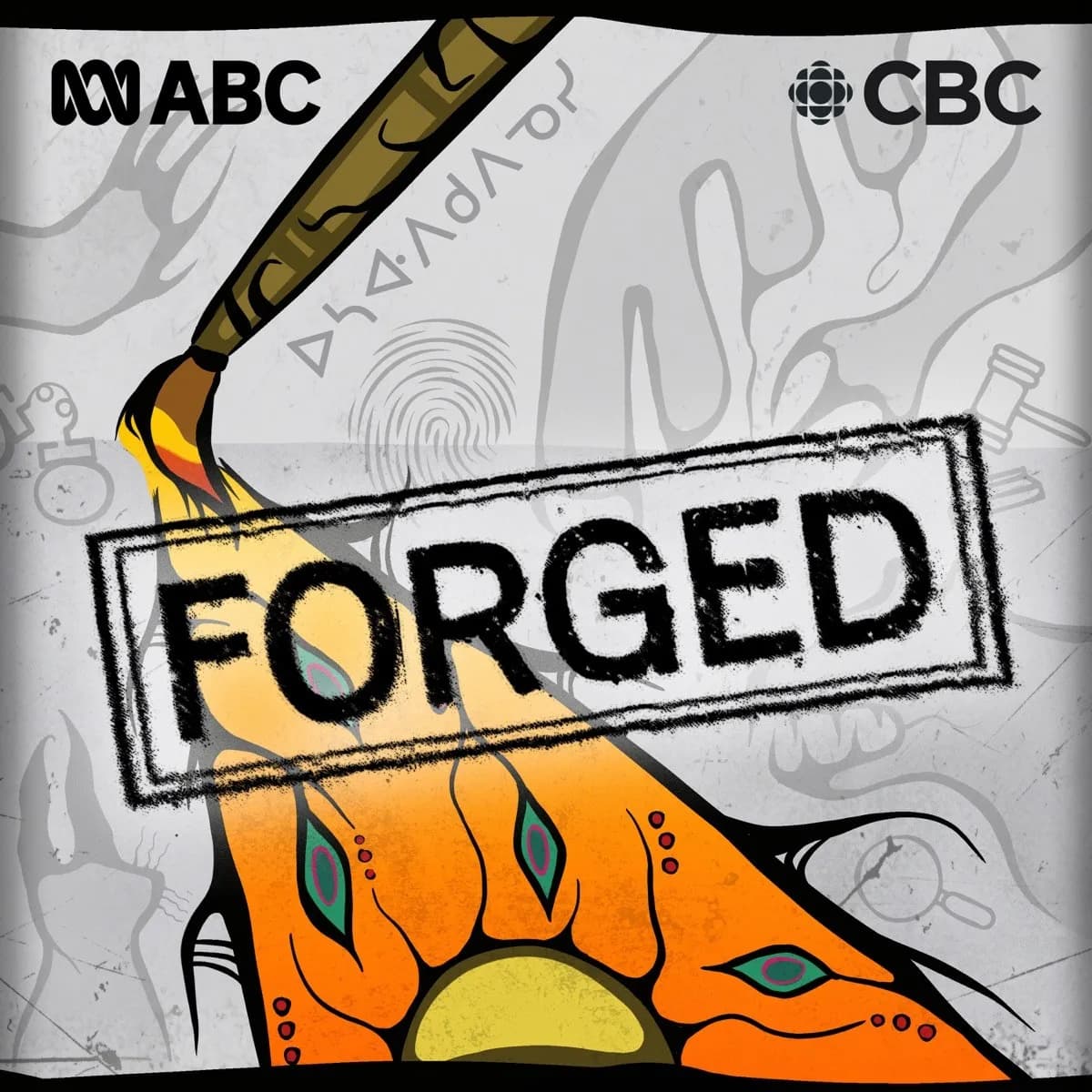
A new true crime podcast, Forged, is pulling back the curtain on one of the most extensive art fraud operations in North American history — a complex web of forgers, dealers, and middlemen who produced and sold over 1,000 fake artworks attributed to celebrated Canadian Ojibwe artist Norval Morrisseau, netting millions of dollars in the process.
Who Was Norval Morrisseau?
Norval Morrisseau, born in 1931 and died in 2007, is widely regarded as one of Canada's most important visual artists. He founded the Woodland style — also known as Anishinaabe art — a vibrant, spiritually charged artistic tradition rooted in Ojibwe mythology and cosmology. His works are held in major museums and have commanded high prices on the international auction market, making him an obvious target for organized forgers.
That combination proved fateful: an artistic universe that is difficult to authenticate, an artist no longer alive to verify his own work, and a market with strong demand. Together, these factors created ideal conditions for one of the most sustained and systematic art fraud schemes Canadian authorities have encountered. Art crime rarely receives the same attention as violent offenses, but the financial and cultural damage it inflicts can be enormous.
A Network Built on Deception
Forged maps the full scope of the network behind the scheme — from those who physically produced the fake paintings, to middlemen who moved the works through galleries and auction houses, to end buyers who paid top prices for art they believed was genuine. The case raises fundamental questions about trust, expertise, and authenticity in the art market, a market that has historically struggled to protect itself against systematic forgery.
But the fraud is more than a financial crime. It also violates Morrisseau's cultural legacy and the Ojibwe tradition from which his art draws its meaning. cultural crime is increasingly discussed as a distinct criminal category — one that tends to hit marginalized communities especially hard.
Why the Podcast Format Works for Complex Crime
At a time when true crime content often gravitates toward murder and violence, Forged offers a welcome alternative. The series speaks to a growing segment of listeners drawn to financial wrongdoing — fraud, money laundering, and organized deception — crimes that demand patience and thorough research to tell well, but that the podcast format is uniquely suited to handle.
Art fraud is notoriously difficult to investigate. Evidence is highly technical, witnesses are frequently compromised by their own involvement in the market, and the line between ignorance and complicity can be razor-thin. None of that requires blood or shock value to hold an audience — and Forged appears to know it.
The Rise of Financial True Crime
Globally, podcasts and documentary series focused on financial and cultural crime have seen significant growth since the early 2020s. Stories about fraud, manipulation, and greed — from investment scams to forgery rings — are finding audiences tired of conventional murder narratives and hungry for more layered criminal storytelling. Forged positions itself squarely in this space, with a case that weaves together art, identity, money, and cultural exploitation into a single, compelling arc.
As a true crime series, it has no shortage of material: the technical complexities of authentication, the human stories of buyers who lost significant sums, and the broader question of how the art market can — and should — protect both itself and the artists whose work forms its foundation.