Who Killed Garrett Phillips?
HBO Max, 2019 — the unsolved 2011 strangulation of a 12-year-old in Potsdam, NY
Quick facts
What Is the Series About?
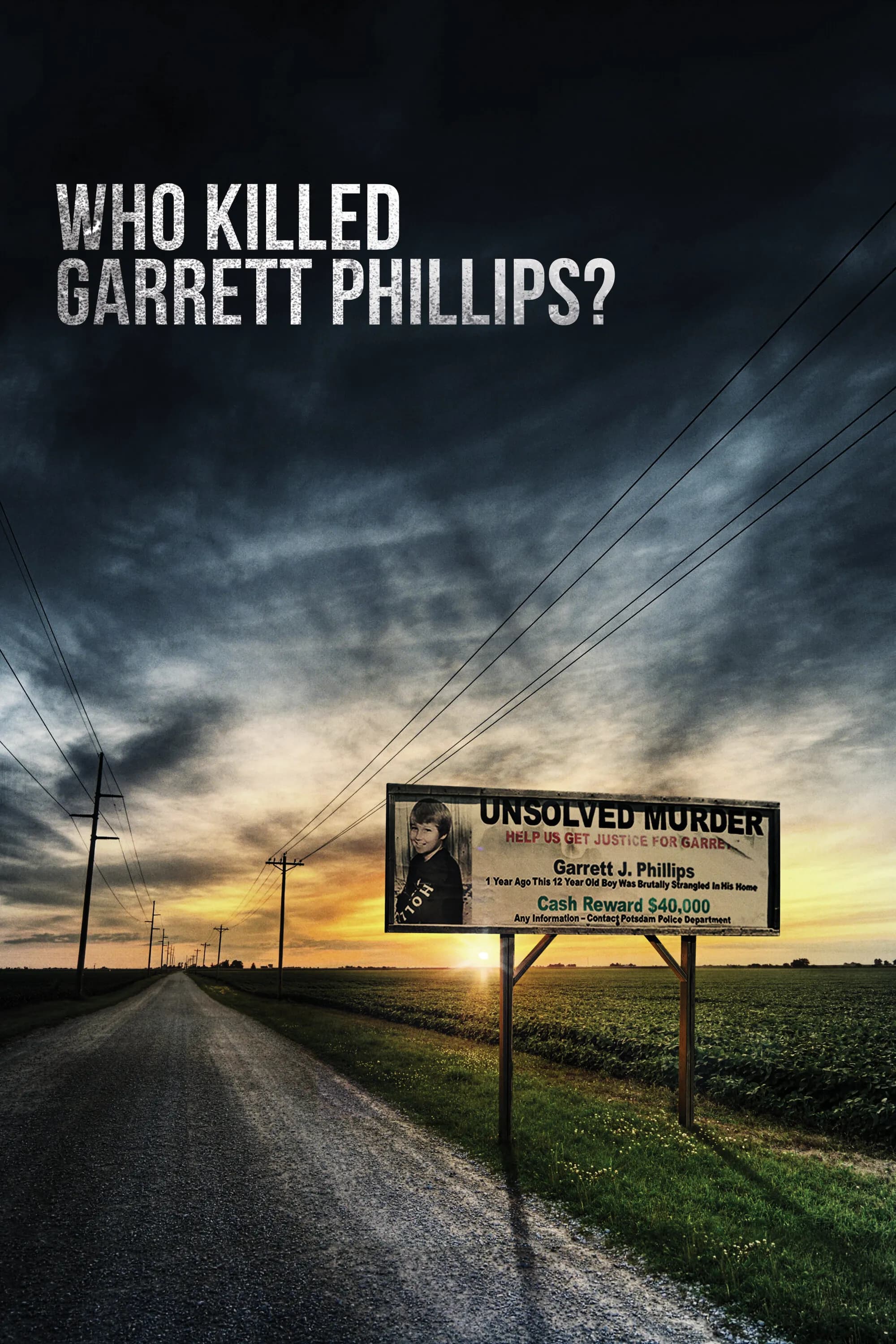
Who Killed Garrett Phillips? is a two-part HBO documentary series directed by Liz Garbus that examines one of the most troubling unsolved murders in recent upstate New York history: the 2011 strangulation of 12-year-old Garrett Phillips in Potsdam, New York. The series does not simply reconstruct the crime — it dissects the investigation, the prosecution, and the social forces that shaped both, asking hard questions about racial bias, institutional failure, and the limits of justice in a small American town.
The documentary premiered at AFI Docs on June 20, 2019, and aired on HBO on July 23 and 24, 2019. It is available to stream on HBO Max.
---
The Case
On October 24, 2011, Garrett Phillips — a 12-year-old boy living in Potsdam, St. Lawrence County, New York — was found strangled in his apartment. He was rushed to the hospital but could not be saved. The case shook the small college town, and law enforcement moved quickly to identify a suspect.
Within days, investigators focused their attention on Oral "Nick" Hillary, a Clarkson University soccer coach who had previously dated Garrett's mother, Tandy Cyrus. The relationship between Hillary and Cyrus had ended, and there were reported tensions. But critics of the investigation — and the documentary itself — argue that another factor played an equally significant role in how quickly Hillary became the prime suspect: he was one of the very few Black men in a predominantly white community.
The case drew years of scrutiny before charges were formally filed. When Hillary finally stood trial, it was conducted as a bench trial, with a judge rather than a jury rendering the verdict. Reporters and legal observers noted throughout the proceedings that the prosecution's evidence was thin — no DNA, no definitive forensic link placing Hillary at the scene at the time of the murder. The presiding judge agreed: Oral "Nick" Hillary was found not guilty.
As of the time of the documentary's release — and according to available reporting since — the murder of Garrett Phillips remains unsolved. No other suspect has been publicly charged. A child is dead, a man's life was upended by a prosecution that failed to prove its case, and the question posed by the documentary's title has no official answer.
---
Production
The series was directed by Liz Garbus, one of America's most acclaimed documentary filmmakers, known for her ability to combine rigorous journalism with deeply human storytelling. Garbus spent considerable time reporting the case, and the documentary reflects extensive research into both the crime and the community context in which it unfolded.
The two-episode format — relatively compact for a case spanning nearly a decade of legal proceedings — allows Garbus to move efficiently from the night of the murder through the investigation, the charges, the trial, and the acquittal, while still making room for the larger questions the case raises. Interviews with community members, legal figures, and those close to both the victim and the accused give the series texture and credibility.
The official HBO trailer framed the documentary around the central tension: a dead child, an accused man who maintains his innocence, and a system that many believe rushed to a conclusion it could never prove.
---
Reception
Critical reception was broadly positive. Reviewers praised the documentary for its depth, its journalistic discipline, and its willingness to hold law enforcement and the prosecution accountable without resorting to sensationalism.
The Washington Post called Who Killed Garrett Phillips? a "masterful study in the evils of assumptions", while the Wall Street Journal described it as an examination of a breakdown in the law-enforcement machine. The Boston Globe focused on how a child's death had effectively destroyed multiple lives — Garrett's most of all, but also those of the people swept up in the investigation's wake.
The News & Observer was among outlets that highlighted the documentary's examination of racial dynamics, noting that Garbus does not shy away from the uncomfortable implication that Hillary's race made him a more convenient suspect in the eyes of investigators who may have stopped looking once they had a name.
Audience response reflected the frustration inherent in the case itself. Viewers drawn in by the true-crime format were left without the resolution the genre often promises — because there is none. Garrett Phillips's killer has never been identified, and the documentary is honest about that fact.
The IMDb title page for the series (tt10532840) reflects ongoing audience engagement with the case, though a verified current rating was not available at the time of this writing.
---
The Case Today
The murder of Garrett Phillips remains an open, unsolved homicide. Oral "Nick" Hillary, who was acquitted, has consistently maintained his innocence. The case is a painful example of what can happen when institutional pressure to close a case collides with insufficient evidence — and, according to many observers and the documentary itself, with racial assumptions that shaped investigative decisions from the earliest hours.
For the Phillips family, justice has never arrived. For the community of Potsdam, the case left lasting questions. And for Nick Hillary, acquittal did not erase the years of suspicion, legal jeopardy, and reputational damage that followed his identification as a suspect.
Who Killed Garrett Phillips? does not pretend to answer what happened on October 24, 2011. What it does — with considerable skill — is show exactly how a system designed to find the truth can instead produce something that looks nothing like it.