OJ Unseen: Exploitation of Evil
Investigation Discovery & HBO Max, 2026 — O.J. Simpson's failed prank-show comeback exposed
Quick facts
What is the series about?
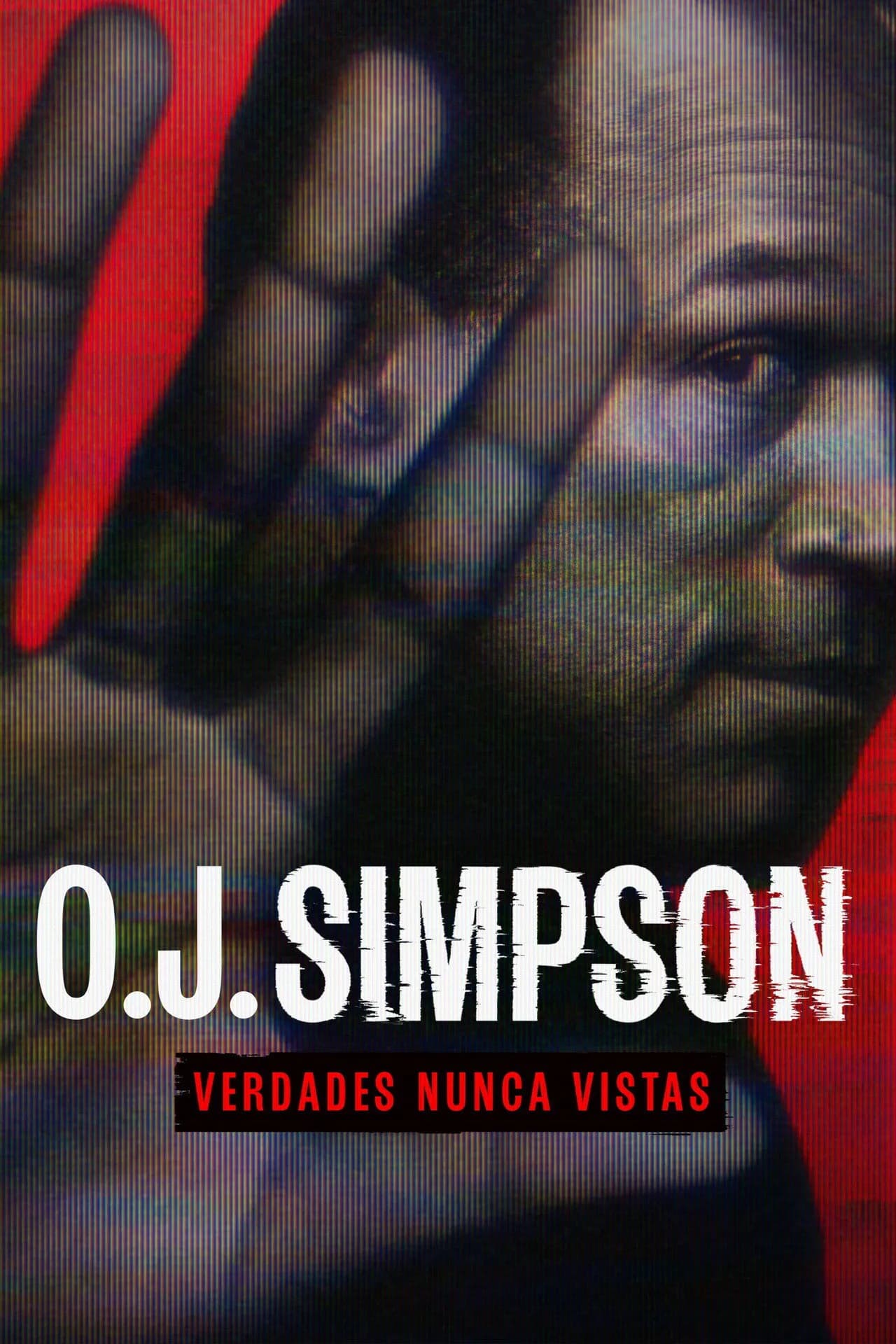
O.J. Unseen: Exploitation of Evil is a four-part documentary event from Investigation Discovery and HBO Max, premiering September 7–8, 2026, that examines one of the strangest footnotes in American celebrity culture: O.J. Simpson's attempt to rehabilitate his public image through a hidden-camera prank show called Juiced, produced roughly a decade after his acquittal for the murders of Nicole Brown Simpson and Ron Goldman. Rather than covering a new crime, the series dissects the making and rapid ethical unraveling of that media project, using more than 60 hours of never-before-seen behind-the-scenes footage and a sit-down interview with Simpson himself. The result is a document not just of one man's brazen bid for relevance, but of the broader question of how entertainment industries enable and profit from notoriety rooted in violent crime.
The Case
To understand why Juiced was so combustible, it is necessary to revisit the case that defined O.J. Simpson's legacy. On the night of June 12, 1994, Nicole Brown Simpson and her friend Ron Goldman were found stabbed to death outside Nicole's condominium in the Brentwood neighborhood of Los Angeles. The crime was savage and the investigation moved rapidly toward Nicole's ex-husband, Orenthal James Simpson — former NFL running back, Heisman Trophy winner, and one of the most recognizable celebrities in America.
What followed was the so-called "Trial of the Century." Simpson was charged with two counts of first-degree murder. The criminal trial, which began in January 1995 and concluded on October 3, 1995, ended in a not-guilty verdict on both counts — a decision that cleaved the American public along racial and social fault lines and continues to generate debate. In February 1997, a civil jury reached a different conclusion, finding Simpson liable for the deaths and ordering him to pay $33.5 million to the victims' families, a judgment he largely avoided paying.
Nicole Brown Simpson and Ron Goldman remain at the center of this story. The documentary is careful to frame the moral stakes of Juiced against the reality of two people who were killed and a family left to watch their killer — in the eyes of many — attempt a television comeback. According to the Hollywood Reporter, the series excavates the "thwarted reality TV comeback" and the behind-the-scenes remorse felt by some of those involved in the production.
The Juiced Project
Juiced was conceived as a hidden-camera prank format — a genre that was commercially dominant in the mid-2000s following the success of shows like Punk'd. Simpson's version aired as a pay-per-view special in 2006 and was almost immediately engulfed in controversy. Critics and the public reacted with revulsion to the spectacle of a man widely believed to have killed two people mugging for a camera in staged pranks. The special holds an IMDb rating of 3.1/10 on its original IMDb page (tt0800100), a reflection of how it was received by audiences who did encounter it.
The documentary draws on the unprecedented archive of footage shot during Juiced's production — over 60 hours of material — to reconstruct how the project came together and why it fell apart. Producers, crew members, and others connected to the show are heard discussing the ethical dimensions of what they participated in. A central and extraordinary element of the series is a sit-down interview with Simpson himself, conducted before his death in April 2024, in which he reflects on the project.
Production
The series is structured as a four-part limited event, with each episode peeling back a different layer of the Juiced production and the cultural ecosystem that made it possible. As noted in the BroadwayWorld premiere announcement, the two-night premiere rollout on September 7 and September 8, 2026, signals that Investigation Discovery treated this as a major fall event. The series streams on HBO Max for subscribers who do not have access to the linear ID network. No director has been confirmed in publicly available materials at time of publication.
The use of 60-plus hours of archival behind-the-scenes footage is the spine of the series' credibility claim. Rather than relying solely on contemporary talking-head interviews or journalistic reconstruction, the filmmakers had access to raw material that was never intended to be seen publicly — footage that reportedly shows the atmosphere on set, the decision-making behind the pranks, and candid moments involving Simpson. This access is what separates the documentary from the many retrospective Simpson projects that have come before it.
Reception
Early critical reception has been pointed. The Wall Street Journal's review, headlined "A Wretched Reality Show Revisited," signals a sharply negative assessment of the original Juiced project — though the framing also implies the documentary is doing serious work in interrogating that wretchedness rather than simply reproducing it. The Hollywood Reporter emphasizes the ethical unease that runs through the series and the remorse expressed by some participants, suggesting the filmmakers are not presenting the story as entertainment triumph but as cautionary exposure.
The central controversy surrounding the documentary mirrors that of the project it covers: is examining Juiced through a new four-part series itself a form of the exploitation it purports to critique? This tension is one the most serious reviews engage with directly. No verified IMDb rating for the documentary series itself was available at time of publication, as the series is newly released.
The Case Today
O.J. Simpson died on April 10, 2024, at the age of 76. He was never convicted of the 1994 murders of Nicole Brown Simpson and Ron Goldman, and the civil judgment against him was largely uncollected. The families of the victims have continued to advocate for their memory and for accountability in the years since the trial. Ron Goldman's father, Fred Goldman, has been a particularly persistent public voice on the subject of Simpson's civil liability.
The arrival of O.J. Unseen: Exploitation of Evil in fall 2026 — two years after Simpson's death — raises questions that the series appears designed to sit with rather than resolve: what does it mean for an entertainment industry to have enabled Juiced in the first place, and what does it mean to now produce a prestige documentary about that enabling? Whether viewers find the series a genuine reckoning or simply the next chapter in the long commercial exploitation of this case will likely define its lasting reputation.