What Happened, Brittany Murphy?
HBO Max, 2021 — the mysterious 2009 death of actress Brittany Murphy
Quick facts
What Is the Series About?
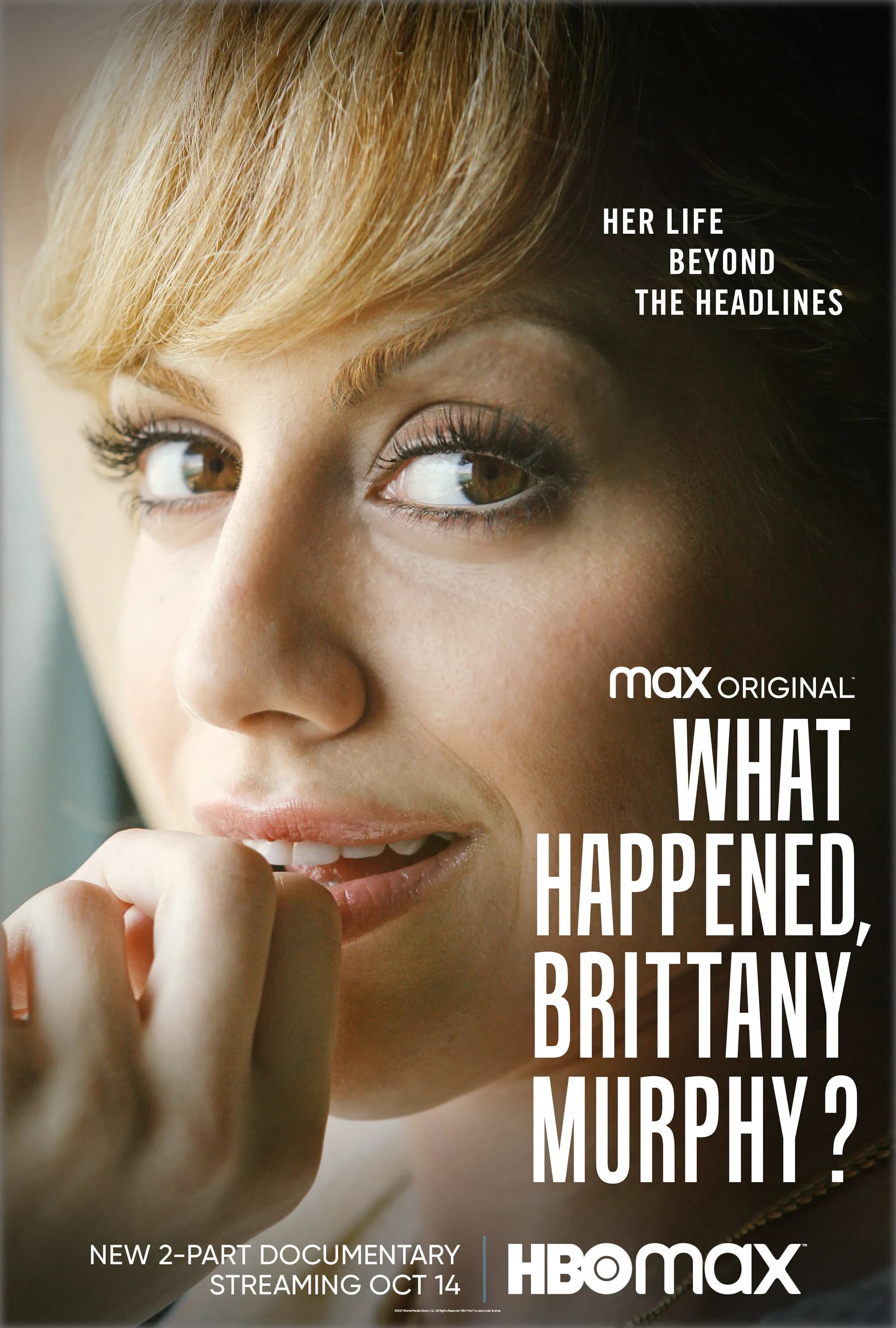
What Happened, Brittany Murphy? is a 2021 HBO Max documentary series that re-examines the life, career, and sudden death of actress Brittany Murphy, who died on December 20, 2009, in Los Angeles at the age of 32. The two-part series attempts to look beyond the official findings and explore the cultural, personal, and conspiratorial dimensions that have surrounded her case ever since. It profiles Murphy not only as a victim of a tragic and premature death, but as a full human being — a talented actress whose star rose quickly in the late 1990s and early 2000s before her life was cut short under circumstances that have never fully satisfied the public.
The series draws on interviews with people who knew Murphy personally and professionally, as well as archival footage and media coverage from her career and the immediate aftermath of her death. It situates the case within a broader cultural conversation about how Hollywood treats young women, how the media covers female celebrities in distress, and how quickly conspiratorial narratives fill the vacuum left by unanswered questions.
The Case
Brittany Murphy — born Brittany Anne Bertolotti on November 10, 1977 — rose to fame through roles in films such as Clueless (1995) and 8 Mile (2002). On the morning of December 20, 2009, she collapsed in the bathroom of her Hollywood Hills home and was transported to Cedars-Sinai Medical Center, where she was pronounced dead.
The Los Angeles County coroner's office completed its investigation and, in February 2010, ruled the death accidental. The official cause was listed as pneumonia, with iron deficiency anemia and multiple drug intoxication — involving both prescription and over-the-counter medications — cited as significant contributing factors. No criminal investigation was opened, and no charges were ever filed in connection with her death.
The case took a deeply unsettling turn five months later when Murphy's husband, British screenwriter Simon Monjack, was found dead in the same home on May 23, 2010. The Los Angeles coroner determined that Monjack had died of the same primary causes — pneumonia and severe anemia — a conclusion that struck many observers as extraordinary and fueled intense public speculation.
Years later, Murphy's estranged father, Angelo Bertolotti, commissioned a private toxicology analysis of hair samples he claimed belonged to his daughter. In 2013, that report alleged elevated levels of heavy metals consistent with poisoning. However, the report was widely challenged by forensic experts and was not accepted by law enforcement authorities as grounds to reopen the case. No perpetrator has ever been identified, and no criminal proceedings have been initiated. The official findings have remained unchanged.
Production
The documentary was produced for HBO Max and released in two parts in October 2021. Specific director credits have not been widely confirmed in publicly available reporting at the time of publication and are listed here as unverified. The series is reported to have incorporated extensive archival materials, including interviews, entertainment news footage, and behind-the-scenes glimpses of Murphy's career trajectory.
The production takes a notably empathetic approach to its subject, reportedly pushing back against the tabloid narratives that defined media coverage of Murphy during her lifetime and after her death. Interviewees include individuals from Murphy's personal and professional circle, though the identities and number of on-camera sources have varied across published reviews.
The series appears to be part of a broader wave of documentary projects — prominent on streaming platforms in the early 2020s — that revisit the deaths or downfalls of female celebrities from the late 1990s and 2000s through a more critically reflective lens, reconsidering both the events themselves and the media environment that shaped public understanding of those events.
Reception
Public and critical reception to What Happened, Brittany Murphy? was notably mixed. Some reviewers praised the series for humanizing Murphy and challenging reductive media portrayals of her, arguing that it served as a meaningful corrective to years of sensationalized coverage. Others felt the documentary leaned too heavily into conspiracy-adjacent framing without sufficiently interrogating the credibility of the more speculative claims it presented.
A recurring point of criticism was the series' handling of the heavy metals toxicology report commissioned by Angelo Bertolotti. Critics noted that presenting disputed forensic findings without sufficient context risks amplifying unsubstantiated theories. Supporters of the series countered that raising questions is not the same as asserting guilt, and that the documentary was more interested in exploring the cultural circumstances of Murphy's death than in prosecuting a case.
IMDb ratings and formal aggregated review scores were not confirmed in sources available at the time of publication.
The Case Today
As of the time of writing, the death of Brittany Murphy remains officially classified as an accidental death. The Los Angeles County coroner's ruling has not been revisited or reversed, and no law enforcement agency has publicly indicated that a criminal investigation is active or planned.
The documentary appears to have reignited popular interest in the case without producing new evidentiary breakthroughs. Murphy's story continues to circulate in true crime media, podcast discussions, and online communities, where debate about the official findings remains active. The simultaneous deaths of Murphy and Monjack in the same home continue to be cited as among the more genuinely inexplicable circumstances in recent Hollywood history — even accounting for the official explanations.
Brittany Murphy's cultural legacy has been substantially reassessed in the years since her death, with many critics and fans arguing that her talent was underappreciated during her lifetime and that her public image was distorted by tabloid coverage that focused on her appearance and personal life rather than her work.