Voyeur
Netflix documentary film (2017) covering Gerald Foos's alleged decades-long spying on motel guests in Colorado
Quick facts
What Is the Documentary About?
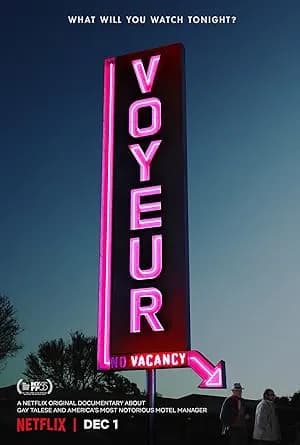
Voyeur is a Netflix documentary film released on December 1, 2017, directed by Josh Koury and Myles Kane. Running approximately 95 minutes, it is a single feature-length film and not a multi-episode series. At its core, Voyeur is the story of two men: Gerald Foos, a Colorado motel owner who claimed to have spied on his guests for decades through hidden ceiling vents, and Gay Talese, one of America's most celebrated journalists, who spent years reporting on Foos's account and ultimately staked his reputation on it.
The documentary is unusual in the true crime landscape because its central drama is not a courtroom verdict but a crisis of truth. By the time the film was released, the story Talese had reported was already under serious scrutiny, and Voyeur captures that collapse in real time, making the journalist himself a subject of the film as much as the alleged voyeur.
The Case
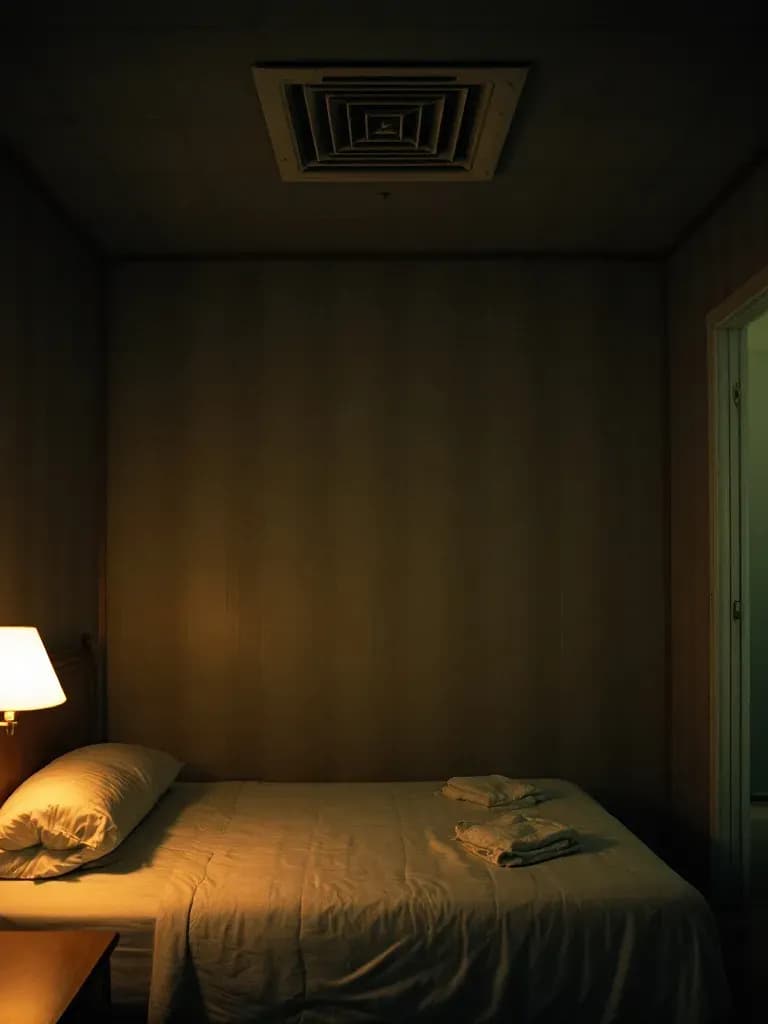
Gerald Foos purchased the Manor House Motel in Aurora, Colorado in the late 1960s. According to his own account, he almost immediately began modifying the property to enable systematic surveillance of guests. He allegedly constructed a walkway in the attic above guest rooms and had ceiling vents specially designed so he could observe those below without being detected.
Foos claimed to have kept handwritten journals documenting what he saw: the private lives, intimate moments, and behaviors of guests who had no idea they were being watched. He described this activity not as mere voyeurism but as a kind of self-styled sociological research, a framing that Talese found compelling enough to pursue for decades.
The alleged crimes centered on Aurora, Colorado, and the victims, motel guests who were watched without consent, are never individually identified in the documentary or in verified source material. Their anonymity reflects both the nature of the alleged offense and the absence of any formal criminal investigation that would have surfaced their identities.
No criminal conviction was recorded against Gerald Foos in connection with these allegations. The statute of limitations on any relevant offenses had long since expired by the time the story became public, and there is no documented prosecution.
The deeper scandal, as the documentary reveals, concerns the truthfulness of Foos's account itself. After Talese published his New Yorker piece and the book The Voyeur's Motel in 2016, the Washington Post investigated and found significant discrepancies, including evidence suggesting Foos may not have owned the motel during some of the periods he described in his journals. Talese briefly and publicly distanced himself from the book before reversing course. The episode became one of the more uncomfortable public reckonings in recent American literary journalism.
Production
Directors Josh Koury and Myles Kane were granted unusual access to both Gerald Foos and Gay Talese over an extended period, allowing them to capture the story's unraveling as it happened rather than reconstructing it after the fact. The film benefits from this fly-on-the-wall proximity: viewers watch Talese grapple with doubts about his source, and they watch Foos, elderly and unrepentant, continue to defend the truth of his account.
The documentary is listed on IMDb under title ID tt7588790 with a runtime of 95 minutes and a U.S. release date of December 1, 2017. The Netflix release made it immediately available to a global audience, amplifying the debate about journalism ethics that the film's subject matter had already ignited.
The filmmakers' approach was deliberately observational rather than prosecutorial. There are no dramatic reenactments. Instead, Koury and Kane let the conversations between Talese and Foos, and the mounting evidence of factual problems, carry the film's tension.
Reception
Critical response to Voyeur was mixed to positive. On Rotten Tomatoes the film holds a score of approximately 79%, while Metacritic places it at 59 out of 100, a split that reflects genuine disagreement about what the film ultimately achieves.
The Guardian praised the documentary's creepiness while arguing that its most important subject is not Foos at all, but the ethical failure embedded in Talese's reporting: a journalist so seduced by a great story that he may have stopped asking the questions a great journalist should ask.
IndieWire was more critical, writing that the film was so eager to tell a good story that it tells the wrong one, a pointed critique suggesting that Koury and Kane, like Talese before them, were not immune to the allure of Foos's narrative.
Consequence described the documentary as an account of both Foos's alleged spying and the scandal surrounding the published account, noting that the two stories are inseparable by the time the film reaches audiences.
For viewers, Voyeur provoked strong reactions less because of the voyeurism itself and more because of what it reveals about how stories get told and who decides what counts as true.
The Case Today
As of the available verified record, Gerald Foos has faced no criminal conviction in connection with the alleged voyeurism at the Manor House Motel. The motel itself no longer operates under that name or ownership. The statute of limitations on any charges related to the described conduct expired long before the story became public.
Gay Talese's book The Voyeur's Motel remains in print, though the controversy over its accuracy has never been fully resolved. Talese has maintained that the core of Foos's account is true, while critics and investigators have continued to question specific claims.
The broader legacy of Voyeur is as a document about the fragility of nonfiction and the dangers of a journalist becoming too invested in the story he is trying to tell. As Denverite reported, Talese's nonfiction account was substantially discredited after discrepancies were uncovered, a fact the documentary captures with uncomfortable clarity since the cameras were rolling when the damage was done.
For those interested in the intersection of media ethics, privacy, and truth in journalism, Voyeur remains a distinctive and unsettling entry in the Netflix documentary catalog.