The Gerald Foos Case — The Voyeur of Manor House Motel
Aurora, Colorado, 1960s–1990s — voyeurism scandal documented but never prosecuted
Published June 2, 2026
Case Details
Quick Facts
The Case
The Gerald Foos case is a United States voyeurism and privacy scandal centered on the Manor House Motel in Aurora, Colorado, where the motel's owner secretly observed guests through specially constructed ceiling vents over a period stretching from the 1960s into the 1990s. Unlike most cases featured in true crime media, the Foos story did not result in a homicide investigation, an arrest, or a criminal trial. Instead, it became publicly known through journalism — most notably Gay Talese's 2016 New Yorker article "The Voyeur's Motel" — and later through a Netflix documentary. The case raises difficult questions about long-term surveillance of unsuspecting members of the public, the reliability of a self-described voyeur as a source, and the ethical limits of narrative journalism.
The Crime
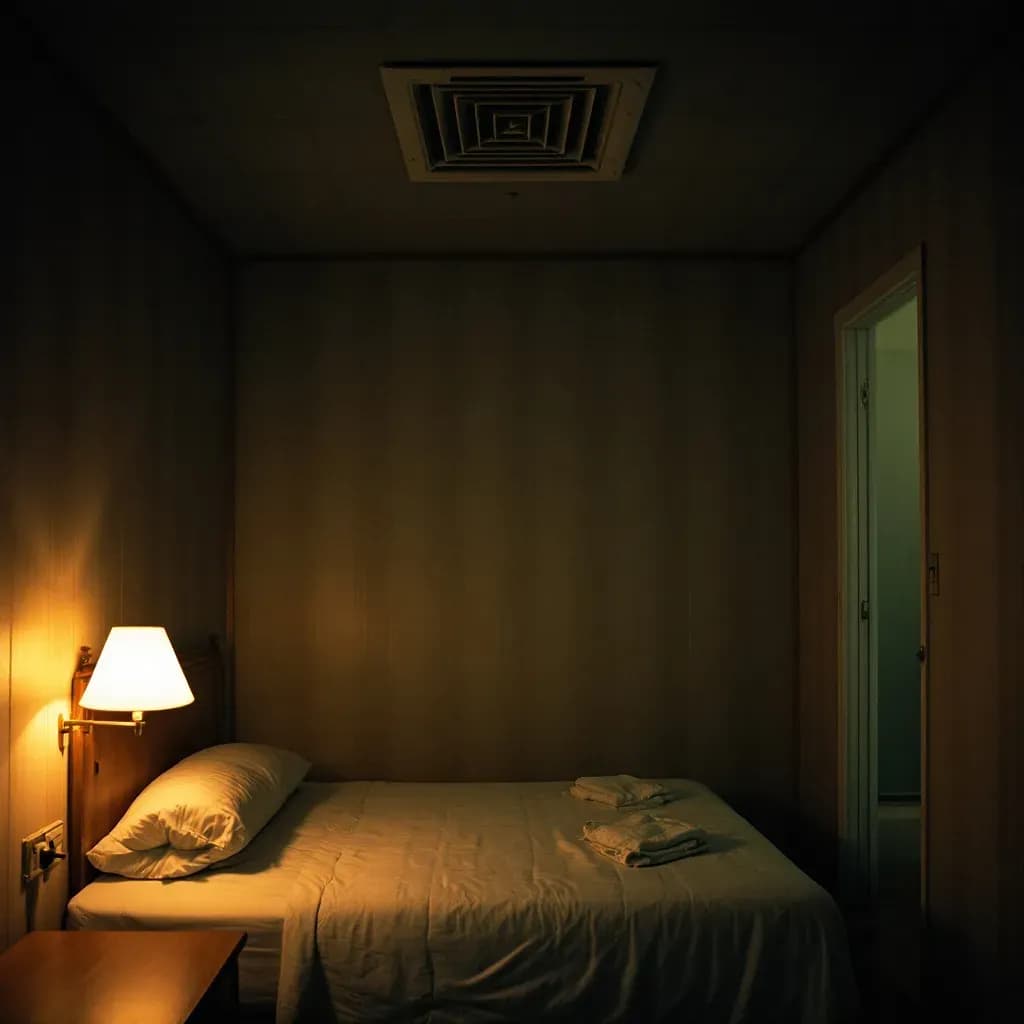
According to Foos's own account, after acquiring the Manor House Motel in the 1960s he modified a number of rooms by installing louvered vents in the ceilings. Above the rooms he built an attic observation platform from which he could look down into the guest rooms without the occupants' knowledge. He claimed to have watched guests for decades, focusing particularly on their sexual behavior, and to have kept detailed handwritten journals describing what he saw.
The conduct described falls squarely within the category of voyeurism and invasion of privacy. The guests — ordinary travelers staying at a roadside motel — had no reason to suspect that the ventilation grilles above them concealed a viewing platform. The scale alleged by Foos, spanning years and a large number of rooms, would make the surveillance one of the most extensive privately operated voyeurism schemes ever documented in the United States, if his accounts are accurate.
Timeline
Foos acquires Manor House Motel
Gerald Foos becomes owner of the Manor House Motel in Aurora, Colorado, and allegedly begins modifying rooms with louvered vents in the ceiling to observe guests.
Foos writes to Gay Talese
Foos contacts journalist Gay Talese and describes his secret surveillance of guests, offering access to his diaries on condition of anonymity.
Motel sold
Foos sells the Manor House Motel, ending the documented period of surveillance from the attic platform he had built above the guest rooms.
'The Voyeur's Motel' published
Gay Talese's article is published in The New Yorker, identifying Foos by name and describing decades of voyeurism at the motel.
Credibility questions arise
Journalists and commentators raise doubts about parts of Foos's account, including inconsistencies in the timeline and possible fabrications.
Netflix documentary 'Voyeur' released
The Netflix documentary, depicting Talese's research and Foos's claims, is released, bringing the case to a wider audience.
The Victims
The victims in this case are the motel's guests — an unknown number of travelers, couples, and families who stayed at the Manor House Motel during the period Foos owned it. None of these individuals have been publicly named, and the available reporting does not identify specific victims or provide verified ages or backgrounds. Because the surveillance was secret and no criminal investigation followed, there is no official victim list. Many of those affected likely never learned that they had been watched.
Investigation
There is no verifiable record of a police investigation, arrest, or prosecution of Foos for the conduct he described. The principal "evidence" in the case consists of Foos's own journals and the reporting built around them by Gay Talese, who first received a letter from Foos in 1980 and corresponded with him for decades before publishing.
After publication, the story's credibility came under scrutiny. Commentators, including legal academics writing at The Faculty Lounge, pointed out timeline problems and inconsistencies in Foos's accounts — including periods when public records suggested he did not actually own the motel. Talese himself briefly distanced himself from the book before reaffirming it. These credibility issues mean that while voyeuristic conduct at the motel is widely accepted as having occurred, specific incidents described in Foos's journals cannot all be independently verified.
Trial and Verdict
No trial took place. The supplied sources do not record any criminal charge, court verdict, or sentence against Gerald Foos in connection with the motel surveillance. By the time the story reached the public in 2016, the alleged conduct had ended years earlier, and applicable statutes of limitations for voyeurism offenses in Colorado would in most cases have long since expired. The case therefore sits in an unusual category: publicly documented misconduct that never produced a prosecution, and a story whose factual reliability is partly dependent on a single self-interested narrator.
Today
The Gerald Foos case remains best known through Gay Talese's reporting and the Netflix documentary "Voyeur", released on December 1, 2017, which examines both Foos's claims and Talese's role in shaping the story. The case has also been revisited by true crime podcasts, including a "Voyeur" episode on True Crime Obsessed that discusses both the original allegations and the credibility controversies that followed publication. The Manor House Motel itself no longer operates under Foos's ownership. The case continues to be cited in discussions of journalistic ethics, the legal treatment of long-term voyeurism, and the gap between morally serious misconduct and the reach of the criminal justice system.
Media coverage
TV series
- Voyeur(2026)
Ask about this case
Answers from KrimiNyt's coverage onlyFollow this case
Get an email when a new documentary, podcast or book about The Gerald Foos Case — The Voyeur of Manor House Motel appears, or when a verdict is reached.