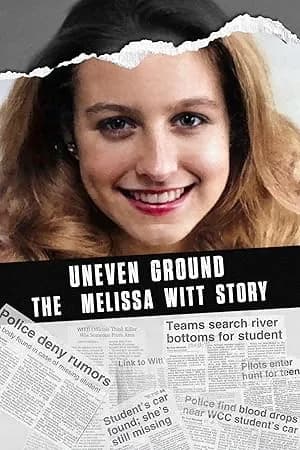
Uneven Ground: The Melissa Witt Story
Apple TV, 2023 — the unsolved 1994 kidnapping and murder of a 19-year-old Arkansas woman
Quick facts
What Is the Series About?
*Uneven Ground: The Melissa Witt Story* is a 2023 true-crime documentary film directed by LaDonna Humphrey and available on the Apple TV store. Running approximately 47–48 minutes, it examines one of Arkansas's most haunting cold cases: the kidnapping and murder of 19-year-old Melissa Witt, who disappeared on December 1, 1994, and whose killer has never been brought to justice. The film is not an episodic series but a single feature-length documentary, starring Deborah Singer Stuart according to the Apple TV listing.
The documentary's title — Uneven Ground — reflects both the rugged Ozark terrain where Witt's body was found and the uneven, frustrating path that investigators and Witt's loved ones have walked for three decades in search of answers.
---
The Case
On December 1, 1994, Melissa Witt, a 19-year-old woman from the Fort Smith, Arkansas area, disappeared. Her body was later recovered in the Ozark National Forest near Fort Smith, and investigators ruled her death a homicide. The case sent shockwaves through the tight-knit Arkansas community and drew significant regional media attention at the time.
Despite the initial intensity of the investigation, no one was ever charged with Witt's murder. The case went cold, and for years it remained an open wound for her family and the community around Fort Smith. According to reporting from Newsweek, the Melissa Witt homicide continues to be officially unsolved, with no convicted perpetrator identified.
A notable development in the broader public investigation came when separate reporting and documentary work surfaced the name Charles Ray Vine as a possible suspect. However, as of the time of this writing, no arrest or conviction has resulted from that lead, and the case remains open.
The crime is classified as a kidnapping and homicide — a cold case that has now stretched beyond 30 years without a resolution.
---
Production
The documentary was directed by LaDonna Humphrey, whose work in the true-crime space is documented on her official filmmaker page. Humphrey and her team reportedly spent years reviewing case files, conducting interviews with witnesses and individuals described as potential suspects, and working closely with retired detectives who had familiarity with the original investigation.
The production approach follows a style common to advocacy-driven true-crime documentaries: rather than simply recounting known facts, the filmmakers appear to have actively engaged with the investigative record in hopes of generating new momentum for the case. The official documentary description page offers additional context on the filmmakers' methodology and their relationship to the Witt family and advocacy community surrounding the case.
Deborah Singer Stuart receives the starring credit on the Apple TV listing, suggesting she plays a significant on-screen role, likely as an interview subject, family member, or investigative contributor — though the available sources do not specify her exact relationship to the case.
The film has been described in reviews as award-winning, and Crime Traveller's coverage characterizes it as an impactful and haunting piece of true-crime filmmaking. It is also available on additional platforms including Roku.
---
Reception
On IMDb (tt27990073), the documentary holds a rating of 5.9 out of 10 based on 127 user ratings at the time of publication. That score reflects a limited but engaged audience — modest by the standards of major true-crime releases, but unsurprising for a regional cold-case documentary without the backing of a major streaming platform's marketing apparatus.
Critical and press reception has been more generous. The film has been referenced as award-winning in at least one review context, and Crime Traveller's write-up describes it positively, noting its emotional weight and the seriousness with which Humphrey approaches the subject matter.
A YouTube clip associated with the documentary or its promotional coverage claims the film generated millions of views and dozens of new investigative leads in the Witt case. That claim, however, originates from a promotional source and should be treated with editorial caution unless independently corroborated.
The documentary sits within a broader ecosystem of coverage around the Witt case. Separate documentary work has raised the name of Charles Ray Vine as a potential suspect — a point of ongoing public debate — and the relationship between these various productions and their respective claims has been a source of discussion among true-crime communities online.
---
The Case Today
As of 2024–2025, the murder of Melissa Witt remains officially unsolved. No individual has been convicted of her kidnapping or homicide. The case has attracted renewed public attention through documentary filmmaking, online advocacy, and investigative journalism — including Newsweek's coverage — but no formal charges have been filed.
The Witt case is an example of a cold case that has remained stubbornly resistant to resolution despite decades of sustained community interest, multiple investigative reviews, and the attention of documentary filmmakers. For true-crime viewers and advocates, Uneven Ground represents both a tribute to a victim whose case has never been closed and a call to action for anyone with information about what happened on December 1, 1994, in Fort Smith, Arkansas.
Anyone with information about the Melissa Witt case is encouraged to contact relevant Arkansas law enforcement authorities.