This Is a Robbery: The World's Biggest Art Heist
Netflix, 2021 — the unsolved 1990 Isabella Stewart Gardner Museum theft in Boston
Quick facts
What Is the Series About?
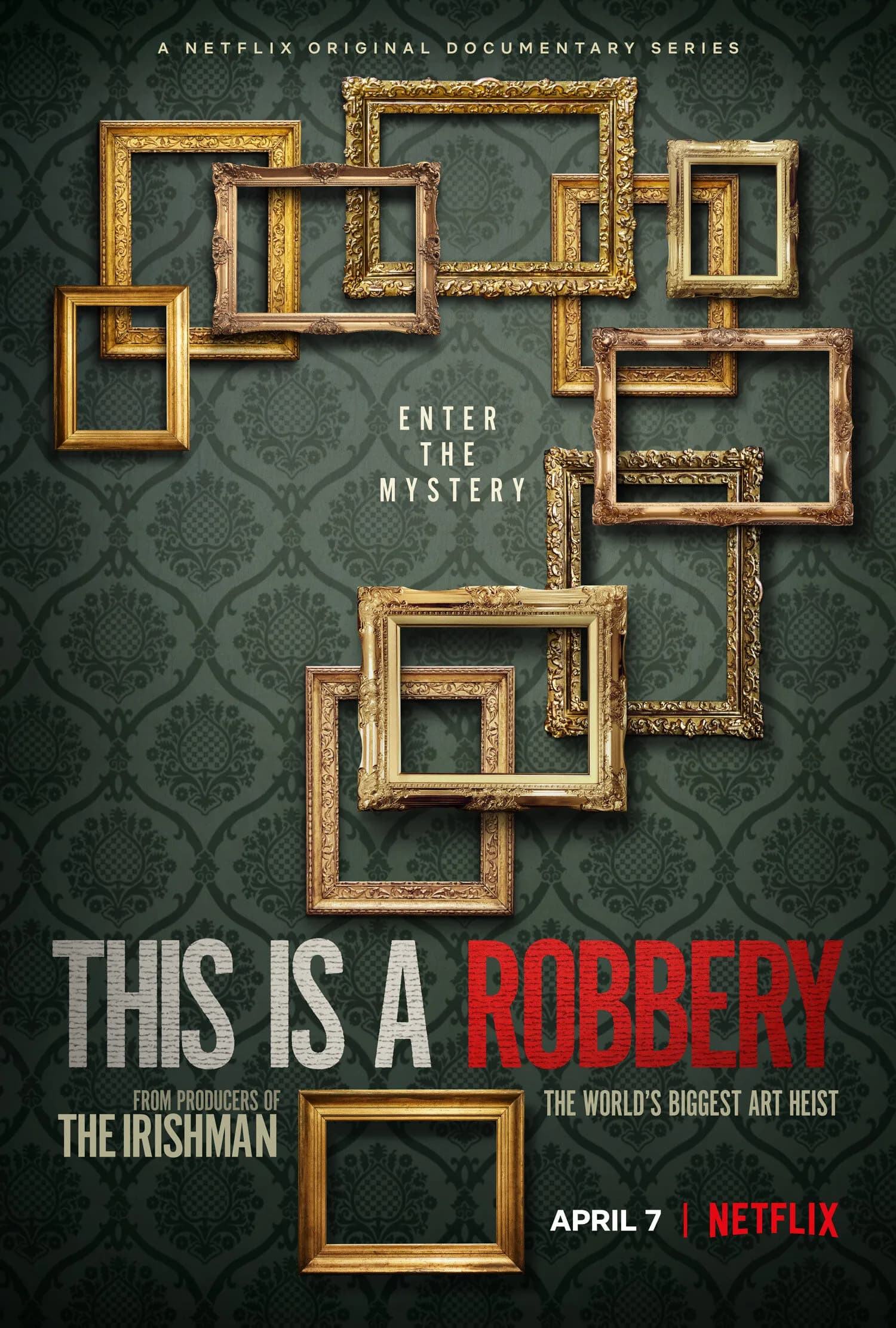
This Is a Robbery: The World's Biggest Art Heist is a Netflix true-crime documentary miniseries about the 1990 theft of 13 priceless works of art from the Isabella Stewart Gardner Museum in Boston, Massachusetts — widely regarded as the largest unsolved art heist in modern history. Released on April 7, 2021, and directed by Colin Barnicle, the four-part series examines the crime itself, the decades-long investigation, and the network of criminal figures and theories that have surrounded the case ever since. More than three decades after the robbery, not a single stolen work has been recovered and no one has ever been convicted for the theft.
The Case
In the early hours of March 18, 1990, two men arrived at the Isabella Stewart Gardner Museum at 25 Evans Way in Boston disguised as police officers. They told the security guards on duty that they were responding to a disturbance call, gained entry to the building, and then restrained both guards with handcuffs. Over the next approximately 81 minutes, the thieves moved methodically through the museum and removed 13 works of art, cutting several paintings directly from their frames. The stolen collection included pieces of extraordinary cultural and monetary value: a Vermeer, works by Rembrandt, Edgar Degas, Édouard Manet, and Govert Flinck, as well as a Chinese Gu bronze vessel. Collectively, the works have been estimated to be worth in excess of 500 million US dollars.
The museum itself was founded through the personal collection of Isabella Stewart Gardner, born April 14, 1840, and who died July 17, 1924 — more than 65 years before the robbery. Gardner's will famously stipulated that the museum's collection must never be altered, meaning that the frames from which the stolen paintings were cut still hang empty on the walls today as a permanent reminder of the loss.
The FBI has investigated the theft for more than three decades. Several suspects have been named in reporting and in law enforcement statements over the years, including Robert "Bobby" Donati, Vincent Ferrara, Carmello Merlino, and Patricia "Terry" White — all figures connected to Boston's organized crime underworld. None have been convicted for the Gardner Museum robbery itself. The documentary series also features extensive interviews with Myles J. Connor Jr., a well-known Boston-area career criminal and art thief who speaks at length about the case and his knowledge of the city's criminal networks. Connor has prior criminal convictions on separate matters, but has not been charged or convicted in connection with the Gardner theft.
As of the series' release in 2021, the FBI and the Isabella Stewart Gardner Museum both publicly maintained that the case remains officially unsolved, and a reward of up to ten million dollars has been offered for information leading to the recovery of the stolen works.
Production
The series was directed by Colin Barnicle, a filmmaker with deep ties to the Boston area. Barnicle drew on a combination of archival news footage, reconstructions, and on-camera interviews with figures who have been connected to, or have claimed knowledge of, the case over the years — including the aforementioned Myles J. Connor Jr. The production captures the texture of Boston's criminal underworld in the late 1980s and early 1990s and places the heist within the wider context of organized crime activity in New England at that time. The series benefits from the long passage of time since the crime, which appears to have made some sources more willing to speak on camera about what they knew or suspected.
The documentary leans into the fact that the case has never been solved, treating the unresolved mystery not as a shortcoming but as its central dramatic engine. Each episode builds on theories and witness accounts while being careful — at least structurally — not to present unproven claims as established fact, though the series does give considerable platform to speculation about mafia involvement.
Reception
The series attracted strong viewer interest when it arrived on Netflix in April 2021, with many audiences drawn to the combination of high-stakes art crime, Boston underworld atmosphere, and the tantalizing possibility that some of the truth might finally emerge. Critics and viewers alike praised the pacing of the four episodes and the access Barnicle gained to criminal figures willing to speak on the record. The archival footage and the striking visual detail of the empty frames still hanging in the museum were frequently highlighted as particularly effective storytelling choices.
Not all reception was uncritical. Some reviewers argued that the series ultimately raised more questions than it answered, relying heavily on theory and implication rather than delivering new, verified facts about who was responsible. This criticism, however, could fairly be applied to almost any documentary about an actively unsolved case — the series can only report what is known and suspected, not resolve what law enforcement has failed to resolve in more than 30 years. The IMDb rating for the series is not independently verified at time of publication.
The documentary reignited public and media interest in the case and prompted renewed discussion in outlets including major American and international press about whether the stolen works might ever surface.
The Case Today
As of the time of writing, all 13 works stolen from the Isabella Stewart Gardner Museum in 1990 remain missing. The FBI continues to list the Gardner Museum theft as an open investigation and maintains a dedicated public case page. The museum itself keeps the empty frames on display and maintains an active reward offer. No criminal charges have ever been filed in connection with the theft itself.
The case stands as both a genuine cold case and a cultural landmark in the history of art crime — a puzzle that has outlasted many of the people thought to know the answer. This Is a Robbery does not solve it, but it remains one of the most compelling documentary treatments of a case that may never fully be resolved.