State of Alabama vs. Brittany Smith
Netflix, 2022 — the self-defense shooting case that challenged Alabama's Stand Your Ground law
Quick facts
What Is the Series About?
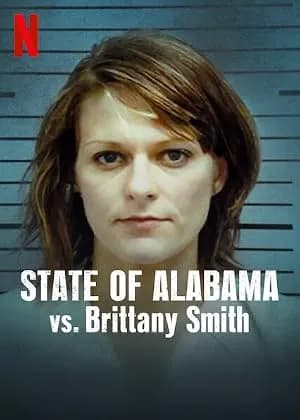
*State of Alabama vs. Brittany Smith* is a 40-minute documentary short released on Netflix on November 10, 2022, directed by Ryan White. It centers on the real Alabama criminal case of Brittany Smith, a mother of four who shot and killed a man named Todd Smith on January 16, 2018, after she said he had brutally raped and assaulted her inside her own home. The film examines whether her actions constituted lawful self-defense under Alabama's Stand Your Ground statute — and why a court said they did not.
The documentary arrives at a moment of intense national scrutiny of Stand Your Ground laws, asking pointed questions about who these statutes were designed to protect and whether they are applied equitably to women, abuse survivors, and minorities.
The Case
On the night of January 16, 2018, Brittany Smith called authorities to report that Todd Smith — a man she knew — had broken into her north Alabama home, attacked her, and raped her. During or shortly after the assault, she shot and killed him. Todd Smith was 38 years old at the time of his death.
Alabama prosecutors declined to treat the shooting as a clear-cut case of self-defense. Smith was charged with murder, and the legal battle that followed became one of the most scrutinized self-defense cases in the state's recent history. Her defense attorneys pursued a Stand Your Ground hearing, arguing she had a legal right to use deadly force against an intruder who had just sexually assaulted her in her own home.
The court denied her Stand Your Ground immunity claim, a decision that outraged many domestic violence advocates and legal observers who argued the law was being applied in a way that systematically disadvantaged survivors of sexual violence. Without immunity, Smith faced the full weight of a murder prosecution.
Rather than risk a jury trial, Brittany Smith entered a guilty plea to murder. She was sentenced to 20 years in prison. However, she served approximately 18 months in custody before being released in May 2021. Upon release, she was placed on 18 months of house arrest followed by five years of supervised probation.
The case drew significant journalistic attention, particularly from AL.com reporter Ashley Remkus, who covered the story extensively and appears in the documentary. Remkus's reporting helped bring national visibility to the case and the broader questions it raised about Alabama's justice system.
A Debate About Stand Your Ground
Alabama's Stand Your Ground law allows individuals to use deadly force in self-defense without a duty to retreat, provided they reasonably believe such force is necessary to prevent death or serious bodily harm. Proponents argue the law protects law-abiding citizens; critics have long argued it is applied unevenly — more readily invoked and granted when the defendant is male, and less consistently when the defendant is a woman fleeing abuse or assault.
The Independent noted that the documentary also highlights the collateral consequences of Smith's prosecution: during the legal proceedings, her four children were placed in foster care with a relative, a detail that added emotional weight to public reaction to the film. Critics of the prosecution argued that a woman who had allegedly just survived a rape should not have found herself in a legal position worse than that of her alleged attacker.
The case became a reference point in broader policy discussions about how self-defense law interacts with domestic violence, sexual assault, and the experiences of women who use force to protect themselves from abusers or attackers.
Production
The documentary was directed by Ryan White, a filmmaker known for socially engaged nonfiction work. The film runs 40 minutes — short by feature documentary standards, but structured to move efficiently through the legal chronology while centering Brittany Smith's own account of events.
According to coverage from Common Sense Media and Rotten Tomatoes, the production includes interviews with key figures connected to the case, most notably AL.com journalist Ashley Remkus, whose on-the-ground reporting provided much of the documentary record. The film uses that journalism as a spine, layering in Smith's personal testimony and legal context to build its argument about the inequities of how Stand Your Ground is adjudicated in Alabama.
The choice to keep the film short appears intentional — it functions less as a comprehensive legal explainer and more as a concentrated emotional and ethical argument, designed to provoke a reaction and spark conversation rather than exhaustively document every procedural detail.
Reception
State of Alabama vs. Brittany Smith holds a 6.0/10 on IMDb (ID: tt22771372). Critical reception was generally respectful of the film's subject matter, with reviewers acknowledging it as a compact and emotionally resonant piece of advocacy journalism in documentary form.
Decider's review framed the film as an effective spotlight on disparities in Stand Your Ground protections, particularly for women and minorities, praising its willingness to make an argument rather than retreat into false balance. Reviewers noted that the 40-minute runtime, while lean, kept the film focused and prevented it from becoming padded or repetitive — a common criticism of the true crime documentary format.
The documentary generated strong viewer reactions on social media, with many expressing outrage at the court's denial of Smith's Stand Your Ground claim and sympathy for her situation as an alleged rape survivor who ended up prosecuted for murder. Others raised questions about due process and the facts of the case as presented, reflecting the genuine complexity and controversy at the heart of the story.
Some critics noted that the film's brevity also worked against it in places, leaving viewers wanting more depth on the legal arguments and the specific evidence presented at the Stand Your Ground hearing.
The Case Today
As of the documentary's release in November 2022, Brittany Smith had been out of incarceration since May 2021, serving the remainder of her sentence under house arrest and supervised probation. Verified reporting does not confirm whether her full probation term has since concluded.
The case remains a touchstone in ongoing debates about Stand Your Ground law reform in Alabama and across the United States, particularly in discussions about how the legal system responds to women who use lethal force in the context of sexual violence and domestic abuse. Brittany Smith's case — and the documentary that brought it to a global Netflix audience — continues to be cited by advocates pushing for legislative changes to ensure self-defense laws protect survivors, not just aggressors.