Scouts Honor: The Secret Files of the Boy Scouts of America
Netflix, 2023 — the decades-long BSA child sexual abuse scandal and cover-up
Quick facts
What Is the Series About?
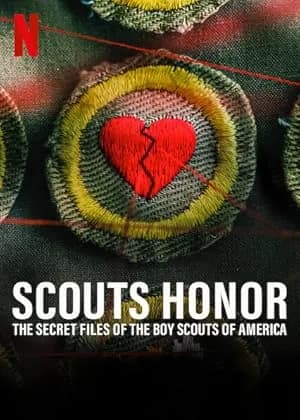
*Scouts Honor: The Secret Files of the Boy Scouts of America* is a 2023 Netflix documentary film directed by Brian Knappenberger that exposes the Boy Scouts of America's systematic, decades-long failure to protect children in its care from sexual abuse — and its active efforts to conceal that abuse from families, communities, and law enforcement. Running 94 minutes and premiering on September 6, 2023, the film is not a courtroom drama built around a single perpetrator or a single victim. It is something more expansive and, in many ways, more disturbing: an institutional autopsy of one of the most trusted youth organizations in American history.
The documentary draws its name from the BSA's own internal confidential records, popularly known as the "perversion files" — a collection of documents in which the organization tracked allegations of sexual abuse by Scout leaders and volunteers, often without ever reporting those allegations to police or child protective services. These files, spanning much of the BSA's modern history, form the evidentiary spine of Knappenberger's film.
The Case
Because Scouts Honor covers an institutional scandal rather than a single crime, there is no single perpetrator and no single trial at its center. What the documentary presents instead is a pattern: adult male Scout leaders and volunteers abusing boys in their troops, the BSA receiving or generating internal reports of that abuse, and the organization repeatedly choosing silence over disclosure.
The scale of the scandal is staggering. By the time the BSA filed for Chapter 11 bankruptcy in February 2020, more than 82,000 abuse claims had been filed by survivors — a number that dwarfed even the Catholic Church abuse settlements that had dominated headlines for years. A bankruptcy reorganization eventually produced a settlement valued at approximately $2.46 billion, one of the largest institutional sexual abuse settlements in U.S. history.
Among the individual stories the documentary examines is that of Christopher Schultz, who was sexually assaulted while a Scout in 1978. Schultz later died by suicide — his story, as reported by Dexerto, is one of the documentary's most affecting illustrations of the long-term human cost of institutional silence.
The film also features Michael Johnson, a former BSA Youth Protection director, who appears not as a perpetrator but as a whistleblower — a figure who attempted to reform the organization's reporting practices from within and whose testimony lends the documentary rare insider credibility.
One specific geographic example the film draws on involves Troop 137 in New Orleans, used to illustrate how local Scout units became sites of abuse that the broader organization failed to address. But the documentary is careful to frame New Orleans not as an outlier but as a microcosm of a nationwide failure.
Production
The film was directed by Brian Knappenberger, a documentary filmmaker previously known for works examining institutional power and digital civil liberties. Knappenberger's approach in Scouts Honor blends survivor testimony, archival documents, and interviews with journalists, attorneys, and former BSA insiders.
According to the official Netflix Media Center, the documentary was produced with access to the BSA's internal files and draws on decades of investigative reporting, including the 1994 book by journalist Patrick Boyle, which was among the first sustained public accountings of the perversion files. The combination of primary documents and first-person survivor accounts gives the film a texture that goes beyond a simple retelling of news headlines.
A notable production footnote: a copyright lawsuit emerged claiming that Netflix had copied elements of another documentary on the same subject. That legal dispute concerns the film's making rather than the underlying abuse scandal, and its resolution did not affect the film's distribution or reception.
Reception
Scouts Honor holds an IMDb rating of [7.0/10](https://www.imdb.com/title/tt28660814). Critical reception was broadly positive, with reviewers across major outlets acknowledging both the documentary's emotional power and the well-documented nature of its subject matter.
The Guardian described the film as sobering and thorough. The New York Times noted that while much of the scandal had been previously documented in press coverage and litigation filings, Knappenberger's assembly of survivor voices gives the film an impact that raw legal documents cannot. Reviews in the Wall Street Journal, Chicago Sun-Times, and San Francisco Chronicle echoed that assessment — calling the film enraging and troubling, but essential viewing for understanding how a trusted institution can systematically betray the children in its care.
The documentary generated significant online discussion at the time of its release, with audiences responding particularly to the survivor testimonies and to the gap — revealed again and again in the film — between the BSA's public image and its internal conduct.
The Case Today
The BSA bankruptcy settlement of approximately $2.46 billion remains one of the most significant legal outcomes in the history of institutional child sexual abuse litigation in the United States. As of the film's release in September 2023, the settlement process was ongoing, with tens of thousands of individual claims being evaluated and compensation being distributed through the reorganization trust.
The BSA itself has implemented reforms to its youth protection protocols in the years since the scandal became a matter of public litigation — including mandatory reporting requirements and background check systems. Critics and survivor advocates, however, have questioned whether those reforms are sufficient given the depth of the institutional failure the documentary chronicles.
For the more than 82,000 survivors who filed claims, the settlement represents a legal acknowledgment of harm. Whether it represents justice is, as the film makes clear, a different question entirely — one that no dollar figure can fully answer.