Pervert: Hunting the Strip Search Caller
Netflix/Paramount+ · 2022 · The decade-long fast-food strip search phone scam exposed
Quick facts
What Is the Series About?
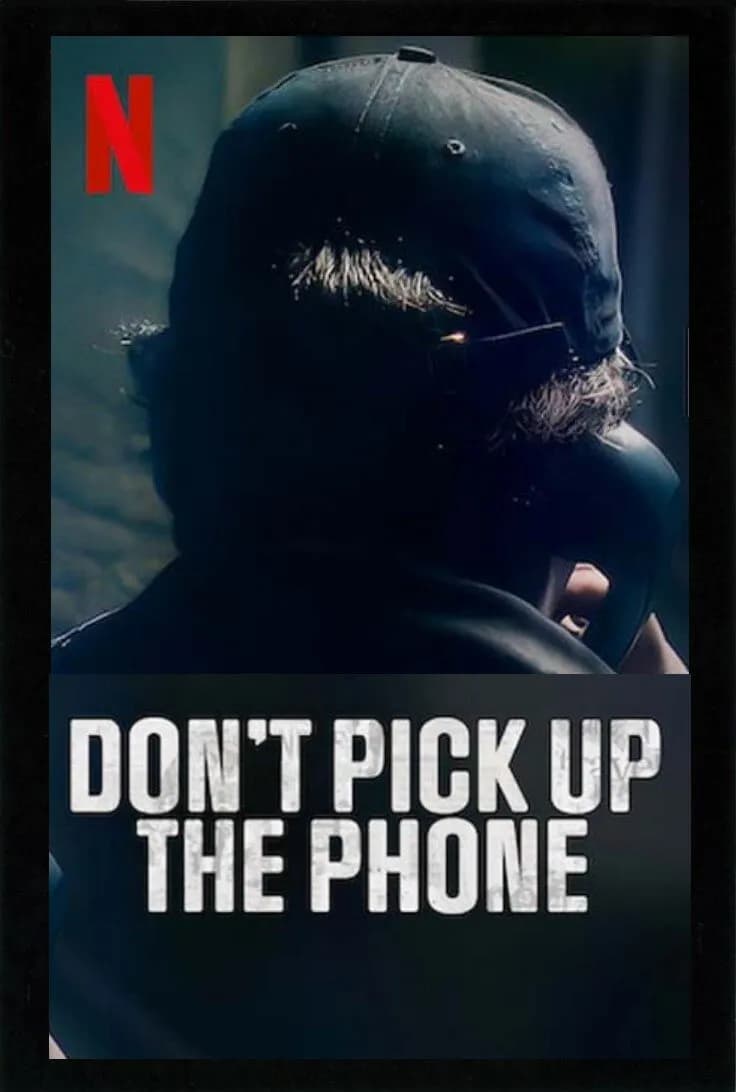
Pervert: Hunting the Strip Search Caller — also released on Netflix under the title Don't Pick Up the Phone — is a three-episode true crime docuseries directed by Sara Mast that investigates one of the most bizarre and disturbing fraud cases in modern American criminal history: the so-called "strip search phone scam." Over the course of more than a decade, an unidentified caller repeatedly phoned fast-food restaurants across the United States, posed as a law enforcement officer, and persuaded managers to detain, strip-search, and in some cases facilitate the sexual abuse of their own employees. The series first premiered on Paramount+ in the UK on October 25, 2022, before becoming available to U.S. audiences on Netflix on December 14, 2022.
The Case
The scam began as early as 1992 and continued for over twelve years, spanning more than 70 incidents in approximately 30 U.S. states. The caller's method was consistent: he would phone a fast-food restaurant, identify himself as a police officer, and claim that an employee on the premises had been accused of theft or another crime. He would then instruct the manager — sometimes for hours at a time — to detain the accused employee, conduct a strip search, and in several cases to involve other individuals in escalating acts of humiliation and abuse. The targets were overwhelmingly young women. That the scheme worked as often as it did has been widely attributed to the psychology of authority and compliance — the caller's confident, official-sounding voice was enough to override the judgment of many otherwise reasonable adults.
The case that brought national attention — and ultimately triggered a criminal investigation — occurred on April 9, 2004, at a McDonald's restaurant in Mount Washington, Kentucky. The victim was Louise Ogborn, an 18-year-old employee, who was detained in the restaurant's back office after a caller impersonating a police officer told the manager she was suspected of theft. Over the course of several hours, Ogborn was subjected to a strip search and sexual assault carried out by Walter Nix Jr., the fiancé of the manager on duty, who had been handed control of the "situation" by the overwhelmed manager. The entire episode was captured on the restaurant's surveillance cameras.
The subsequent investigation pointed investigators toward David Richard Stewart, a Florida resident and former corrections officer. Stewart was arrested and charged with impersonating a police officer and solicitation of sodomy in connection with the calls. Crucially, the calls reportedly stopped after Stewart's arrest, which investigators viewed as circumstantially significant. However, at his 2006 trial, Stewart was found not guilty on all charges, leaving the identity of the caller legally unresolved to this day. No one else has ever been convicted of making the calls.
Walter Nix Jr., by contrast, faced direct accountability for his actions in the Kentucky restaurant. He pleaded guilty to sexual assault and was sentenced to five years in prison. His conviction addressed the physical abuse inflicted on Louise Ogborn but did not answer the larger question of who orchestrated the scheme from the other end of the phone line.
Production
The series was directed by Sara Mast, whose approach centers the experience of survivors and draws on interviews, archival footage, and documentation from the investigations that spanned more than a decade. The docuseries is structured across three episodes, allowing sufficient time to trace the full arc of the scam — from its earliest known incidents in the early 1990s through the landmark Kentucky case and its deeply unsatisfying legal aftermath.
A significant dimension of the series is its examination of why the scam worked. Rather than treating the managers and employees who complied with the caller's instructions as simply gullible or culpable, the documentary engages with the psychological mechanisms of authority, compliance, and coercion that researchers have documented since Stanley Milgram's famous obedience experiments. The case became something of a real-world demonstration of how far ordinary people can be led by a persuasive voice of apparent authority — even to the point of participating in acts they would otherwise find unconscionable.
The documentary also benefits from the existence of surveillance footage from the 2004 Kentucky incident, which was later made public and had already circulated widely online and on television news programs before the series was produced. That footage, while deeply disturbing, provided an unusually concrete visual record of events that in most other incidents of the scam were known only through witness accounts.
Reception
Press coverage of the series was dominated by expressions of shock at the scale and audacity of the scam. Metro described the documentary trailer as looking "too wild to fathom", a reaction typical of the broader reception. Publications including Glamour, The Sun, and The Daily Mail covered the series extensively, each emphasizing the sheer number of incidents and the psychological dimensions of the case.
Viewers and critics were particularly struck by the fact that the scam was perpetrated not through technology or sophisticated deception but through the simple, low-tech act of a phone call — and that it succeeded so repeatedly, for so long, at so many locations. The acquittal of the only man ever charged with the calls added a further layer of unease to audience reactions, since it meant the series could offer no clean narrative resolution.
The series carries an IMDb rating that has not been independently verified from official sources at the time of this writing, though secondary aggregator sites have cited a figure of approximately 6.7/10. Its availability on both Netflix and Paramount+ gave it broad international reach, and the dual-title release — Don't Pick Up the Phone in some markets and Pervert: Hunting the Strip Search Caller in others — reflected the different editorial sensibilities of its distribution partners.
The Case Today
The strip search phone scam case remains one of the most legally unresolved and psychologically unsettling episodes in recent American true crime history. David Richard Stewart was acquitted in 2006 and has never been convicted of any crime relating to the calls. The fact that the calls stopped after his arrest has been widely noted but is not, legally, proof of guilt. No other individual has since been charged in connection with the calls.
Louise Ogborn subsequently filed a civil lawsuit against McDonald's Corporation, and the case drew attention to the responsibilities of corporations to protect their employees from foreseeable harm — including the harm that can arise when managers are not trained to recognize and resist social engineering. McDonald's had reportedly received warnings about the scam before the 2004 Kentucky incident.
Walter Nix Jr. served his sentence for the sexual assault of Ogborn. The broader question of accountability — for the system that allowed the scam to operate for over a decade, for the corporations that failed to warn their employees, and for the unknown caller who may never face justice — remains open, and is a central preoccupation of Sara Mast's documentary.