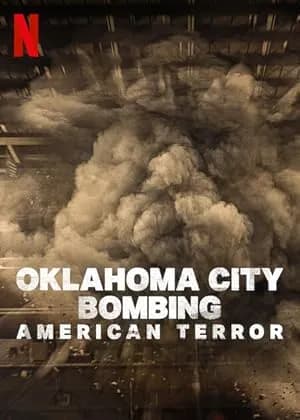
Oklahoma City Bombing: American Terror Netflix Documentary
Netflix-dokumentar (2025) om det dødeligste indenlandske terrorangreb i USA's historie
Quick facts
## What is the series about?
Oklahoma City Bombing: American Terror is a Netflix documentary about the bombing of the Alfred P. Murrah Federal Building on April 19, 1995 — what Netflix describes as the deadliest domestic terror attack in U.S. history. The documentary, directed by Greg Tillman and running 82 minutes, was released on April 18, 2025 — one day before the 30th anniversary of the tragic attack. The film reconstructs the events minute by minute, giving voice to survivors, first responders, investigators, and witnesses who were present that fateful morning.
At the center of the documentary are audio-recorded interviews with the perpetrator himself, Timothy McVeigh — a controversial but dramatically effective choice that gives viewers a rare glimpse into the terrorist's mindset and motives. According to Netflix's official description, the film also includes reconstructions of the crime scene, archival footage, and first-hand accounts from those who survived the catastrophe.
## The case behind the documentary
At 09:02 local time on April 19, 1995, a massive bomb loaded onto a rented truck detonated in front of the Alfred P. Murrah Federal Building in Oklahoma City. The explosion — caused by roughly 2,300 kilograms of homemade explosives made from ammonium nitrate and fuel — pulverized large sections of the building's facade and sent shockwaves through the surrounding neighborhood. 168 people died, including 19 children from a daycare center on the building's ground floor. Hundreds of others were injured.
The man behind the attack was Timothy James McVeigh, a former U.S. Army soldier deeply radicalized by a mix of anti-government ideology, hatred of the federal government, and fascination with the violent novel The Turner Diaries. A key factor in McVeigh's radicalization was the FBI's military operation against the religious sect Branch Davidians in Waco, Texas, in 1993, which ended in a massive fire and 76 deaths. McVeigh deliberately chose April 19 as the date of the attack — the second anniversary of the end of the Waco tragedy.
McVeigh did not act alone. His friend and co-conspirator Terry Nichols helped acquire the ingredients for the bomb and took part in the planning. Nichols, however, was not present in Oklahoma City on the day of the attack.
Just 90 minutes after the explosion, McVeigh was pulled over and arrested by state trooper Charles Hanger on a highway north of Oklahoma City — not because of the bombing, but because he was driving without a license plate and carrying an illegal concealed weapon. His connection to the attack was established shortly after, when the FBI identified him through the rental truck company and eyewitnesses.
In 1997, a federal jury sentenced McVeigh to death. He did not deny responsibility — on the contrary, he referred to the children who died as "collateral damage," a phrase that shocked the world. On June 11, 2001, Timothy McVeigh was executed by lethal injection, becoming the first person executed by the federal government in the United States since 1963. Terry Nichols was sentenced to life in prison without the possibility of parole.
## The production
The documentary is directed by Greg Tillman and produced for Netflix. The film's dramaturgical choice to structure the narrative in real time — almost minute by minute from the morning of April 19, 1995 — gives viewers, according to reviewers, an intense and immersive sense of the catastrophe's immediate chaos and the desperate rescue efforts that followed.
One of the most notable features of the production is its use of McVeigh's own audio-recorded prison interviews. This is material rarely heard in such a widely accessible context, and according to the official Netflix trailer, it is used to draw a psychological portrait of the perpetrator and uncover the motivation behind the bloodshed he orchestrated. The documentary combines these recordings with interviews with survivors, relatives, first responders, and FBI investigators who led the subsequent investigation and manhunt for those responsible.
The film's release is carefully timed to coincide with the 30th anniversary of the attack — an editorial decision that underscores the intent to honor the victims and reopen the conversation about domestic terrorism at a time when the topic remains highly relevant in the United States.
## Reception
Reviews of Oklahoma City Bombing: American Terror have generally been positive. Critics describe the documentary as a "solid overview" and a "powerful" film that treats its subject with respect and dignity toward the victims. USA Today praised it as a "moving documentary" with its 82-minute runtime, noting that it successfully balances factual detail with human stories.
The most debated editorial choice is undoubtedly the use of McVeigh's own audio-recorded interviews — an approach that will always raise questions about whether it gives a terrorist a platform. The film's approach, however, appears to use the material as a documentary tool to illuminate radicalization and ideology rather than to glorify the perpetrator.
The documentary's IMDb ID is tt36351149, and an official IMDb rating has not yet been verified from available sources.
## The case today
Timothy McVeigh has been executed, and Terry Nichols is serving his life sentence. The case file itself is closed in a legal sense — but the debate over domestic terrorism, anti-government radicalization, and political violence is more relevant than ever in the United States. The Oklahoma City National Memorial & Museum, built on the site where the Murrah Building once stood, now serves as a national memorial to the 168 victims.
The documentary's release in April 2025 comes at a time when the United States is once again debating homegrown extremism and violent radicalization — and in this way, the film functions not only as historical documentation but as a relevant mirror for today's challenges with political violence and terror on American soil.