Murder Mountain
Netflix, 2018 — The cannabis economy, disappearances, and the murder of Garret Rodriguez in Humboldt County
Quick facts
What Is the Series About?
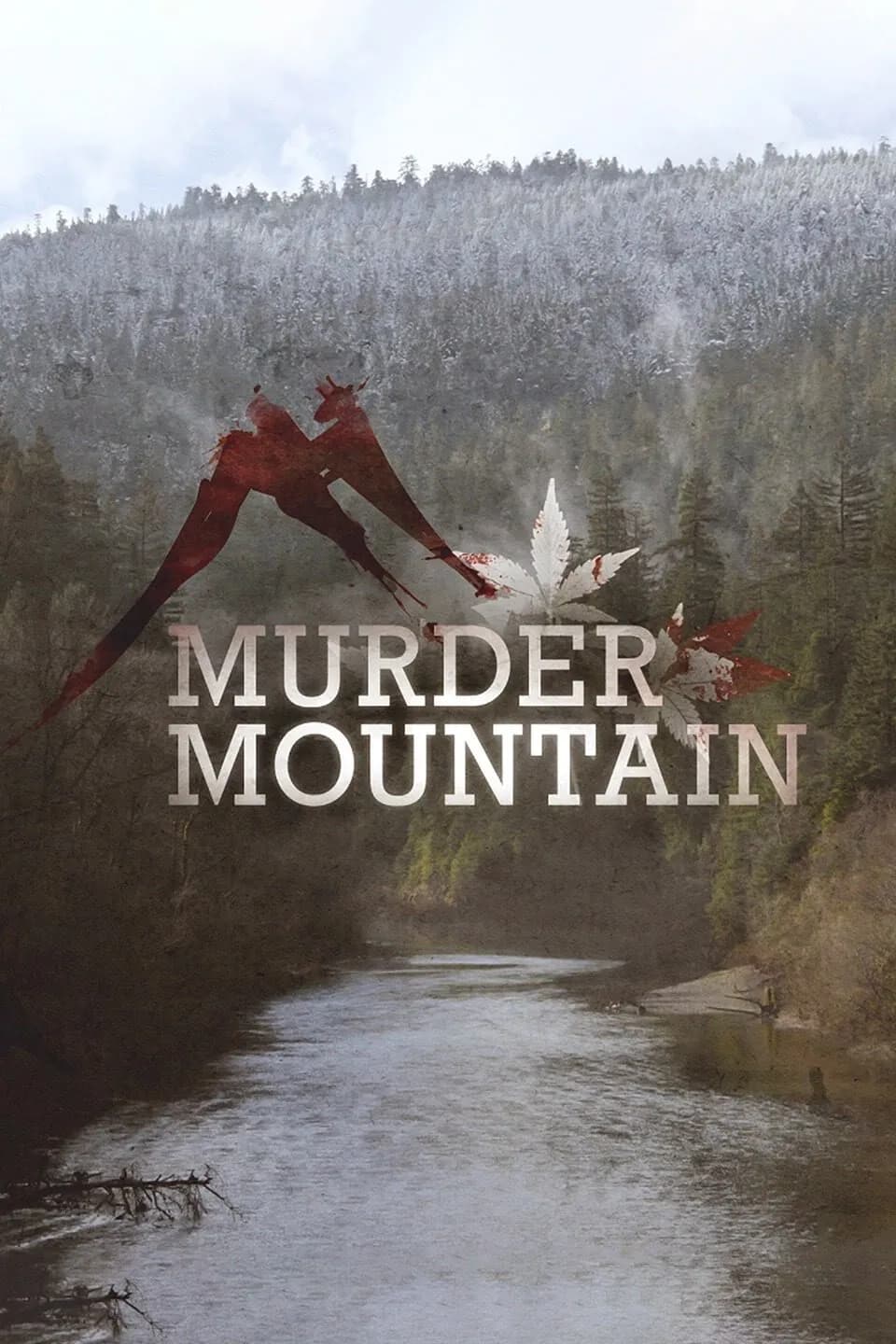
Murder Mountain is a six-episode true-crime docuseries that premiered on Netflix on December 28, 2018, following an earlier Fusion TV debut on September 23 of the same year. The series takes its name from a grim local nickname for the Garberville and Rancho Sequoia area of Humboldt County in Northern California — a remote, fog-wrapped region long famous for producing some of the most prized cannabis in the United States, and equally infamous for violence, disappearances, and a culture of deep distrust toward law enforcement.
Rather than focusing on a single crime in isolation, the series operates on two levels simultaneously. On the macro level, it is a reported examination of Humboldt County's underground cannabis economy — its rise, its dangers, and the seismic impact of California's gradual move toward legalization on the growers who built their lives in the shadows. On the micro level, it is anchored by one devastating, unresolved case: the murder of 29-year-old cannabis grower Garret Rodriguez.
The Case
Garret Rodriguez was a young man from San Diego who, like many before him, was drawn north to Humboldt County by the promise of the cannabis trade. He settled in the Rancho Sequoia area and became part of the tight-knit — and deeply secretive — community of growers that had existed there for generations. Not long after his arrival, Rodriguez went missing. For approximately a year, his fate was unknown.
In December 2013, his body was found in a shallow grave) in Humboldt County. He was 29 years old. His death was ruled a homicide. What followed, however, was not a tidy arrest and prosecution. Based on all available reporting, no perpetrator has been publicly named, charged, or convicted in connection with Rodriguez's killing. The case sits in a legal limbo that is both frustrating and, in the context of this particular region, depressingly familiar.
The series uses Rodriguez's murder as the emotional and narrative spine of the story, interviewing friends, fellow growers, and community members who knew him, while simultaneously exploring the broader pattern of violence and disappearances that have made "Murder Mountain" more than just a colorful nickname. Law enforcement perspectives are included, though the relationship between local police and the cannabis community is portrayed as fractured and adversarial — a dynamic that, the series argues, has allowed crimes to go unsolved for years.
Production
The series was produced by documentary filmmaker Joshua Zeman, whose previous work had also explored the intersection of crime, community, and institutional failure. The production team embedded themselves in Humboldt County over an extended period, gaining access to growers, locals, and advocates in a community that is historically suspicious of outsiders — particularly those with cameras.
This access is one of the series' most notable achievements. The growers and residents who appear on camera do so with an awareness of the risks involved, and many speak candidly about the violence, the economics, and the social codes of a world that has operated outside mainstream American law for decades. The series was rated TV-MA on Netflix, reflecting its unflinching approach to both the crime content and the drug economy it documents.
According to reporting on the controversy surrounding the series, local officials later claimed that producers had originally pitched the project to the community as a broader exploration of cannabis legalization, and that the pivot to centering Rodriguez's murder felt, to some, like a bait-and-switch. Zeman disputed this characterization.
Reception
Critical reception was largely positive. The Daily Beast described Murder Mountain as "an eye-opening watch," and Decider praised it as genuinely binge-worthy. Film Inquiry called it a "fascinating insight" into an isolated and uniquely American subculture. Perhaps most strikingly, the series was reported as the most-streamed documentary on Netflix at the time of its release — a significant commercial achievement that underscored the mainstream appetite for stories about the cannabis underground.
The series is listed on IMDb under title ID tt9078908, though a current aggregate rating was not available at the time of publication.
Not everyone celebrated the series. The Humboldt County Sheriff's Office issued a pointed public statement shortly after the Netflix release, describing the documentary as "one side of a highly sensationalized story." Local officials expressed concern that the show's framing — and its very title — would damage the county's efforts to rebrand itself as a destination for legal cannabis tourism and legitimate agritourism more broadly. They argued that the series was incomplete, that it omitted important context about law enforcement's work, and that it could harm the economic prospects of a region already struggling through the painful transition from black-market to regulated cannabis production.
The Los Angeles Times covered the fallout in detail, reporting on the tension between the series' creators and local government — a conflict that itself became part of the story, raising questions about who gets to define a community's narrative and at what cost.
The Case Today
As of the most recent publicly available information, the murder of Garret Rodriguez remains unsolved. No perpetrator has been identified, charged, or convicted in connection with his death. The shallow grave in Humboldt County where he was found in December 2013 has become a symbol — for the series, and for the broader conversation about what it costs to live and die in the cannabis underground.
The legalization of recreational cannabis in California, which formally took effect in January 2018, has continued to reshape Humboldt County in complicated ways. Many legacy growers have struggled to transition into the regulated market, undercut by lower-cost competitors and burdened by licensing costs and taxes. The social and criminal dynamics that Murder Mountain documented have not simply dissolved with legalization; they have evolved.
Rodriguez's family and those who knew him continue to live with an open wound. His case is a reminder that true-crime storytelling, at its best, is not merely entertainment — it is a record of what happens when institutions fail, when communities are left to police themselves, and when the price of a particular American dream turns out to be a life.