Lucrecia: Un crimen de odio
Disney+, 2024 — Spain's first recognized racist murder, Aravaca 1992
Quick facts
What Is the Series About?
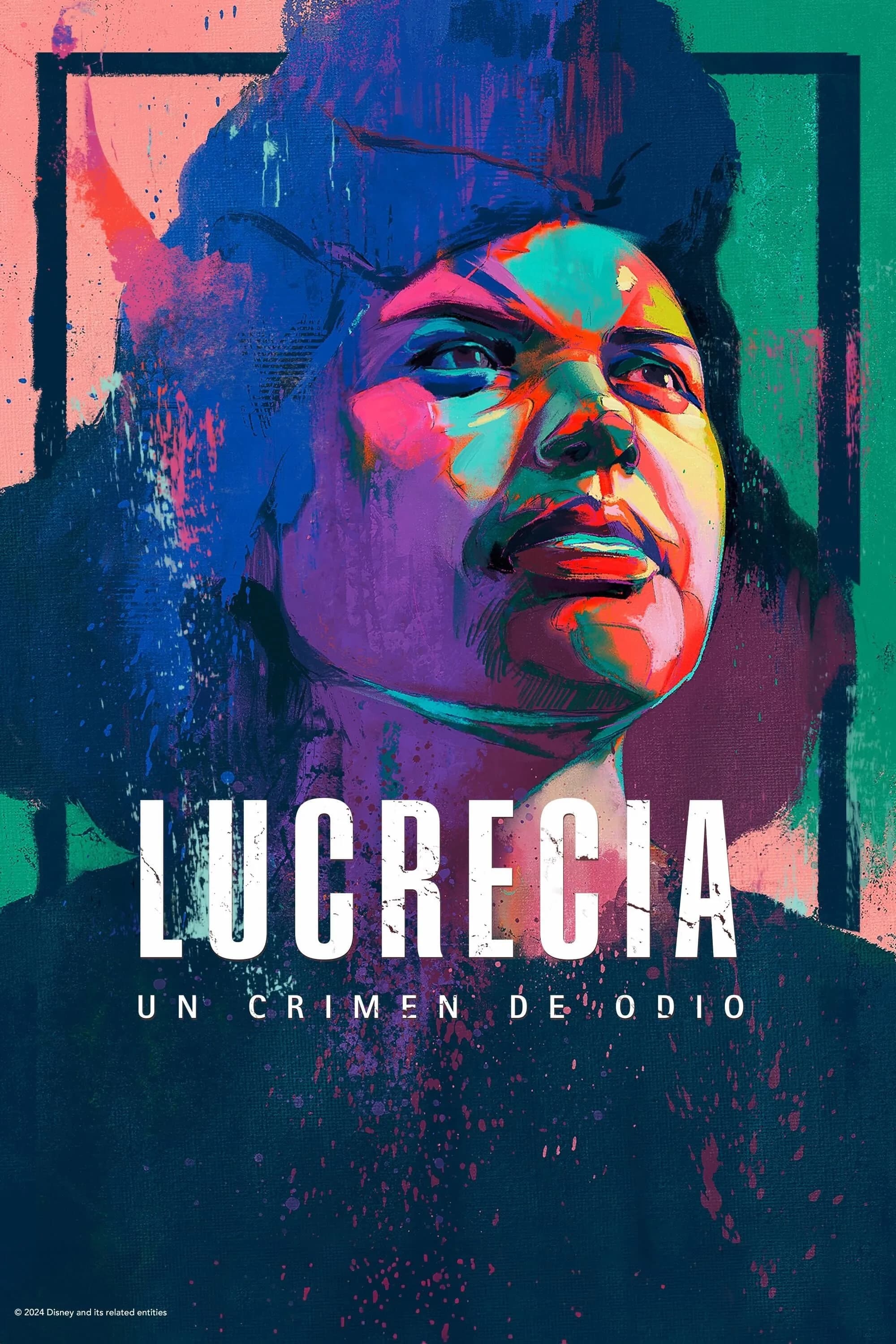
Lucrecia: Un crimen de odio — released internationally as Lucrecia: A Murder in Madrid — is a four-part documentary miniseries on Disney+ that revisits the 1992 racist murder of Lucrecia Pérez Matos, a Dominican immigrant living in Madrid. Widely recognized as Spain's first officially acknowledged hate crime, the case exposed deep currents of xenophobia in early-1990s Spanish society and triggered a legal and political reckoning that would reshape the country's criminal code. The series premiered on 27 June 2024 on Disney+ in Spain and draws on archive footage and first-person testimony to reconstruct both the crime and its aftermath.
---
The Case
On the night of 13 November 1992, Lucrecia Pérez Matos — a 33-year-old Dominican domestic worker who had emigrated to Spain in search of a better life — was shot and killed inside the ruins of the Four Roses nightclub, an abandoned building in the Madrid suburb of Aravaca. She was not alone: a group of immigrants had gathered there seeking shelter. The attackers opened fire without warning.
The perpetrators were four young neo-Nazis, led by Luis Merino Pérez, a 25-year-old who was a member of Spain's Guardia Civil in active service at the time of the crime — a detail that amplified the scandal considerably. The other three participants were minors, aged 16 at the time. Their motivation was explicitly racial and xenophobic: they had targeted the location knowing that immigrants used it for shelter.
Spanish judicial proceedings initially framed the case as involving one consummated murder and one frustrated murder. Within 28 days of the crime, on 11 December 1992, the examining magistrate ordered all four defendants into pretrial detention. The group was ultimately sentenced collectively to 126 years in prison. The three minor defendants served approximately six and a half years before being released. Luis Merino Pérez, the Guardia Civil officer who led the attack, is identified in reports as the only one of the four who remained incarcerated beyond that point.
The murder sent shockwaves through Spanish society. It prompted the largest anti-racism protests Spain had seen at the time, spreading across eight major cities. Legislators and legal scholars pointed to the case as evidence that Spanish criminal law was ill-equipped to address racially motivated violence. That pressure contributed directly to the 1995 revision of the Spanish Penal Code, which formally introduced discrimination as an aggravating factor in criminal sentencing — a landmark change in the country's legal framework for hate crime.
Lucrecia Pérez Matos left behind a daughter, Kenia Carvajal Pérez, who has since spoken publicly about her mother's life and death and appears in the documentary series as one of its key witnesses.
---
Production
Lucrecia: Un crimen de odio was directed by David Cabrera and Garbiñe Armentia and produced by Justin Webster Productions (JWProductions). Justin Webster also served as writer and executive producer on the project, according to Disney+ press material. The production is structured across four episodes, each building a different layer of the case: the crime itself, the investigation and trial, the social and political fallout, and the long-term legacy for Spain's immigrant communities and hate-crime legislation.
The series makes extensive use of archive material alongside first-person testimonies. Among those who appear on camera are Lucrecia's daughter Kenia Carvajal Pérez and former Spanish vice president Narcís Serra, who was in government at the time of the murder. The combination of personal testimony and historical documentation gives the series both an intimate and a politically contextual register — consistent with the documentary tradition that Justin Webster's production company has developed over two decades of Spanish-language true crime and investigative non-fiction.
---
Reception
Spanish and international outlets framed the series as a necessary public reckoning with a crime that, despite its historical significance, had faded from mainstream memory. El Confidencial described the documentary as renewing urgent debate about racism and xenophobia in contemporary Spain, noting that the murder had "more repercussion than other racist violence of the period" and that the series brought that context back into focus ahead of ongoing political discussions about immigration and hate crime.
The Manchester Evening News highlighted the scale of the social response the original crime had provoked, calling Lucrecia's murder "the shocking crime" that triggered the largest anti-racism mobilization in modern Spanish history. Coverage at the time of release was overwhelmingly framed around the historical and legal significance of the case rather than around controversy about the filmmakers' editorial choices. No major disputes about the documentary's approach or methodology surfaced in published reviews available at the time of writing.
The series holds an IMDb entry under the title Lucrecia: un crimen de odio (ID: tt31844445), though a confirmed aggregate rating score was not available in verified sources at the time of publication.
---
The Case Today
More than thirty years after the murder, the legal and symbolic legacy of the Lucrecia Pérez case continues to shape Spain's approach to hate crime. The 1995 penal reform that her murder helped catalyze remains the foundation of Spain's hate-crime aggravating-factor framework, which has been cited in dozens of subsequent prosecutions. Advocacy organizations and academics regularly return to the case as the baseline reference point for racist violence in modern Spanish legal history.
Lucrecia's daughter Kenia has become a public voice for the recognition of her mother's place in Spanish history. The 30th anniversary in 2022 prompted a wave of commemorative journalism and official acknowledgment, and the Disney+ documentary — arriving two years later — extended that re-examination to a streaming audience well beyond Spain's borders. Whether the four perpetrators are currently free or incarcerated remains a matter of some ambiguity in public reporting: the most precise account in verified sources states that three were released after approximately six and a half years, with Luis Merino Pérez identified as the only one still imprisoned as of the most recent reporting.